

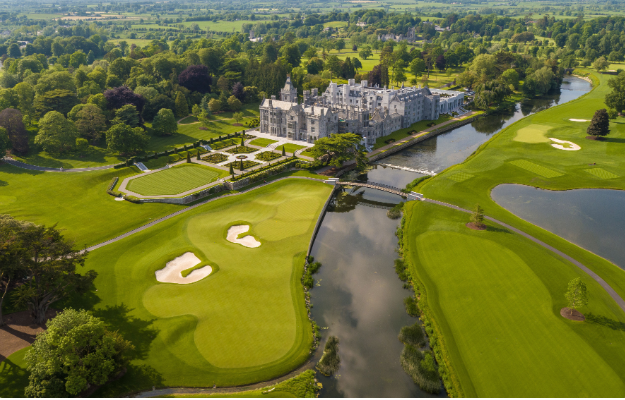






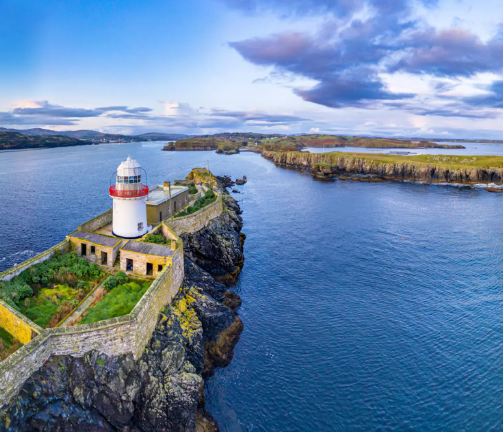
There are few places in world golf where geography, history and the game itself combine with quite the same drama as they do in Ulster.
Stretching across nine counties and encompassing a remarkable collection of more than 100 golf courses, the province is a destination of extraordinary variety. Here, golf can be played beside the Atlantic Ocean with enormous dunes rising above the fairways; on peaceful parkland estates framed by ancient woodland; around shimmering lakes; beneath the shadow of castles; and across landscapes where the weather can change from benign sunshine to links-golf wind in the space of a few minutes.
It is this variety that makes Ulster such an intriguing proposition for the travelling golfer.
The province includes Antrim, Armagh, Cavan, Donegal, Down, Fermanagh, Londonderry/Derry, Monaghan and Tyrone. It also contains some of the most famous names in Irish golf, from Royal County Down and Royal Portrush to Portstewart and Castlerock, while a host of superb inland courses provide an alternative side to the golfing story.
For the purposes of this journey, however, the emphasis is on eight courses that demonstrate just how broad the Ulster offering has become: PGA National Slieve Russell, Donegal Golf Club, Concra Wood, Malone Golf Club, Portstewart’s Strand Course, Castlerock Golf Club, Galgorm Castle and Farnham Estate.
Together they provide a fascinating tour through the province, moving from the lakelands of Cavan and Monaghan to the wild Atlantic coast of Donegal and the Causeway Coast, before returning to the sophisticated parkland environments around Belfast and Ballymena.
The result is a golf itinerary that can be as luxurious, competitive, scenic or adventurous as the golfer wants it to be.
PGA National Ireland Slieve Russell – Cavan’s Lakeside Championship Retreat
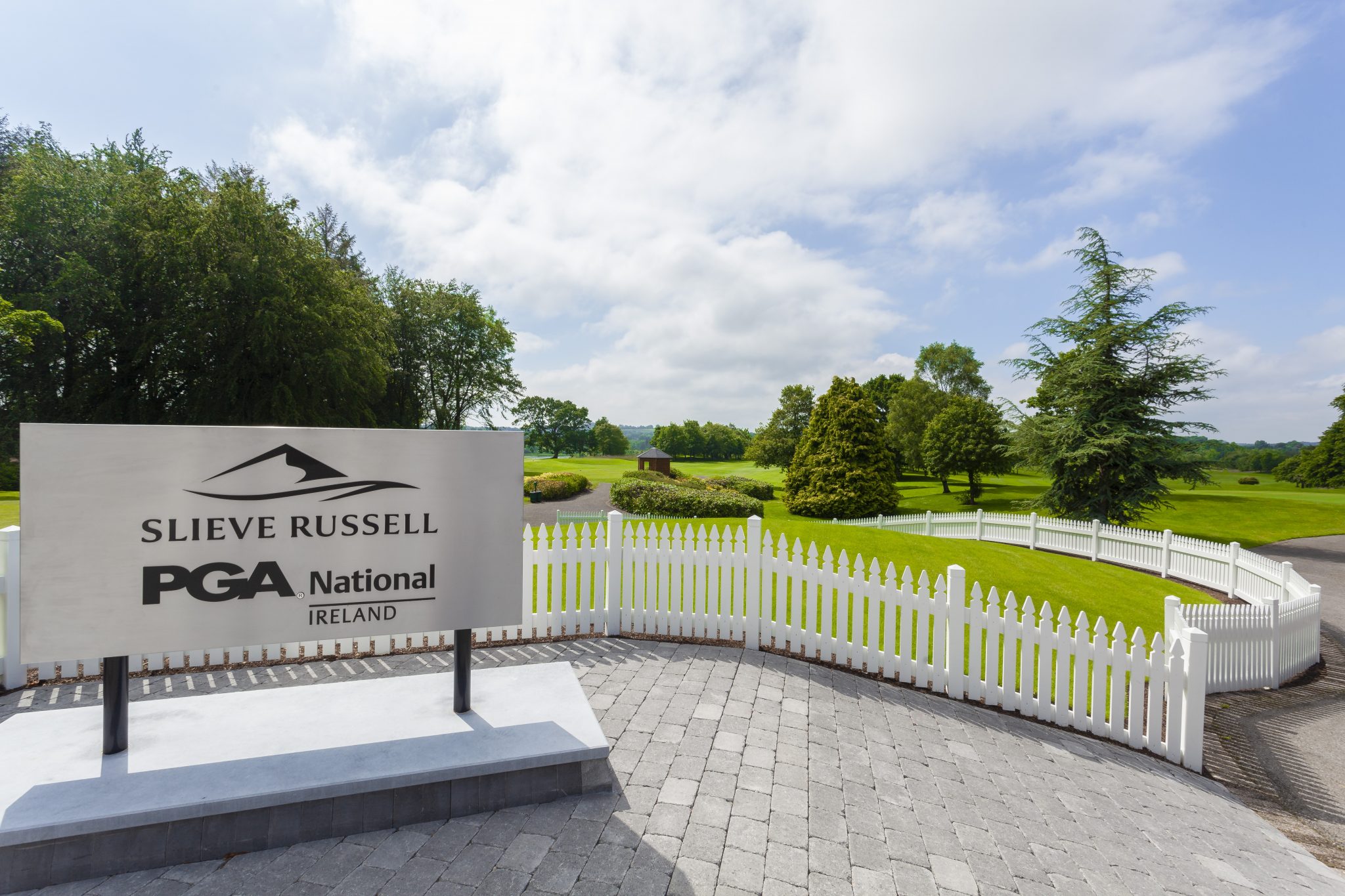
In the heart of County Cavan, close to the town of Ballyconnell, PGA National Ireland Slieve Russell provides one of the most complete golf-resort experiences in the province.
It is a destination where the golf is only part of the attraction, but it is exceptionally good golf nonetheless.
Set across approximately 300 acres, the Slieve Russell estate is a landscape of drumlins, woodland and lakes. Around 50 acres of water form part of the wider estate, and the championship course makes intelligent use of that natural environment.
The 18-hole, par-72 layout was created by the late Patrick Merrigan, one of Ireland’s most influential golf architects. Merrigan’s philosophy was not to overpower the landscape but to work with it, allowing the course to wind naturally through the Cavan countryside.
The result is a layout that looks beautiful from the tee but can become considerably more demanding once the round gets under way.
The championship course measures more than 7,000 yards from the back tees and is accompanied by a nine-hole PGA National Academy course. The greens have long had a reputation for being particularly testing, rewarding golfers who can control their approach shots and understand the subtle contours.
It is the back nine, however, that often leaves the strongest impression.
The feature hole: the 12th
The 12th is arguably the hole that best captures the character of Slieve Russell.
A substantial par four with water running alongside the hole, it demands a combination of distance, precision and nerve. From the tee, the golfer is confronted by a visual challenge that immediately focuses the mind. The water creates a sense of danger without becoming an artificial gimmick, and the closer the ball gets to the green, the more strategic the hole becomes.
The 12th is also a reminder of why Slieve Russell works so well as a championship venue. It asks questions of the better golfer while still offering alternative strategies for the club golfer.
The 11th, another hole involving water around the green, and the par-five 13th are also among the memorable holes on a back nine that continually changes perspective.
The facilities
For the travelling golfer, Slieve Russell is exceptionally well equipped.
There is a three-bay floodlit driving range, putting and practice areas, a nine-hole academy course and a fully equipped golf operation. The clubhouse is attached to the main hotel and provides a natural meeting point before and after golf, with a pro shop, changing facilities, showers and everything required for a comfortable golf day.
Then there is the resort itself.
The hotel offers more than 200 bedrooms, while the wider property includes a substantial spa, leisure facilities, restaurants, bars and extensive conference and event facilities. The resort has hosted major professional tournaments, including European Tour events and the Irish PGA Championship, and its PGA National designation places it among a very select group of golf resorts worldwide.
What not to miss
Do not leave the Slieve Russell estate without visiting the ancient Aughrim Wedge Tomb, believed to date back around 4,000 years.
It is an extraordinary reminder that the landscape surrounding the golf course has been shaped by people for thousands of years.
For golfers, Slieve Russell also makes an excellent base for an extended lakeland itinerary, with Lough Erne and other Cavan and Fermanagh courses within reach.
The combination of hotel, spa, championship golf and surrounding countryside makes this one of Ulster’s most complete stay-and-play destinations.
Donegal Golf Club – Atlantic Golf in Its Purest Form
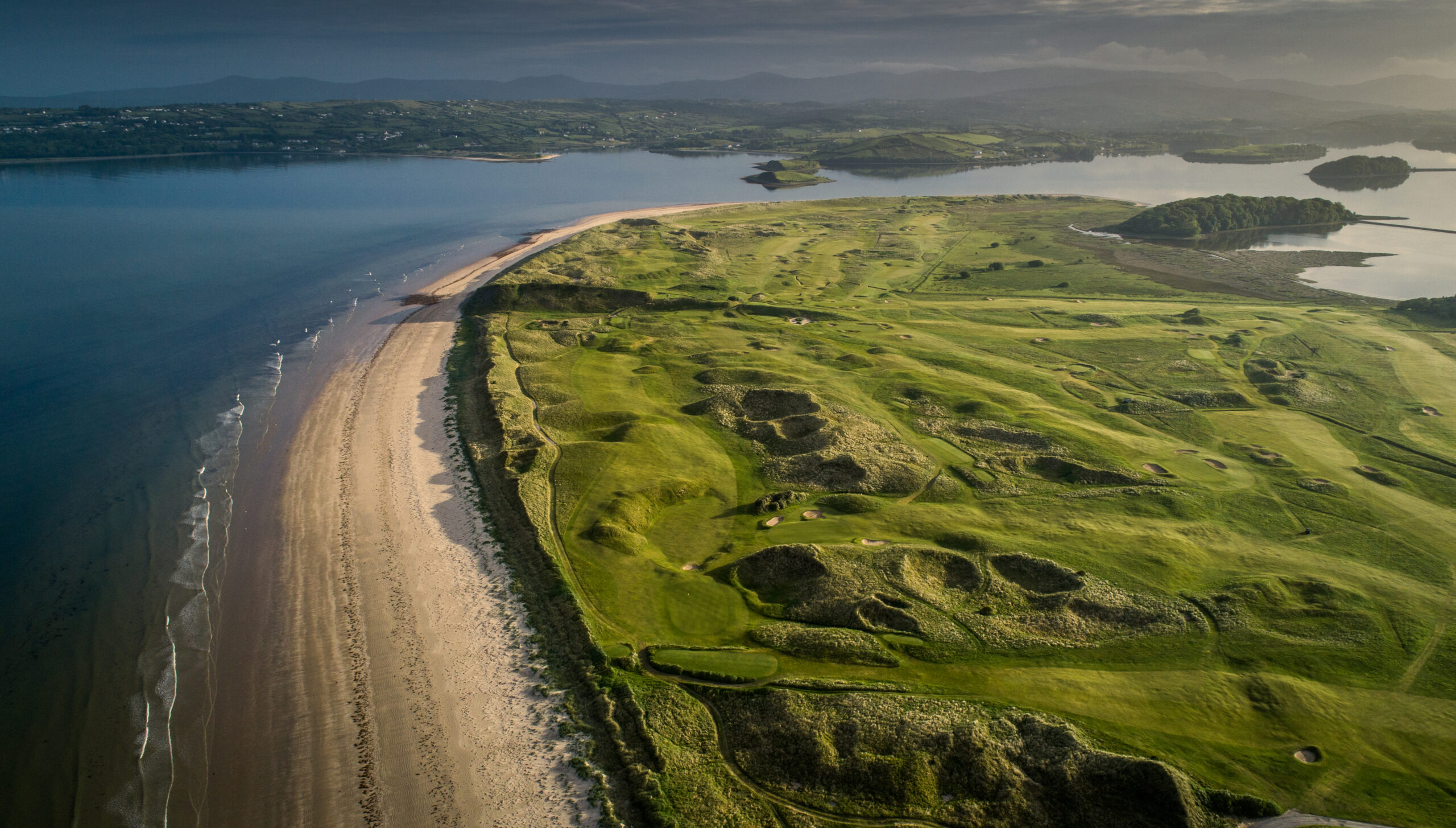
If Slieve Russell demonstrates the sophistication of inland Irish golf, Donegal Golf Club provides the opposite experience.
The Murvagh Peninsula is wild, open and unmistakably coastal.
Located south of Donegal Town, the course occupies a remarkable piece of land that projects into Donegal Bay and the Atlantic Ocean. There are few distractions here. No urban skyline dominates the horizon. There is little traffic noise. Instead, the golfer encounters dunes, sea, sky, wildlife and the constantly changing Atlantic wind.
It is an environment in which the game feels elemental.
Donegal was originally designed by Eddie Hackett, one of Ireland’s great links architects. Hackett used Muirfield as an inspiration, creating two distinct loops that allow the course to move between the more exposed outer dunes and the relatively sheltered inner section.
Pat Ruddy subsequently reshaped and enhanced a number of holes, continuing the evolution of the layout while respecting Hackett’s original character.
The result is a course that can stretch beyond 7,400 yards from the championship tees yet remains surprisingly walkable.
That is one of Donegal’s great strengths.
The feature hole: the 10th – Hackett’s Corner
The 10th hole, appropriately named “Hackett’s Corner”, provides an ideal point at which to appreciate the architecture of the course.
As the golfer turns towards the inner loop, the hole retains a connection with the Atlantic landscape while introducing a subtly different challenge.
It is a fitting tribute to Hackett, whose philosophy was always about allowing the land to dictate the golf.
But Donegal is not a course that depends upon one hole.
The drama comes from the entire experience. The outer loop provides huge vistas across Donegal Bay and the ocean, while the inner loop offers more sheltered holes where the wind can still become a decisive factor.
The course is a par 73 and includes five par fives, four par threes and nine par fours. From the championship tees, its length can be intimidating, but the generous scale of the property gives the golfer room to breathe.
The clubhouse
Donegal’s clubhouse was rebuilt in 1998 and has the feel of a genuine seaside golf club rather than a resort constructed solely for visitors.
There is a pro shop, changing facilities and hospitality areas, while the setting provides an ideal place to relax after the round.
Practice facilities include a driving range, warm-up area, putting green, chipping area and bunker practice.
That is important at Donegal because the wind can turn even the most straightforward-looking shot into a very different proposition.
What not to miss
The clue is in the name: Donegal Bay is impossible to ignore.
Take time after the round to appreciate the views from Murvagh, then head into Donegal Town and explore Donegal Castle and the surrounding historic centre.
For a longer stay, Donegal opens the door to one of Ireland’s most spectacular regions. Slieve League, Glenveagh National Park, the Bluestack Mountains and the Atlantic coast are all within the wider touring area.
And if the golf itself is the reason for the trip, Donegal is one of those courses where the memory of the landscape is likely to remain as strong as the score.
Concra Wood – Monaghan’s Lakes, Woodland and Golfing Theatre
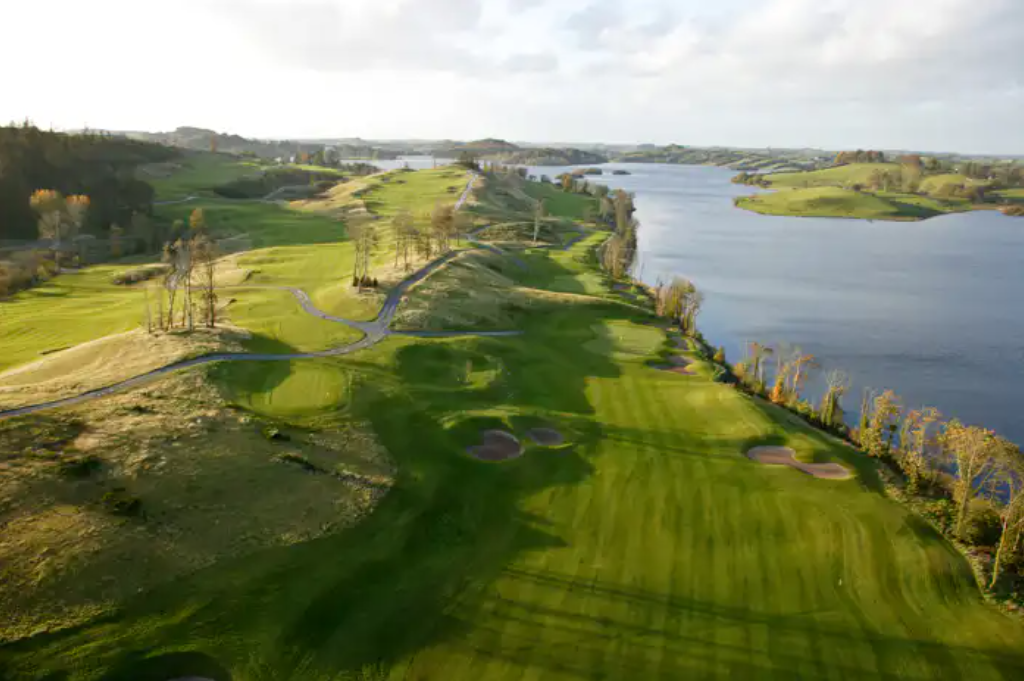
Concra Wood, near Castleblayney in County Monaghan, is one of Ulster’s most compelling inland golf experiences.
The setting around Lough Muckno immediately distinguishes it.
The course was created by two of Ireland’s most celebrated golfing names, Christy O’Connor Senior and Christy O’Connor Junior. Their collaboration produced a championship layout that moves through woodland, around lakes and across elevated ground, using the natural features of the property to create a constantly changing sequence of holes.
It is a course where the views are part of the architecture.
Water is visible from every hole, while many of the holes are played directly around the lakes and wooded landscape.
The scale of the design is considerable, with the course extending to approximately 7,300 yards from the back tees.
Yet Concra Wood is not simply about length.
It is about angles.
The golfer is continually asked to consider where the best side of the fairway is, how much of the lake to challenge and whether the aggressive line will genuinely provide a better opportunity.
The feature hole
Concra Wood is not easily reduced to a single signature hole because its strongest feature is the relationship between the course and Lough Muckno.
The lakeside holes provide the defining moments, with water appearing beside fairways, greens and approach lines.
The opening par-five 1st is a particularly attractive introduction. At almost 500 metres from the back tees, it offers the opportunity to start strongly but immediately establishes the scale of the course.
Further into the round, the water becomes increasingly strategic.
The golfer who tries to overpower Concra Wood can quickly discover that the course is designed to punish poor decisions rather than merely poor swings.
Clubhouse and facilities
The clubhouse sits at one of the highest points on the property, giving it an exceptional outlook across the surrounding Monaghan countryside.
It is a modern facility with changing rooms, showers, lockers and a pro shop, while The View Restaurant provides the ideal setting for lunch, dinner or a post-round drink.
The practice facilities include a driving range, putting green and chipping green, allowing visitors to prepare properly before taking on the championship layout.
The clubhouse itself is an important part of the Concra Wood experience because the course is as much about landscape as it is golf.
What not to miss
Castleblayney and the wider Monaghan lakeland region deserve time beyond the course.
Lough Muckno itself is a major recreational attraction, while the county has a rich literary and cultural history.
For the travelling golfer, Concra Wood also sits conveniently within a wider north-eastern golf itinerary, making it an excellent partner to courses in Cavan, Louth, Armagh and Down.
Malone Golf Club – Belfast’s Elegant Parkland Gem
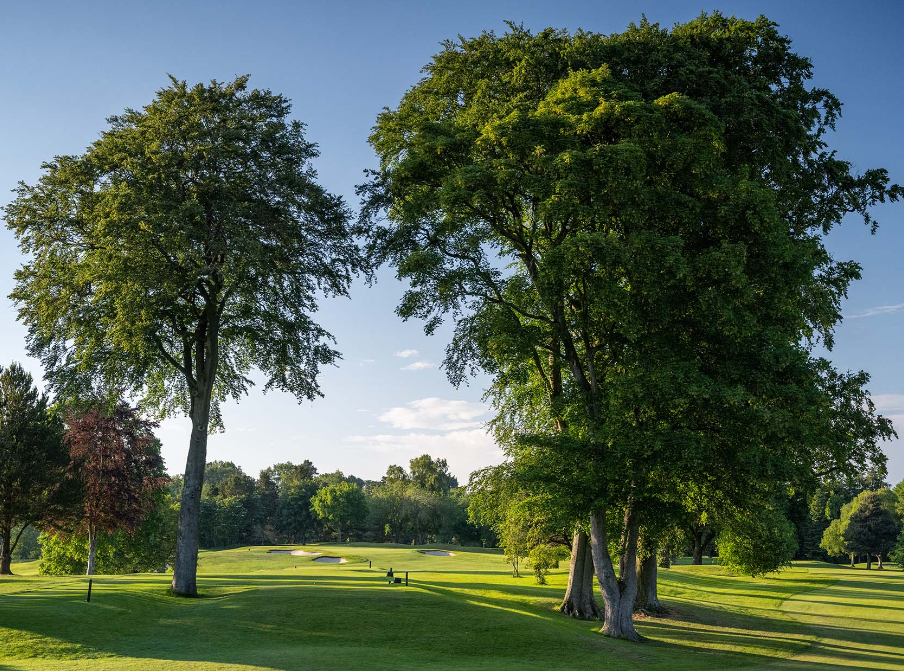
Golf in Ulster is often associated with linksland, but Malone Golf Club offers a compelling reminder that the province can produce outstanding parkland golf too.
Just a few miles south of Belfast city centre, Malone occupies an extraordinary landscape in the Lagan Valley.
Mature oaks, sycamores and pines line the fairways, while Ballydrain Lake dominates the back nine.
The course has developed through the work of several architects. John Morrison, who worked with Harry Colt, had an influence on the layout, while C.K. Cotton and subsequent architects have also contributed to its evolution.
The result is a course with an architectural history almost as interesting as the estate in which it sits.
The feature hole: the 15th
The 15th is Malone’s signature hole and one of the finest inland short holes in Ulster.
It is a short par three, but the length is deceptive because the golfer must play across the water to a green framed by mature planting.
The setting is beautiful.
The challenge is not.
The tee shot demands commitment because any hesitation can turn a straightforward par opportunity into a watery disaster.
The 13th, 14th and 15th form Malone’s own version of Amen Corner, with the lake influencing each hole and strategy becoming increasingly important.
The 18th then provides a memorable conclusion, requiring a drive over the lake towards a raised fairway before the approach to the final green.
The clubhouse
One of Malone’s great pleasures is arriving at the clubhouse.
The approach runs along Lime Avenue, lined with mature trees, before the historic clubhouse comes into view.
The building dates from the 19th century and has the atmosphere of an established country estate rather than a conventional golf clubhouse.
Inside, the experience is relaxed and traditional, with hospitality providing an appropriate conclusion to a round that feels remarkably removed from the nearby city.
What not to miss
Belfast itself is the obvious attraction.
Titanic Belfast should be high on any first-time visitor’s list, while the Cathedral Quarter provides a very different experience of the city through restaurants, bars, music and architecture.
The Ulster Museum and Botanic Gardens are also close by.
Malone therefore makes an ideal golf choice for a city break because the golfer can combine a high-quality parkland round with the cultural attractions of Belfast without lengthy transfers.
Portstewart Strand – The Wild Face of the Causeway Coast
There are golf courses that impress.
And then there are golf courses that make you stop on the first tee and simply look.
Portstewart’s Strand Course belongs firmly in the second category.
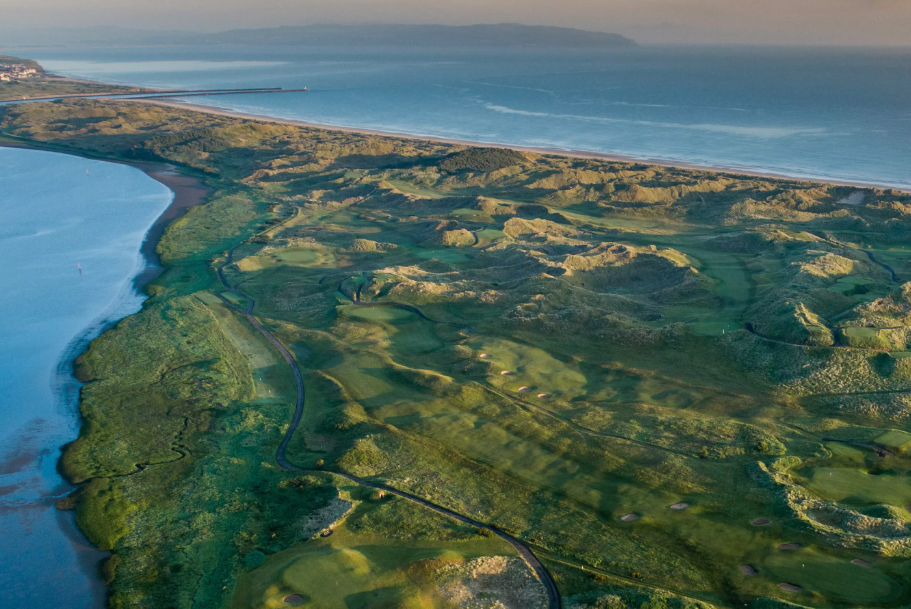
Set on the Causeway Coast in County Londonderry/Derry, the Strand is one of the most visually spectacular links in Ireland.
Towering dunes dominate the front nine. The Atlantic is close by. Strand Beach stretches alongside the course, while views extend towards Donegal, Lough Foyle and the surrounding Antrim coastline.
The modern Strand Course emerged through a remarkable evolution.
Willie Park Jr. had an early involvement, while A.W. Gow was associated with the original layout. The dramatic modern expansion into the Thistly Hollow dunes was led by club members Des Giffin and Michael Moss, with seven holes added to create the spectacular championship course golfers know today.
The feature hole: the 1st
The opening hole is arguably the most memorable way to begin a round anywhere in Ulster.
From the elevated tee, the golfer looks out across the links, beach, Atlantic and surrounding countryside.
It is an intimidating first view.
The 1st is a long par four, and the tee shot needs to find a favourable position before the approach to the large green.
But the shot is almost secondary to the setting.
Portstewart understands something important about golf: the opening tee shot can create an emotional connection with a course before the golfer has hit a single approach.
The 6th, a par three played to a plateau green, is another standout, particularly when the wind changes the club selection dramatically.
The clubhouse
Portstewart has developed into a major golf destination and its clubhouse reflects that status.
The club has evolved from humble beginnings into a modern facility designed around hospitality as much as golf.
There are dining and bar facilities, changing areas and a pro shop, while visitors are made to feel very much part of the club for the day.
That atmosphere matters because Portstewart is a course where the experience continues after the final putt.
What not to miss
The Causeway Coast is one of Ireland’s great touring landscapes.
The Giant’s Causeway is the obvious essential visit, while Dunluce Castle provides one of the most atmospheric historic sites anywhere on the island.
Bushmills, the world’s oldest licensed whiskey distillery, is another natural stop.
And then there is the coastal drive itself.
Portstewart, Portrush, Dunluce, Bushmills and the Giant’s Causeway can easily be linked into one spectacular day.
For golfers, the proximity of Royal Portrush and Castlerock makes the area particularly dangerous to leave.
One round becomes three very quickly.
Castlerock – Where Links Golf Meets the Bann
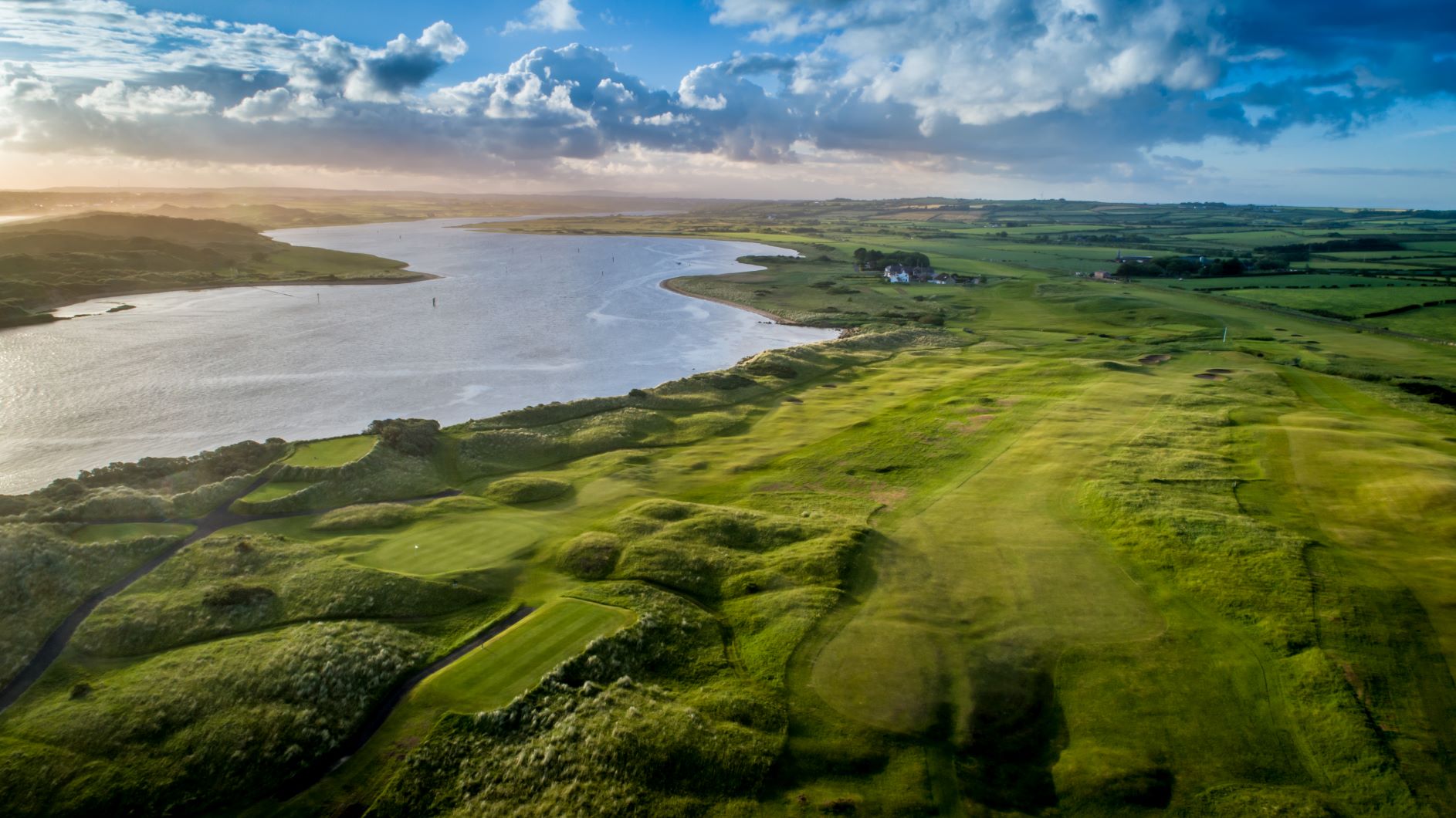
Just across the River Bann from Portstewart lies Castlerock Golf Club, another outstanding Causeway Coast links.
The course combines traditional links terrain with enormous dunes and a series of holes that continually change in character.
The Mussenden Course is the headline layout, while the club also offers the nine-hole Bann Course.
Castlerock’s history includes an association with the great Harry Colt, who is believed to have been consulted during a redesign around 1930.
Today, the course is a fascinating combination of strategy, dunes, natural contours and exposed coastal golf.
The feature hole: the 4th – Leg o’ Mutton
The 4th hole, known as “Leg o’ Mutton”, is one of Castlerock’s signature holes.
A long par three, it requires the golfer to carry a river, while the railway line adds another visual element to the challenge.
It is precisely the sort of hole that makes links golf so addictive.
The green may look inviting from the tee, but the surrounding hazards make an indifferent swing very expensive.
The 15th is another standout, with a blind approach characteristic of the course, while the 18th provides an excellent short par-four finish.
The clubhouse
Castlerock’s clubhouse provides the traditional post-round atmosphere expected of a long-established links club.
There is a pro shop, changing facilities, bar and food service, with the emphasis on making visitors feel comfortable after tackling the exposed links.
It is a place where the weather outside becomes part of the conversation.
What not to miss
The name Castlerock is inseparable from Mussenden Temple, which sits dramatically above the nearby cliffs.
The temple and Downhill Demesne are essential stops.
The wider Causeway Coast also offers beaches, coastal walks, Bushmills and the Giant’s Causeway.
And for the serious golfer, Castlerock should be played in conjunction with Portstewart.
The two courses offer completely different versions of links golf despite being so close together.
Galgorm Castle – Tournament Golf in County Antrim
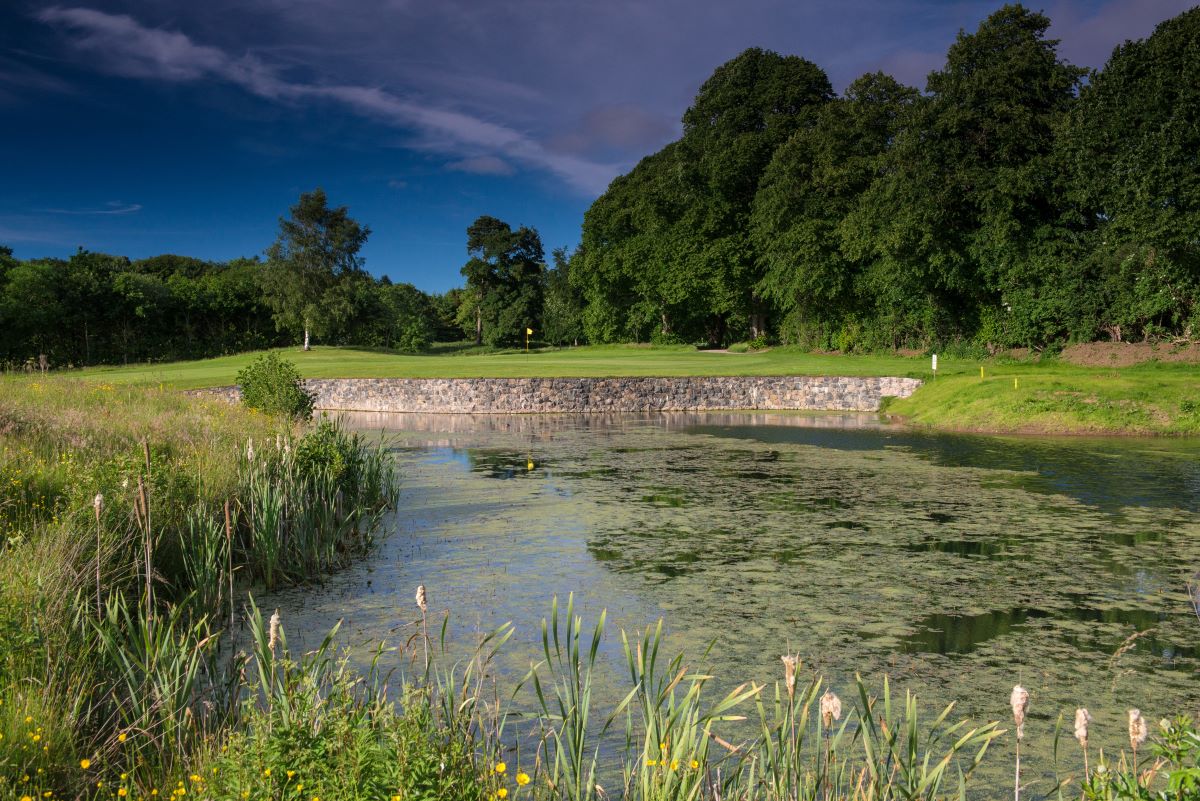
If Portstewart and Castlerock represent the wild Atlantic face of Ulster golf, Galgorm Castle demonstrates the sophistication of its parkland tradition.
Located near Ballymena in County Antrim, Galgorm is set within a historic 220-acre estate.
The championship course was designed by Simon Gidman and opened in 1997. Since then it has evolved continuously, with a major programme of improvements transforming it into one of Northern Ireland’s premier tournament venues.
The course has hosted the Northern Ireland Open, the World Invitational and the 2020 Irish Open.
It is also a course that combines mature parkland with a surprisingly large amount of water.
The Rivers Maine and Braid influence the layout, while five lakes and an oxbow lake add further strategic elements.
The feature hole: the 18th
The modern 18th is the hole that best demonstrates Galgorm’s transformation.
A substantial par five, it offers genuine risk and reward for the longer hitter.
The fairway encourages an aggressive strategy, but the closer the golfer gets to the green, the more dangerous the water becomes.
A new water feature was introduced alongside the 18th green, creating a dramatic finishing amphitheatre.
The result is a closing hole capable of producing everything from eagle to disaster.
That makes it ideal for tournament golf and equally enjoyable for ordinary visitors.
The clubhouse
Galgorm’s clubhouse has become a destination in its own right.
Castle Kitchen + Bar provides a contemporary food and drink experience, while the clubhouse also includes a fully stocked pro shop, professional services and upgraded changing facilities.
The resort’s broader hospitality offering is one of the reasons Galgorm has become so popular for golf breaks.
The Castle Championship Course is not simply somewhere to play and leave.
It is part of a wider luxury resort experience.
What not to miss
Stay at Galgorm if time permits.
The resort combines golf with spa facilities, restaurants, bars and extensive accommodation.
Outside the resort, Ballymena provides an accessible base for exploring County Antrim.
The Causeway Coast is also close enough to combine with Galgorm, making it possible to build an itinerary that moves from inland parkland golf to some of the world’s most spectacular links.
Farnham Estate – Cavan’s Quiet Parkland Masterpiece
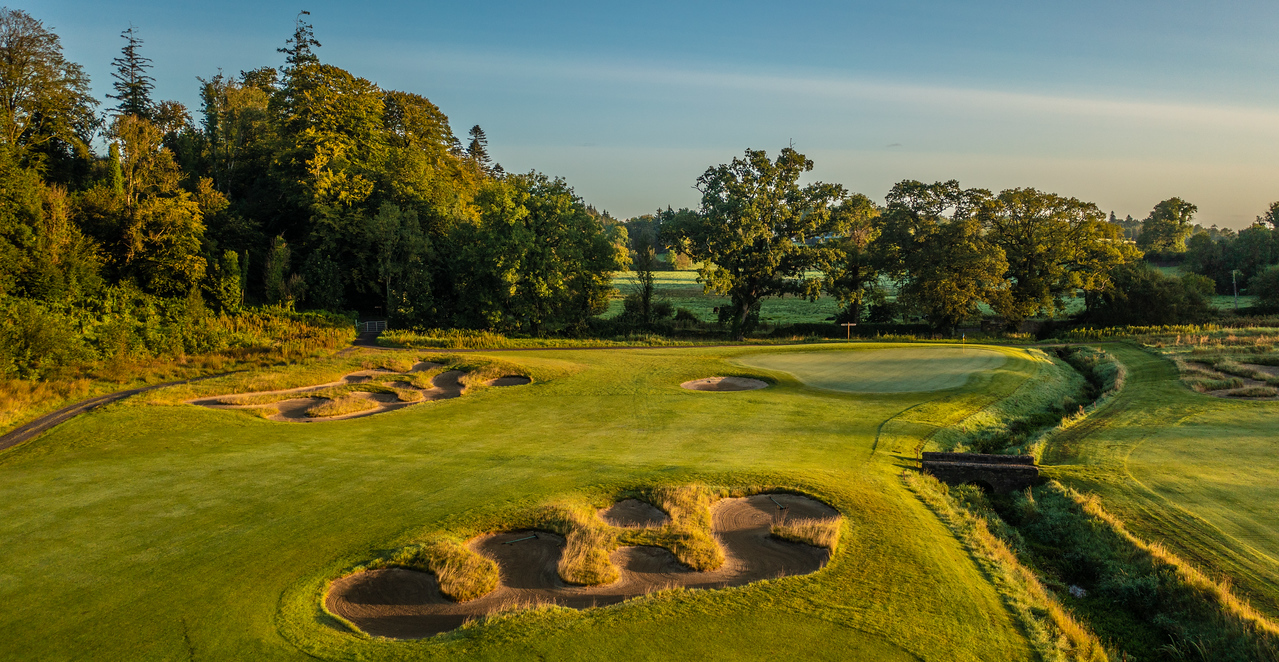
Back in County Cavan, Farnham Estate provides another interpretation of the Ulster golf resort.
The estate is spread across approximately 500 acres of rolling countryside and dense woodland, creating a sense of space and tranquillity that is immediately apparent from the first tee.
Designed by Jeff Howes, the 18-hole championship course is deliberately integrated into the estate rather than imposed upon it.
The front nine and back nine offer distinctly different experiences.
The opening nine moves through more open, rolling meadowland, while the back nine enters denser and more rugged woodland.
Seven lakes and a meandering stream provide the water hazards, while ancient trees, wildlife, a fairy fort and a wishing well reinforce the feeling that the golfer is moving through an established estate rather than a conventional modern golf development.
The feature hole: the 4th
Interestingly, Farnham does not claim one definitive signature hole.
The club itself points to several candidates, including the 2nd, 10th, 15th and 16th.
But the designer’s favourite is the 4th.
The hole requires a controlled draw between two large oak trees before the golfer faces a well-guarded green with water behind and to the right.
It is an excellent example of Howes’ approach.
The hole is not simply about the quality of the golf shot. It is about shaping that shot correctly and understanding the relationship between tee, fairway, approach and green.
The 16th is another visual highlight, played from an elevated tee towards a generous green guarded by substantial bunkers.
The 18th then provides a strong par-five finish, with the lake influencing the tee shot and the approach.
The clubhouse
Farnham’s clubhouse is deliberately understated.
Located beside the 18th hole, it provides a pro shop, changing facilities, light snacks and beverages, and a terrace overlooking the closing green.
It is precisely the sort of clubhouse that suits the estate: comfortable, practical and focused on the golfing experience rather than grand architectural gestures.
For groups, the clubhouse and hotel facilities make Farnham particularly appealing for a golf break.
What not to miss
The Farnham Estate Spa & Golf Resort is one of the reasons the course works so well as a destination.
A round can be followed by spa treatments, fine dining or simply a walk through the estate’s ancient woodland.
Further afield, Cavan provides access to the Marble Arch Caves and Cuilcagh Boardwalk, while the wider lakeland region offers an abundance of walking, fishing and outdoor activities.
Farnham is therefore an ideal course for golfers travelling with non-golfers because the destination offers plenty beyond the fairways.
The Ulster Golf Experience
What becomes clear after travelling through these eight courses is that Ulster cannot be reduced to a single style of golf.
That is perhaps the province’s greatest strength.
Donegal is wild Atlantic links golf.
Portstewart is spectacular dunes and coastal theatre.
Castlerock is strategic links golf with a rugged edge.
Malone is mature, elegant parkland in the shadow of Belfast.
Galgorm is tournament-standard estate golf.
Concra Wood is lake-and-woodland golf at its most dramatic.
Farnham is peaceful estate golf surrounded by nature.
Slieve Russell is the complete modern golf resort, combining championship golf with accommodation, spa and leisure facilities.
And these are only eight courses among more than 100 spread throughout the province.
For the visiting golfer, that scale of choice is significant.
A trip to Ulster does not need to revolve around one famous course. It can be constructed as a genuine golfing tour, with each day offering a different landscape and a different architectural philosophy.
The nine-county advantage
One of the most appealing aspects of an Ulster golf trip is the ability to combine counties and regions without feeling that the journey has become repetitive.
A golfer could begin in Cavan with Slieve Russell and Farnham, move east towards Monaghan for Concra Wood, then travel north towards Belfast and Malone.
From Belfast, the Causeway Coast opens up a completely different chapter, with Galgorm providing a superb inland complement to Portstewart and Castlerock.
A separate journey west brings Donegal into the picture, where the golf becomes more exposed, more remote and more directly connected to the Atlantic.
This is not simply a collection of golf courses.
It is a collection of landscapes.
The importance of the clubhouse
One of the recurring themes of Irish golf is that the clubhouse is often as important to the visitor as the course.
Ulster is no different.
At Malone, the historic clubhouse adds atmosphere to an already beautiful estate.
At Donegal, the clubhouse provides shelter and hospitality after a round on an exposed peninsula.
Portstewart has developed its clubhouse experience alongside the rise of the Strand as a major international destination.
Castlerock retains the traditional club atmosphere that links golfers have come to expect.
Galgorm takes the concept further, incorporating sophisticated dining and resort facilities.
At Slieve Russell and Farnham, the clubhouse is part of a much larger stay-and-play proposition.
Concra Wood, meanwhile, uses its elevated clubhouse position to showcase the landscape golfers have just experienced.
The lesson for the travelling golfer is simple: do not rush away after the 18th hole.
In Ulster, the post-round drink, meal and conversation are part of the experience.
A destination beyond golf
The other great advantage of an Ulster golf trip is that the golf courses sit within regions rich in history, scenery and culture.
The Causeway Coast is perhaps the most obvious example.
A golfer can play Portstewart in the morning, visit the Giant’s Causeway in the afternoon, explore Bushmills and finish the evening in Portrush.
A trip to Malone can become part of a Belfast city break.
Donegal can be combined with Donegal Castle, Slieve League or Glenveagh National Park.
Slieve Russell and Farnham open the door to Cavan’s lakeland landscape and the Marble Arch Caves.
Concra Wood provides access to Monaghan’s lakes and countryside, while Galgorm offers an ideal base for exploring Antrim.
This makes Ulster particularly attractive for couples and groups where not everyone plays golf.
The golfer gets world-class or championship-standard courses.
The non-golfer gets coastline, castles, food, history, walking, spa experiences and some of the most spectacular scenery in Europe.
Planning the Ultimate Ulster Golf Trip
There is no single perfect Ulster itinerary because the province is too varied for that.
But several combinations make obvious sense.
The Cavan–Monaghan golf break
Start at PGA National Slieve Russell, where the combination of championship golf and luxury accommodation makes an easy opening day.
Follow it with Farnham Estate, then travel east towards Concra Wood.
This itinerary is particularly suited to golfers who prefer parkland courses and resort golf.
It is also one of the easiest options for groups looking for accommodation, dining and leisure facilities alongside their golf.
The Belfast and Antrim itinerary
Base yourself in Belfast and play Malone before travelling north towards Galgorm.
From there, the Causeway Coast is within easy reach.
This combination gives the golfer a taste of sophisticated inland parkland golf followed by the dramatic scenery of Northern Ireland’s northern coastline.
The Causeway Coast golf tour
For golfers whose priority is links golf, the combination of Portstewart and Castlerock is irresistible.
Add Royal Portrush and the itinerary becomes one of the strongest links-golf trips anywhere in Europe.
But even without Portrush, Portstewart and Castlerock provide more than enough variety for a memorable trip.
The Donegal adventure
Donegal deserves its own journey.
The location is part of the attraction, and rushing in for a round before immediately departing would miss much of what makes the region special.
Give yourself time to explore Donegal Town, the coastline and the mountains.
Then play the Murvagh links when the Atlantic is providing the backdrop.
It is a golf experience in which the scorecard almost becomes secondary.
Why Ulster Should Be on Every Golfer’s Radar
Ireland has long been one of the world’s great golf destinations.
But the international conversation has often been dominated by a relatively small number of famous names.
Ulster deserves a broader look.
The province offers an extraordinary combination of famous championship venues, highly regarded parkland courses, emerging destinations and traditional clubs.
It also provides something increasingly important in modern golf travel: authenticity.
At many Ulster courses, the visitor is not entering a manufactured golf resort. They are becoming part of a landscape and, for a few hours, part of the history of a club.
The courses feel different because the land feels different.
At Donegal, the Atlantic dictates the mood.
At Portstewart, enormous dunes dominate the golfer’s field of vision.
At Castlerock, the railway, river and dunes create a uniquely Irish links challenge.
At Malone, mature trees and Ballydrain Lake create an entirely different golfing environment.
At Galgorm, tournament golf has been integrated into an historic estate.
At Concra Wood, the lakes of Monaghan provide the architecture.
At Farnham, woodland and water create an atmosphere of peace.
At Slieve Russell, the drumlins and lakes become the foundation for a complete modern golf resort.
That variety is Ulster’s trump card.
The final word
There are golf trips where the objective is simply to tick off famous names.
Ulster offers something more rewarding.
It invites the golfer to travel.
To cross counties.
To follow coastlines.
To discover towns, castles, lakes and historic estates.
To play links golf in winds that can change direction between holes.
To walk beneath ancient trees on parkland fairways.
To finish a round overlooking a lake with a pint and a plate of local food.
And, most importantly, to discover that the golfing story of Ireland’s northern province is considerably larger than its most famous courses.
Across its nine historic counties, Ulster offers more than 100 opportunities to tee it up. The eight courses featured here provide a compelling starting point, but they are only the beginning.
For the golfer prepared to explore, Ulster is not merely another destination on the Irish golf map.
It is an entire golfing journey.
A journey that can begin among the lakes of Cavan, move through the woodland of Monaghan, continue into the sophistication of Belfast, climb towards the estates of Antrim and then explode into the dunes and Atlantic winds of the Causeway Coast and Donegal.
It is a journey through some of Ireland’s most beautiful landscapes, some of its richest history and some of its most enjoyable golf.
And that, ultimately, is what makes Ulster such an extraordinary golf destination.
The fairways are waiting.
READ MORE ON GOLF IN ULSTER IN THIS YEAR’S; DG IRELAND TOP150 /with Editor, Kevin Markham