








For golfers, few destinations in Scotland can match the sheer concentration of outstanding courses found in the South East.
Stretching from Edinburgh and Musselburgh along the East Lothian coast towards Dunbar, and encompassing some of the most historic golfing ground in the country, this is an area where almost every road seems to lead to another memorable course. There are classic links, historic parkland layouts, championship venues and intimate coastal courses, all within a relatively compact area.
The region’s greatest asset is undoubtedly its variety. A golfer can begin a trip at the historic Royal Burgess in Edinburgh, travel east to Royal Musselburgh, and then continue along the coast to Dunbar, Kilspindie, Longniddry, The Glen, North Berwick, Gullane and Muirfield. The famous courses of East Lothian are so close together that it is possible to construct an itinerary with a completely different golfing experience every day.
East Lothian is rightly marketed as Scotland’s Golf Coast, with 18 golf clubs and 21 courses concentrated along approximately 30 miles of coastline between Musselburgh and Dunbar. The area also enjoys one of Scotland’s drier and sunnier climates, making it particularly attractive for golf breaks.
And then there is Edinburgh itself: one of Europe’s great cities, sitting immediately beside this golfing treasure trove.
For a golf trip that combines outstanding courses, history, scenery, excellent accommodation, food and drink and easy transport, the South East of Scotland is exceptionally difficult to beat.
Getting to the South East of Scotland
One of the region’s major advantages is its accessibility.
For international golfers, Edinburgh Airport is the obvious gateway. It is only a short drive from the city’s golf courses and provides a huge choice of domestic, European and international connections. The Royal Burgess, for example, is less than five miles from Edinburgh Airport, making it possible to arrive in Scotland and be on a golf course remarkably quickly.
Glasgow Airport is another option, particularly for golfers combining East Lothian with Ayrshire, Glasgow or the west of Scotland. However, for a dedicated South East itinerary, Edinburgh is generally the most convenient arrival point.
A hire car is strongly recommended. The compact geography means that golfers can stay in Edinburgh, Gullane, North Berwick or another East Lothian base and reach numerous courses without lengthy journeys.
That proximity is one of the region’s defining characteristics. From Musselburgh to Dunbar, the coastline is effectively one long golfing corridor.
And what a corridor it is.
Royal Burgess – golf history in the heart of Edinburgh
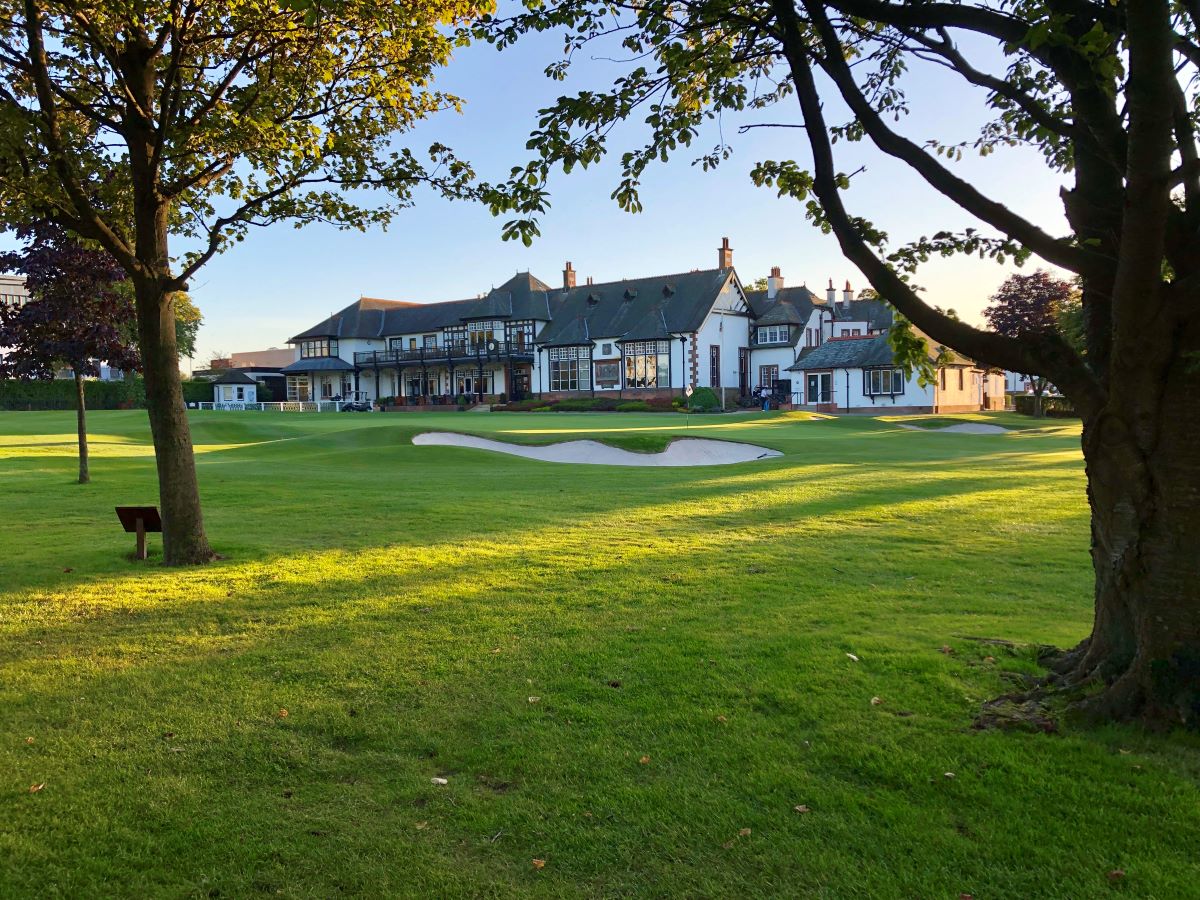
A South East golf trip can begin with one of the most historically significant clubs in the world: The Royal Burgess Golfing Society of Edinburgh.
The Society dates back to 1735 and is widely recognised as the world’s oldest golf club. Its history began at Bruntsfield Links before the club moved to Musselburgh in 1874 and eventually established its permanent home at Barnton in Edinburgh.
For a golfer, the significance of that history is immediately apparent. This is not simply a modern course carrying an historic name. The club has been part of Edinburgh’s golfing story for almost three centuries.
The present course was designed by Willie Park Jr, one of the great figures in golf-course architecture and a former Open Champion. Old Tom Morris surveyed the ground before construction and approved its suitability, famously concluding that the turf was so good there was no need to lay greens. The course opened in 1895. James Braid subsequently made important revisions, particularly to the fairways and greens.
The result is an elegant parkland course just a few miles from the centre of Edinburgh.
Tree-lined fairways, cleverly positioned bunkers and excellent greens make Royal Burgess a strategic test rather than simply a test of length.
The feature hole – 11th
The 11th is arguably the course’s most picturesque hole.
A downhill par four of around 348 yards, it requires the golfer to play over an open cundie, crossed by a beautiful stone bridge. The combination of elevation, mature trees and the bridge creates one of the course’s most memorable visual moments.
The long par fours at the 4th, 7th and 17th provide a sterner challenge, but the 11th captures much of what makes Royal Burgess special.
The clubhouse
The clubhouse is a major part of the Royal Burgess experience.
The late-Victorian Arts and Crafts building was completed in 1897 and is regarded as one of the club’s great treasures. It contains an impressive collection of golfing artefacts, trophies and memorabilia reflecting the Society’s extraordinary history.
Visitors can enjoy the dining facilities, bar and lounges, while the club also offers visitor locker facilities, professional services and a particularly welcoming hosted experience. Its Burgess Experience can include a clubhouse tour, visitor locker, refreshments, forecaddie and halfway-house stop.
The combination of golf, architecture and history makes Royal Burgess an ideal opening round for a South East trip.
BOOK NOW The Royal Burgess Golfing Society of Edinburgh
Royal Musselburgh – centuries of golf at Prestongrange
From Edinburgh, the next stop can be Royal Musselburgh Golf Club, another club with an extraordinary place in the history of the game.
The club traces its origins to the eighteenth century and is recognised as the fifth oldest golf club in the world. Its famous Old Club Cup, first played for in the eighteenth century, is regarded as the oldest golf trophy still being played for continuously.
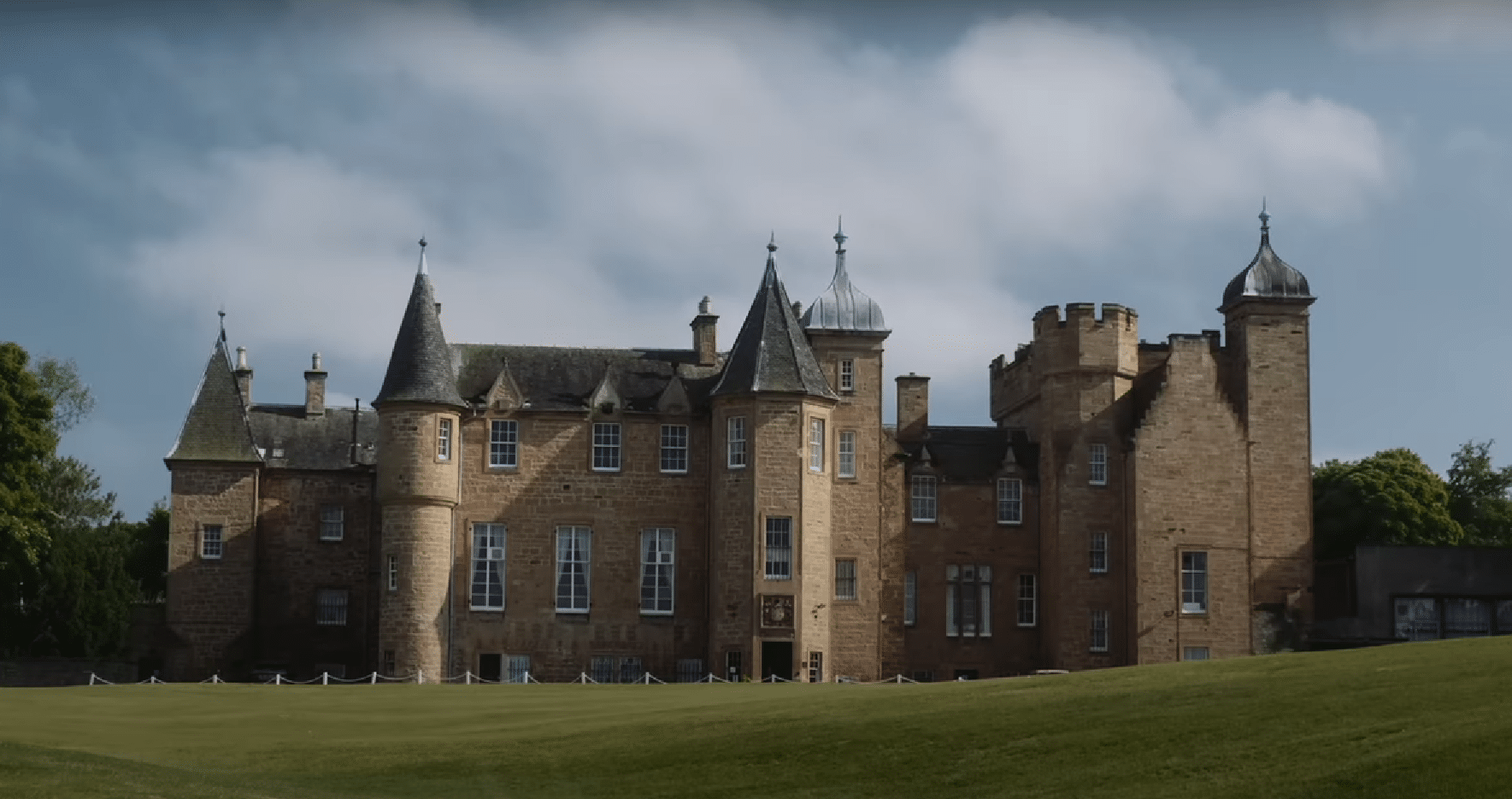
The club originally played at Musselburgh Links before moving to Prestongrange in the 1920s. The move provided the opportunity to create an 18-hole parkland course and make use of the magnificent Prestongrange House as the clubhouse.
The course was designed by James Braid, one of the greatest Scottish golf architects and a five-time Open Champion. Braid’s design provides a traditional parkland challenge but retains the influence of the nearby coast.
Later modifications were made by Fred Hawtree and Mungo Park, but Braid’s underlying character remains.
The feature hole
The course is full of interesting holes, but the 4th is particularly memorable.
A dogleg to the right, it is one of the more demanding early holes and requires careful positioning from the tee. The proximity of the historic clubhouse adds to the atmosphere, while the course increasingly becomes more demanding as the round progresses.
The contrast with the links courses further east is part of Royal Musselburgh’s appeal. Here the golfer experiences mature parkland rather than exposed coastal dunes.
Prestongrange House
The clubhouse itself is exceptional.
Prestongrange House is a historic mansion with origins going back to a much earlier building on the site. It has a long association with the Royal Musselburgh Golf Club and has housed the club since the 1920s. Historic Environment Scotland describes it as a fine example of a large baronial mansion developed from a late-sixteenth-century tower house.
For a visiting golfer, this creates an atmosphere that is difficult to reproduce. After playing a Braid course, you can walk into a historic Scottish mansion for lunch or a drink.
That is one of the great pleasures of a South East Scotland golf tour: the clubhouse can be almost as interesting as the course.
BOOK NOW Royal Musselburgh Golf Club
Dunbar – links golf beneath the Lammermuirs
Continue east and the character of the golf changes again.
Dunbar Golf Club occupies a spectacular stretch of coastline with the North Sea on one side and the Lammermuir Hills providing a backdrop inland.
Dunbar is a classic Scottish links and has hosted Open Championship Final Qualifying, demonstrating that its challenge is more than capable of standing alongside the region’s famous courses.
The course demands accuracy and imagination. The wind can transform the character of holes, while the natural links contours create numerous opportunities for running approaches and imaginative recovery shots.
Dunbar is particularly attractive for golfers who want a traditional links experience without necessarily playing only the biggest names.
Its location also makes it an ideal pairing with North Berwick, Gullane or Muirfield.
Kilspindie – small course, enormous character
If Dunbar offers championship-style links golf, Kilspindie Golf Club provides something altogether more intimate.
Situated beside Aberlady Bay, Kilspindie is one of those courses that visitors remember long after the round because of its individuality.
The course occupies a beautiful piece of coastal land close to Aberlady and its nature reserve.
It is not a course where golfers need to rely on brute strength. Instead, accuracy, imagination and the ability to cope with natural hazards are rewarded.
Kilspindie’s compact nature makes it particularly useful for a golf trip. It can provide an enjoyable round between larger championship courses, and its coastal setting delivers all the atmosphere golfers come to Scotland to experience.
It is also a reminder that one of the joys of East Lothian is discovering courses beyond the famous names.
Longniddry – golf with Edinburgh on the horizon
Another excellent option is Longniddry Golf Club, situated on the southern shore of the Firth of Forth.
Longniddry has the distinction of being the closest seaside course to Edinburgh, making it an obvious choice for golfers staying in the capital.
The course combines links characteristics with parkland elements, producing something different again from the pure links of Dunbar or North Berwick.
The views are an important part of the experience, with the Firth of Forth providing a constantly changing backdrop.
For golfers putting together a five- or six-round itinerary, Longniddry is an excellent option because it offers variety without requiring a long drive.
The Glen – North Berwick’s coastal gem
Just beyond North Berwick lies The Glen Golf Club, home to the East Links.
This is a course where scenery and architecture work together brilliantly. The layout combines traditional seaside links with holes played across headland terrain, producing elevated tees and dramatic views.
Visit East Lothian describes The Glen as a challenging combination of seaside links and headland holes.
The course is an excellent choice for golfers who want the character of North Berwick without necessarily playing the famous West Links.
The scenery alone is reason enough to visit. Looking across the Firth of Forth towards the coastline and islands provides the kind of backdrop that makes a Scottish golf trip memorable.
North Berwick West Links – golf’s living history
North Berwick is one of the essential stops.
The club was founded in 1832, and the West Links is among the world’s most historic golf courses.
This is golf played over natural ground rather than manufactured terrain. The fairways follow the contours of the land, with stone walls, burns, dunes and the coastline influencing the strategy.
The famous 13th, Pit, is perhaps the most recognisable example.
A stone wall runs across the hole, forcing golfers to think carefully about their tee shot. It is one of the great examples of a natural feature becoming an integral part of a golf hole.
North Berwick is also famous for the quality of its short holes and the way its routing continually changes direction.
It is a course where imagination matters.
Gullane – three courses and a mountain of golfing history
Gullane is effectively a golfing town.
Courses surround the village, and the elevated terrain provides spectacular views across the Firth of Forth towards Edinburgh and beyond.
Gullane No. 1 is the headline attraction, a championship links that has hosted major national and international events, including the Scottish Open.
But golfers should not overlook Gullane No. 2 and Gullane No. 3.
The three courses provide different levels of challenge and allow visitors to experience the same remarkable linksland from different perspectives.
Gullane’s elevation is particularly distinctive. Several holes play across higher ground, producing spectacular views and often creating unusual wind conditions.
For a golf group, Gullane is also an excellent base. The village is surrounded by accommodation, restaurants and pubs, while many of the region’s other courses are only a short drive away.
Muirfield – the ultimate championship experience
No South East Scotland golf article would be complete without Muirfield.
Home of The Honourable Company of Edinburgh Golfers, Muirfield is one of the world’s most celebrated championship courses.
The Honourable Company has records dating to 1744, making it one of the earliest recorded golf clubs in existence. The club moved from Musselburgh to Muirfield in 1891.
Muirfield has hosted the Open Championship on numerous occasions and remains one of the ultimate tests of championship golf.
The layout is famous for its unusual routing. The front nine and back nine essentially form two loops, producing a constantly changing direction of play.
That matters enormously because the wind rarely stays consistent.
Muirfield rewards strategic thinking. Positioning is crucial, and the golfer must continually consider how the next shot will be affected by the prevailing conditions.
It is precisely this combination of strategy, history and natural terrain that has made Muirfield one of the world’s great golfing venues.
For golfers fortunate enough to secure a tee time, it is likely to be the centrepiece of the trip.
Why the South East is so special
What makes this region different from many other golf destinations is not simply the quality of its headline courses.
It is the density and variety.
Within a relatively short drive, a golfer can play:
- Royal Burgess – historic parkland golf in Edinburgh.
- Royal Musselburgh – James Braid parkland golf beside a magnificent historic clubhouse.
- Dunbar – classic championship links.
- Kilspindie – intimate and characterful coastal golf.
- Longniddry – seaside golf close to Edinburgh.
- The Glen – dramatic headland and coastal golf.
- North Berwick West Links – one of the world’s great historic links.
- Gullane – championship golf with spectacular elevated views.
- Muirfield – one of the great Open Championship venues.
And these are only the courses specifically highlighted for this trip.
East Lothian has another remarkable collection of golf, including Musselburgh Links, Luffness New, Craigielaw, The Renaissance Club and other courses that can be incorporated into a longer itinerary. Visit East Lothian currently lists 21 courses across 18 golf clubs.
That means golfers can build the trip around their own preferences.
A group chasing championship golf can centre its itinerary around Muirfield, Gullane and North Berwick.
A group looking for history can combine Royal Burgess, Royal Musselburgh, North Berwick and Muirfield.
A mixed group can select some of the more accessible courses while still enjoying the scenery and atmosphere of the Golf Coast.
And for golfers who want to play six or seven rounds, the sheer number of nearby courses means there is no need to repeat a style of golf.
More than just golf
The South East also works brilliantly for a golf holiday because there is so much to do away from the courses.
Edinburgh provides world-class restaurants, history, architecture, whisky bars, shopping and cultural attractions.
East Lothian offers beaches, coastal walks, historic houses, castles, seafood restaurants and traditional pubs. Gullane and North Berwick are particularly attractive bases for golfers who want to stay close to the sea.
The region is also extremely well suited to travelling with non-golfers. While the golfer is on the course, partners can explore Edinburgh, visit attractions, walk along the coast or simply enjoy the local food and scenery.
That combination is increasingly important when planning a modern golf trip.
The perfect Scottish golf destination
The South East of Scotland offers something few golf destinations can match: extraordinary choice without sacrificing convenience.
You can begin your trip at the world’s oldest golf club, Royal Burgess, playing a Willie Park Jr-designed parkland course only minutes from Edinburgh Airport.
You can then experience the history and character of Royal Musselburgh, playing a James Braid course from the grounds of a historic Scottish mansion.
From there, the coast opens up.
Dunbar provides classic links golf. Kilspindie offers quirky coastal character. Longniddry combines seaside golf with proximity to Edinburgh. The Glen brings headland drama. North Berwick delivers centuries of golfing tradition. Gullane provides championship golf and spectacular views.
And then there is Muirfield.
Few places in the world allow golfers to experience such a concentration of historic and championship courses within such a small geographical area.
That is ultimately what makes the South East of Scotland such an appealing destination.
It is not just a golf trip. It is a journey through the history of the game.
So much choice, so much variety and such an extraordinary concentration of great courses make the South East of Scotland an ideal place to go for your next golf trip.