




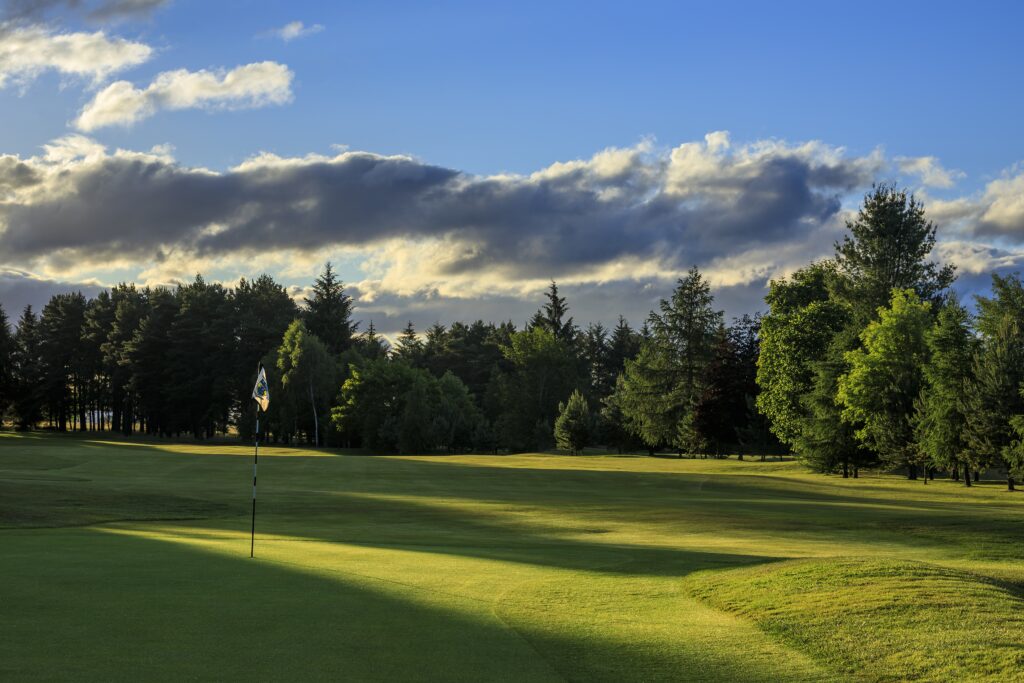
There are few places in Scotland where a golfer can experience such an extraordinary mixture of links, heathland, parkland and historic inland golf within one relatively compact area.
The Heartlands and Perthshire sit at the crossroads of some of Scotland’s finest golfing territory. To the east lie the celebrated links of Angus and Fife, while inland the landscape changes dramatically, with tree-lined courses, heathland fairways, mature woodland and the spectacular scenery of Perthshire. For the travelling golfer, it is this variety that makes the area so appealing.
A golf trip here can begin on the Fife coast at Dumbarnie, move north to the ancient links of Montrose, take in the traditional Medal Course at Monifieth, head inland to the superb Rosemount and Lansdowne courses at Blairgowrie and then test the parkland challenge of Downfield near Dundee. Add The Golf House Club at Elie and the possibilities become even more compelling.
The result is a destination where no two rounds need feel remotely alike.
Why the Heartlands & Perthshire are perfect for a golf trip
The great advantage of this part of Scotland is its location.
Dundee provides a natural base for the eastern side of the region, with Monifieth, Downfield, Montrose and Blairgowrie all readily accessible. Dundee Airport is particularly convenient for golfers, while Edinburgh Airport provides a much wider range of international connections. Edinburgh is Scotland’s busiest airport and currently serves more than 160 destinations, with direct transport connections to Fife, Dundee and Perth.
Dundee Airport is another option, particularly attractive for golfers arriving from London, with Loganair currently operating services to London Heathrow.
For international groups, Edinburgh will generally offer the greatest choice of flights. Glasgow Airport is also a practical alternative for Perthshire and the central belt.
Once on the ground, a hire car is recommended. The courses are close enough to make a multi-course itinerary straightforward, while the roads themselves provide some spectacular scenery.
And then there is the golf.
This is a region steeped in the history of the game. Montrose claims more than 460 years of golfing heritage, golf has been played at Monifieth since at least 1639, The Golf House Club at Elie traces its golfing rights back centuries, and Blairgowrie has links to some of the greatest architects in golf.
The area also offers modern golf at its very best, particularly at Dumbarnie, where Clive Clark has created a dramatic links designed around risk, reward and enjoyment.
For a golf group looking to combine famous courses with less obvious discoveries, it is almost impossible to run out of options.
Perthshire Golf Courses | Golf in Scotland | Where Golf Began
Dumbarnie Links – modern links golf with an old soul
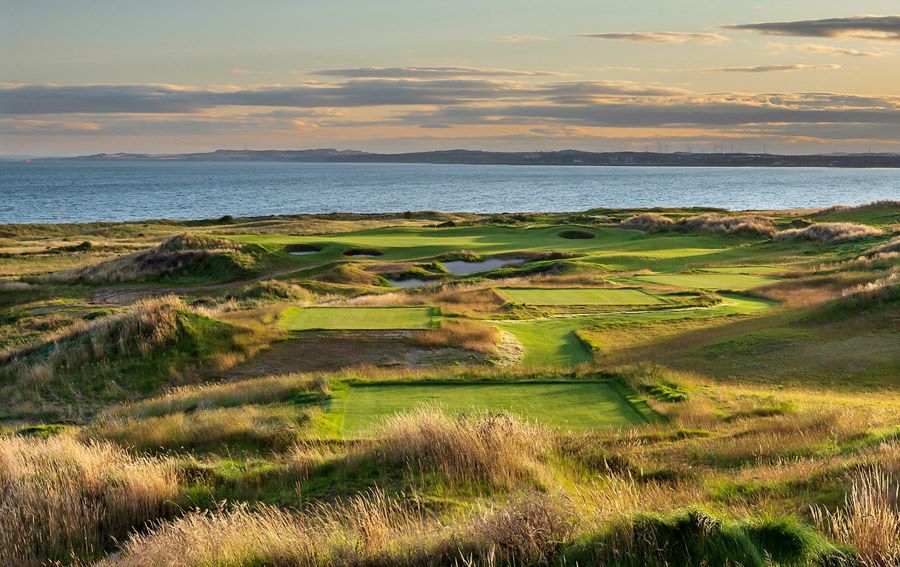
Dumbarnie is the new arrival among the courses featured here, but it already feels as though it belongs to the Fife coastline.
Situated on the southern coast of Fife overlooking the Firth of Forth, Dumbarnie opened in 2020 after an ambitious project transformed approximately 350 acres of land into a genuine modern links. The course was designed by former Ryder Cup player Clive Clark, who had long wanted to create a true Scottish links.
Clark’s philosophy is immediately apparent. Dumbarnie is designed to be challenging without being intimidating. Generous fairways, multiple teeing options and wide playing corridors allow golfers of different standards to enjoy the course, while the architecture continually presents opportunities to take risks.
There are huge dunes, fescue grasses, blow-out areas, pot bunkers and a stone wall that becomes one of the defining features of the course.
Several holes offer alternative routes, meaning that golfers must make decisions rather than simply execute predetermined shots.
The feature hole – 17th
The 17th is the hole everybody talks about.
It is a short, potentially drivable par four, but the direct route requires the golfer to carry an ancient stone wall and negotiate a collection of deep pot bunkers. Alternatively, the safer route to the left gives a straightforward approach to the green.
It is classic risk-and-reward golf.
In a match, the hole could easily decide the result. A birdie or eagle is available to the brave, but a big number is equally possible.
The 8th is another memorable hole, a short par three with water and dramatic views towards the Firth of Forth, while the 3rd is another tempting short par four.
Clubhouse and facilities
Dumbarnie’s clubhouse continues the modern character of the course while drawing inspiration from traditional Fife farm buildings.
It provides a restaurant, bar, golf shop and comfortable areas from which to enjoy the views across the course and coastline. The Old Barn restaurant focuses on fresh local produce, while the Wee Barn provides food and refreshments out on the course.
There is also a strong visitor experience, with caddies, practice facilities, equipment support and an emphasis on treating visiting golfers like members for the day.
Dumbarnie may be young, but it has quickly established itself as one of the most exciting modern links in Scotland.
BOOK NOW Home – Dumbarnie Links
Montrose Golf Links – more than four centuries of golf
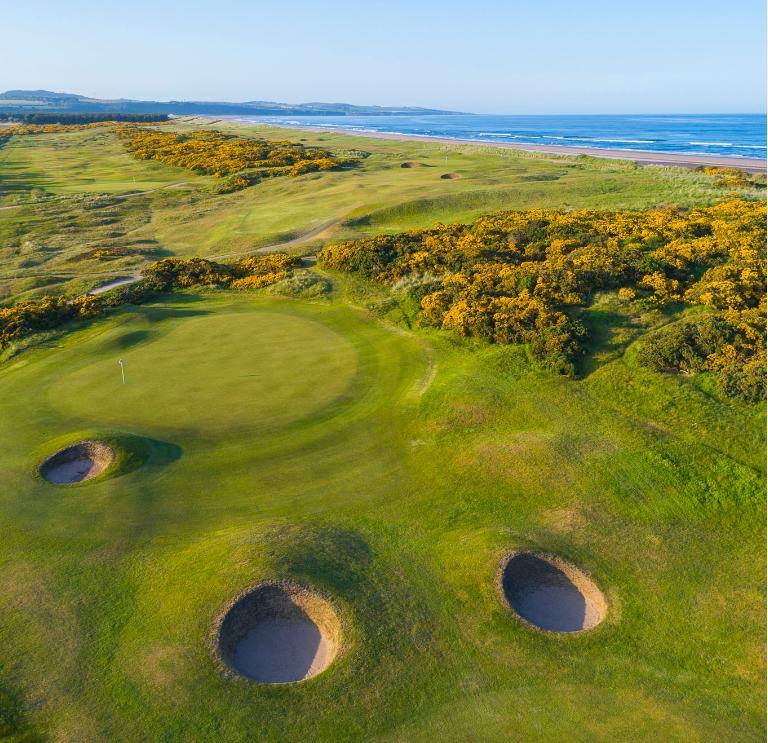
From the modern architecture of Dumbarnie, travel north and the golfing clock turns back dramatically.
Montrose Golf Links is one of the most historic golfing landscapes in the world. Golf has been played here since at least 1562, making Montrose the fifth-oldest recorded golfing site in the world according to the club.
The modern visitor can play two courses: the historic 1562 Championship Course and the shorter Broomfield Course.
The 1562 is the principal attraction. It has evolved through the work of several important architects, including Old Tom Morris, Willie Park Jr and Harry Colt, with Martin Hawtree later realigning the second hole in response to coastal erosion.
Willie Park Jr made important changes in 1903, while Colt’s work in the early twentieth century helped establish the character of the present course.
This is therefore not simply an old course. It is a living record of golf-course architecture.
A feature hole and the character of Montrose
Montrose is perhaps best appreciated as a collection of memorable holes rather than one single signature hole.
The course winds through dunes and natural links terrain, with fast greens, deep bunkers and constantly changing wind conditions. The proximity of the sea means that a calm-looking hole can become an entirely different proposition when the breeze strengthens.
The 1562 is around 6,500 yards and has the feel of a traditional championship links rather than a manufactured modern course.
The opening stretch is particularly evocative, while the holes that run close to the coast demonstrate why this piece of land has been treasured by golfers for generations.
Club history and clubhouse facilities
The history of the clubs associated with Montrose is almost as fascinating as the golf itself.
The first formal golf club was established in 1810, while the Royal Montrose Mercantile Golf Club is the modern successor to a number of historic clubs that played on the links. The present Royal Montrose clubhouse occupies the site of the club’s third major clubhouse.
Today visitors can use the two nearby clubhouses associated with Royal Montrose Mercantile and Montrose Caledonia, providing dining, changing facilities and bathrooms. The Links also has a professional shop and practice facilities.
For the travelling golfer, Montrose offers something quite special: the opportunity to play on ground that has been used for golf for more than four centuries.
BOOK NOW Montrose Golf Links | Unforgettable Golf Experiences in Scotland
Monifieth Golf Club – the Medal Course
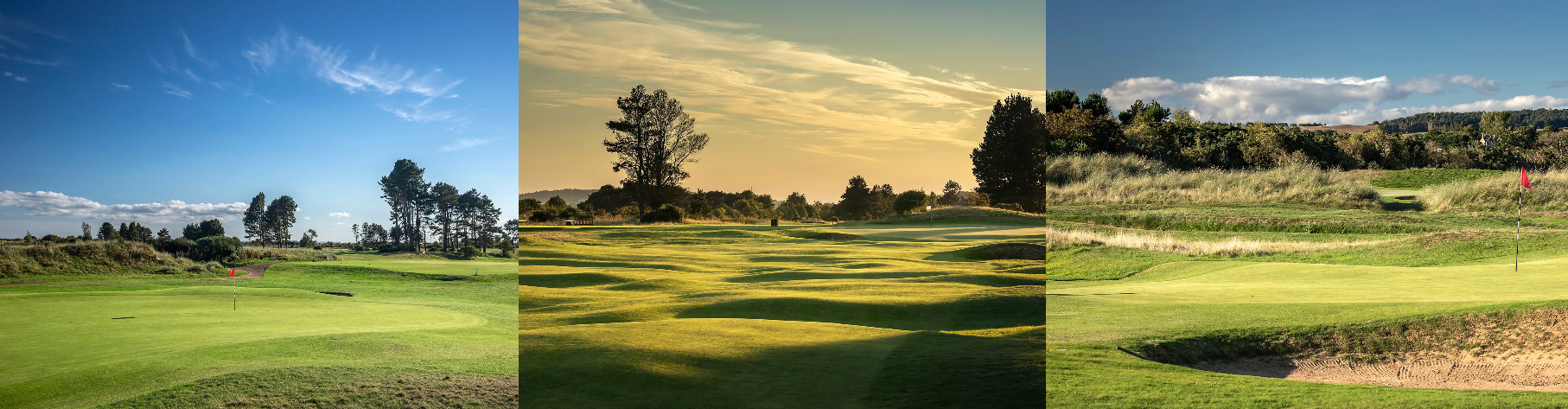
Continue south towards Dundee and you reach another historic links whose origins stretch back to the seventeenth century.
Golf was being played at Monifieth by 1639, when parish records recorded a local golfer being reprimanded for playing before Sunday church services. By 1845, a formal nine-hole course had been established, with Allan Robertson of St Andrews credited with laying out the original course.
Robertson was one of the most important figures in nineteenth-century golf. He was regarded as the greatest golfer of his era and is recognised as the world’s first professional golfer.
The Medal Course has subsequently evolved, including an expansion to 18 holes in 1880 and later modifications. Today it measures approximately 6,662 yards from the back tees and provides a traditional east-coast links challenge.
The feature hole – 15th, The Plantation
The 15th, The Plantation, is widely regarded as the signature hole.
The tee shot requires the golfer to favour the left side of a ridge. Miss to the right and a large tree complicates the approach. The hole illustrates what makes Monifieth so enjoyable: it does not need enormous length to demand intelligent golf.
The closing 18th, named after four-time Walker Cup player Ian Hutcheon, is another excellent risk-and-reward hole. A par five, it gives the big hitter the temptation to attack while offering the sensible player the opportunity to make a comfortable par.
Clubhouse and facilities
Monifieth is unusual because three clubs share the two courses.
Visitors have access to the Links Centre, a well-stocked professional shop, lockers and visitor facilities, while the two clubhouses provide showers, food and beverage facilities on a rotational basis. There are also putting and chipping areas, warm-up nets and a larger practice area nearby.
The history of Monifieth Golf Club itself dates from 1858, making it the oldest existing club still playing at Monifieth.
The course has also attracted elite golf. It has hosted Open qualifying and R&A championships, and in 2026 the Medal Course is hosting the Home Internationals.
For golfers staying in Dundee, Monifieth is almost impossible to overlook.
BOOK NOW Home – Monifieth Golf Links
Blairgowrie Golf Club – Rosemount and Lansdowne
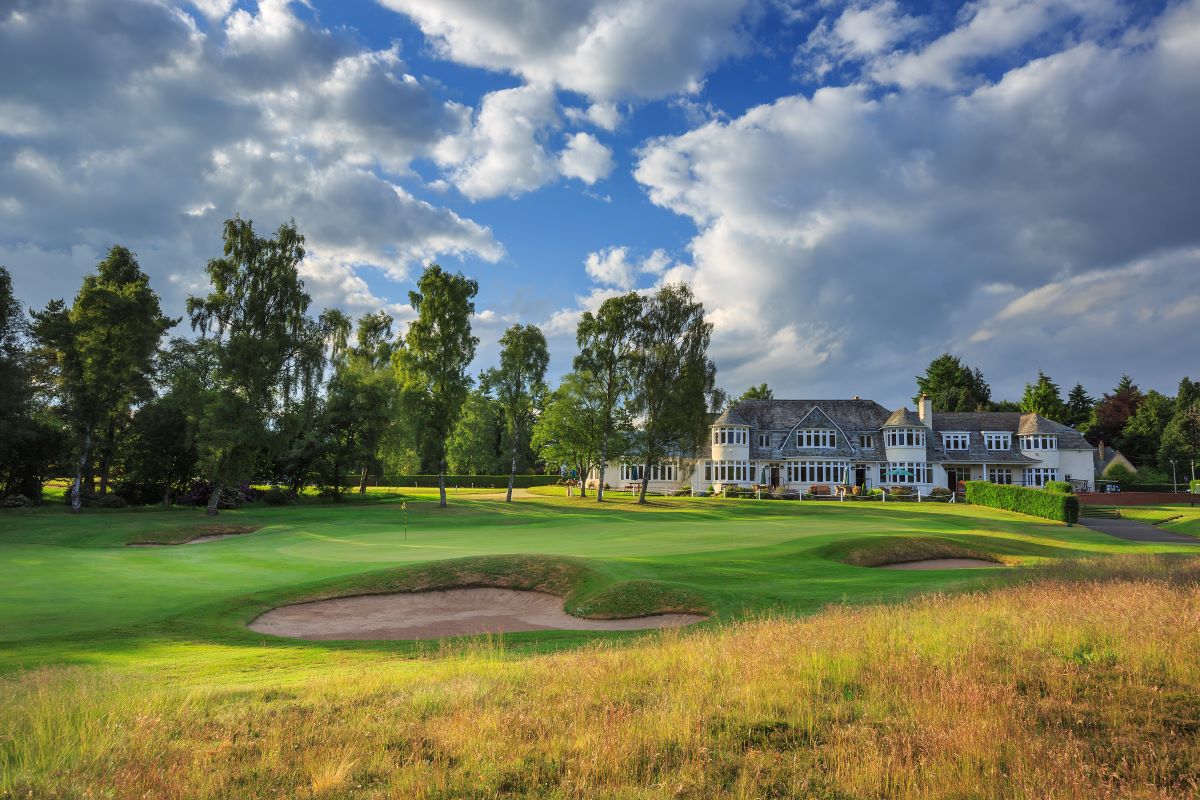
If the coast provides the traditional Scottish links experience, Blairgowrie demonstrates another side of Scottish golf.
Situated in Perthshire amid beautiful countryside and mature woodland, Blairgowrie Golf Club offers two championship courses – Rosemount and Lansdowne – together with the nine-hole Wee Course.
The club was founded in 1889, initially playing over a course beside the Black Loch on land belonging to the Dowager Marchioness of Lansdowne. That original course eventually became known as Lansdowne.
Rosemount has an extraordinary architectural pedigree.
Alister MacKenzie, later designer of Augusta National and Cypress Point, first designed an extension for Blairgowrie in 1914. The work was delayed by the First World War, but after the war MacKenzie returned and designed the 18-hole course that opened in 1927.
In 1930, James Braid was brought in to add eight holes and further refine the course.
Rosemount is therefore a fascinating meeting of two great architectural minds.
Lansdowne was later designed by Peter Alliss and Dave Thomas in the 1970s.
Rosemount’s feature hole – the 17th, Plateau
The 17th, Plateau, is one of the standout par threes in Scottish golf.
At approximately 160 yards, it looks manageable, but the two-tiered green makes distance control critical. Bunkers and run-off areas surround the putting surface, while finding the wrong level can easily result in three putts. The club itself describes it as one of Scotland’s top-rated par threes.
The Rosemount course is otherwise a wonderful mixture of mature trees, heathland-style terrain and strategic golf.
The Lansdowne provides a contrasting experience. Its design by Alliss and Thomas produces a more modern championship test, with demanding tee shots and well-positioned hazards.
Clubhouse
Blairgowrie’s clubhouse is an important part of the visitor experience.
The award-winning building includes a substantial bar, professional shop, reception and catering facilities, with views across the famous Rosemount landscape. Visitors can also use the club’s extensive practice facilities, including two practice areas, covered hitting bays, short-game facilities and a large putting green.
The club’s championship history is considerable. Rosemount has hosted the Martini International, won in 1977 by Greg Norman, as well as numerous national amateur and senior championships.
For golfers wanting a break from links golf, Blairgowrie is one of the strongest reasons to visit Perthshire.
Downfield Golf Club – a James Braid classic near Dundee
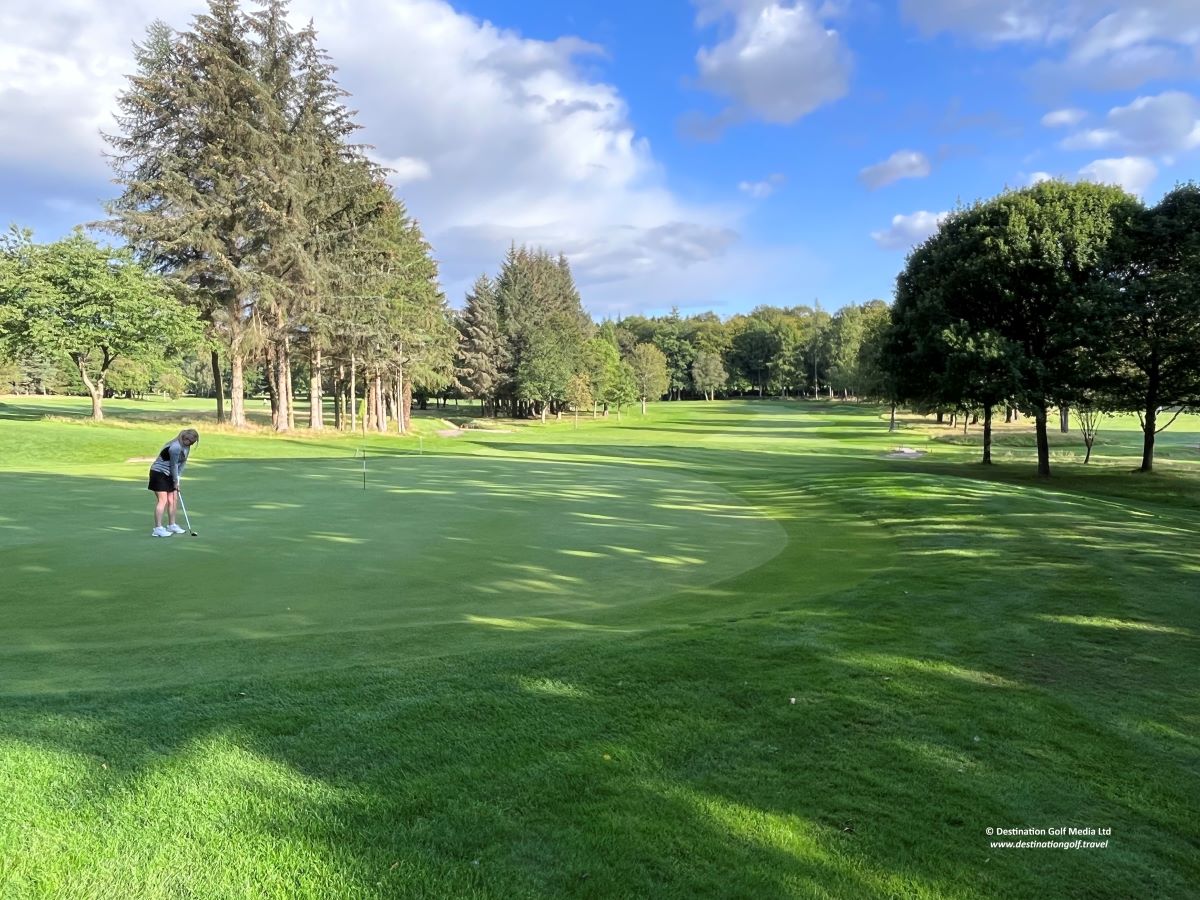
Just outside Dundee, Downfield Golf Club provides another welcome change of style.
This is classic Scottish parkland golf, with mature trees, water hazards and carefully shaped fairways. The course sits on the edge of Dundee and is less than 30 minutes from both St Andrews and Carnoustie, making it an excellent addition to an eastern Scotland golf itinerary.
The modern course opened in the 1930s and was designed by James Braid, one of the greatest course architects Scotland has produced. Downfield remains a proud member of the Association of James Braid Golf Courses.
The club’s earlier history is equally interesting. A nine-hole Baldovan course existed around the turn of the twentieth century, while the original Downfield Golf Club was established in 1895. After the First World War the land returned to agriculture, and the club was re-established in 1932 before eventually developing into the 18-hole course golfers see today.
A course with championship pedigree
Downfield has hosted some remarkable events.
The inaugural Scottish Open was played here in 1972, with Neil Coles winning after a sudden-death play-off. Peter Thomson, a five-time Open champion, subsequently described Downfield as one of the finest inland courses he had played.
In 1999, the club hosted Open qualifying and Paul Lawrie qualified here before going on to win the Open Championship at Carnoustie.
The course continues to host major events, including R&A and DP World Tour qualifying.
Clubhouse and facilities
Visitors are treated as members for the day, with access to the clubhouse, catering and practice facilities. The club has a driving range, putting and practice areas, a professional shop and a welcoming clubhouse environment.
With water in play on seven holes and mature trees shaping many of the fairways, Downfield is a course where accuracy matters.
It is also a perfect illustration of why the Heartlands are so attractive: you can play links golf on the coast one day and then be tackling a James Braid parkland course the next.
BOOK NOW Home – Downfield Golf Club
The Golf House Club, Elie – centuries of links tradition
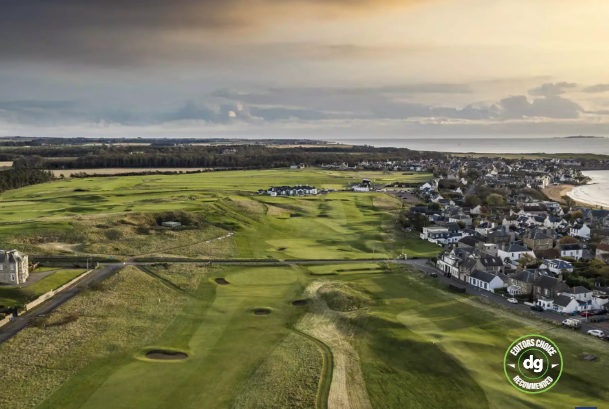
The final stop takes us across to Fife and one of Scotland’s most distinctive golfing experiences: The Golf House Club, Elie.
Located on the Fife coast in the East Neuk, Elie is approximately 20 minutes from St Andrews and less than an hour from Edinburgh.
Golf at Elie goes back centuries. The club’s heritage records golfing rights dating back to 1589, while organised golf was being played here by the nineteenth century. The Golf House Club itself was founded in 1875, taking its name from the clubhouse completed in 1877.
The course has evolved naturally, with contributions from several architects and generations of golfers. Most importantly, Elie was the home of James Braid, who learned his golf here before becoming a five-time Open Champion and one of the greatest course designers of all time.
The feature hole – 13th
If you ask about Elie’s most famous hole, the answer is almost certainly the 13th.
Braid himself called it “the finest in all the country.” The hole runs along the coast towards the dramatic Kincraig cliffs, with the green sitting on a raised shelf beside the natural landscape.
The 12th is also spectacular, with golfers able to challenge the coastline and shorten the hole by taking an aggressive line.
Elie is not a course that relies on length. It measures just over 6,200 yards and instead demands imagination, patience, accurate club selection and the ability to cope with an ever-changing coastal breeze.
Perhaps the most famous feature is not even a golf hole.
The starter’s hut features a submarine periscope, allowing the starter to check that the first fairway is clear before golfers tee off. It is one of the most wonderfully eccentric traditions in Scottish golf.
The clubhouse
The Golf House Club’s clubhouse was completed in 1877 and remains at the centre of the golfing experience.
It has been carefully modernised over the years, including a major refurbishment, but retains its traditional character. The clubhouse overlooks both the first tee and 18th green, while members and visitors have access to lounges, locker rooms, dining and hospitality facilities.
The building also reflects the club’s history, including original wooden lockers and memorials to members lost in the World Wars.
A round at Elie feels less like visiting a golf attraction and more like stepping into the living history of Scottish golf.
BOOK NOW Home :: The Golf House Club,Elie
The perfect golf trip – and why the Heartlands should be next
The great strength of Scotland’s Heartlands and Perthshire is that they refuse to fit into one golfing category.
Dumbarnie gives you a modern links with bold risk-and-reward architecture.
Montrose takes you back more than four centuries.
Monifieth provides traditional links golf with an extraordinary history and the legacy of Allan Robertson.
Blairgowrie offers the architectural brilliance of Alister MacKenzie and James Braid, together with the modern Lansdowne course designed by Peter Alliss and Dave Thomas.
Downfield introduces a completely different environment – mature parkland shaped by James Braid and tested at the highest level.
And Elie provides one of the most characterful seaside rounds in Scotland, complete with centuries of history and the remarkable legacy of James Braid.
That variety is the key.
A golfer could build a three-day trip around Monifieth, Downfield and Blairgowrie. A longer itinerary could add Montrose and Dumbarnie. A Fife extension could bring in Elie, St Andrews, Crail, Lundin Links and other East Neuk courses.
The geography makes it possible to create an itinerary that combines famous names with hidden gems, championship courses with enjoyable club courses, and links golf with inland parkland.
There is also plenty beyond the fairways. Dundee provides restaurants, culture and waterfront attractions, while Perthshire offers castles, rivers, mountains, whisky, country estates and some of Scotland’s finest scenery.
For groups, that makes the destination especially appealing. Golfers can play demanding championship courses while non-golfing partners have plenty to explore. And because so many of the courses are within manageable driving distance, a golf trip can be built around one base rather than constantly changing hotels.
A destination with something for every golfer
The Heartlands & Perthshire may not have the same single-minded golfing identity as St Andrews or the Ayrshire coast, but that is precisely their attraction.
Here, golf is not one experience. It is many.
It is the roar of the wind at Montrose.
It is a stone wall and nine pot bunkers at Dumbarnie’s 17th.
It is the ancient linksland at Monifieth.
It is the tree-lined fairways and Plateau green at Blairgowrie.
It is James Braid’s strategic thinking at Downfield.
And it is standing on the 13th tee at Elie, looking towards Kincraig and remembering that James Braid himself considered this one of the finest holes in Scotland.
For a golfer planning the next Scottish adventure, that combination is hard to resist.
So much choice, such a remarkable variety of courses and an extraordinary depth of golfing history make Scotland’s Heartlands & Perthshire an ideal destination for your next golf trip.