







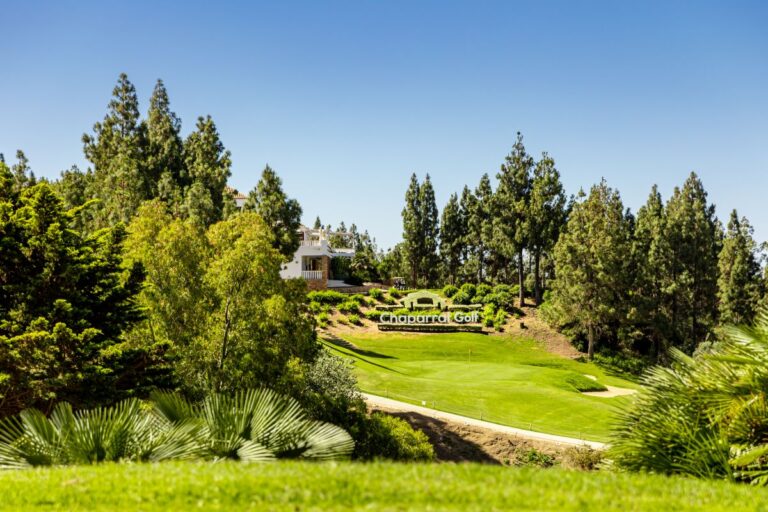
Chaparral Golf is celebrating its twentieth anniversary in 2026. Under the leadership of the Rubio family, this magnificent course, nestled in the Chaparral forest, was brought back to life following the vision of its original designer, Pepe Gancedo.
It took three years of intensive work to restore a course that had failed to overcome a deep crisis and had closed its doors in 1991. The drive and determination of Antonio Rubio, together with his family and an outstanding team of professionals, not only made this new chapter possible but have positioned the course as a benchmark on the Costa del Sol and among the most prominent at both national and international level.
Passion, effort, and learning define the story of Chaparral Golf. A story with all the elements of a great narrative, in which Antonio Rubio emerges as the protagonist after discovering – almost by chance – a project to which he would dedicate three years of work to bring it back to life.
Pepe Gancedo, a passionate golfer and artist – known as the “Picasso of Spanish golf” – had already proven his talent with designs both national and internationally. However, Chaparral was his most special project. In this unique setting, he had been able to fully express his creativity until the 1990’s crisis cut his work short, leaving unfinished business. When Antonio Rubio discovered the course after acquiring the land for other purposes, he decided that no one was better suited than Gancedo to restore it. For the designer, it was an opportunity to bring his “baby” back to life.
Granada-born entrepreneur Antonio Rubio suddenly found himself facing an unexpected challenge. After his ventures in construction, the acquisition of this land, located between Calaburra lighthouse and Mijas, introduced him to the, until then unknown, world of golf: “There was only a farmhouse-style clubhouse, almost in ruins. There were pine trees and forest, but no sign of a golf course. We faced every possible problem and more to build it. But the thought that we could make it a reality was an enormous motivation.”
Gancedo quickly got to work with a very clear vision of what the course should be. He assembled his own team and, alongside professionals such as greenkeeper Manolo Pantoja, managed to fully engage everyone in the project.
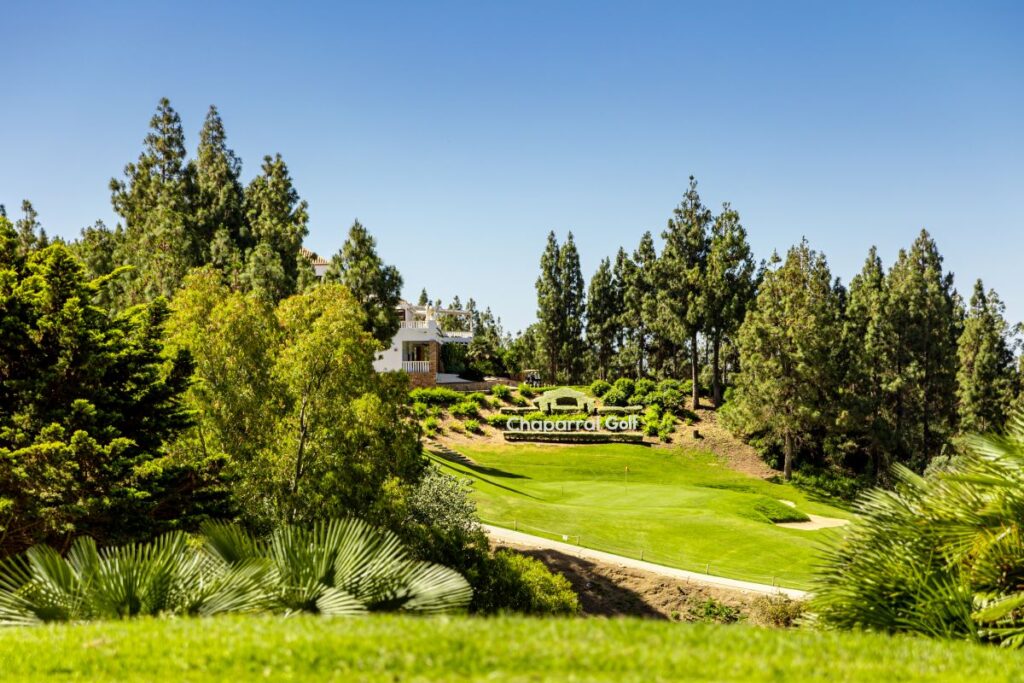
The result was a design true to his style: a strategic and balanced course, perfectly integrated into unique vegetation and framed by spectacular views where forest meets the Mediterranean. A demanding yet fair layout that retains the essence Gancedo himself highlighted upon its revival: “This is a fabulous golf course.”
On February 28, 2006, Chaparral Golf was ready for its reopening. It was then that Antonio Rubio and his family saw the final result for the first time. Their reaction reflected satisfaction with the work accomplished and facilities that exceeded all expectations. A new challenge then began: putting it into operation. The people behind the project were key in this new stage. For this reason, Antonio chose to surround himself with experienced golf management professionals, including Domingo Gavira, the current General Manager, who recalls his arrival: “The first time I came to Chaparral was a striking experience. I was impressed by the surroundings, the atmosphere, and that pine forest by the sea. I felt an immediate connection, as if it were my life project.”
Domingo and the Chaparral team have maximized the course’s potential, placing it among the top 25 in Spain and strengthening its international projection.
“We have consolidated a demanding yet accessible course, capable of challenging experienced players while remaining enjoyable for all levels. This balance, built on a long-term strategic vision, has been key to positioning Chaparral Golf as a benchmark of quality and excellence.”
A commitment to innovation and development has also been essential. With services such as a clubmaker, fitting center, and advanced technology like TrackMan and Toptracer, the club continues to grow without losing its essence.
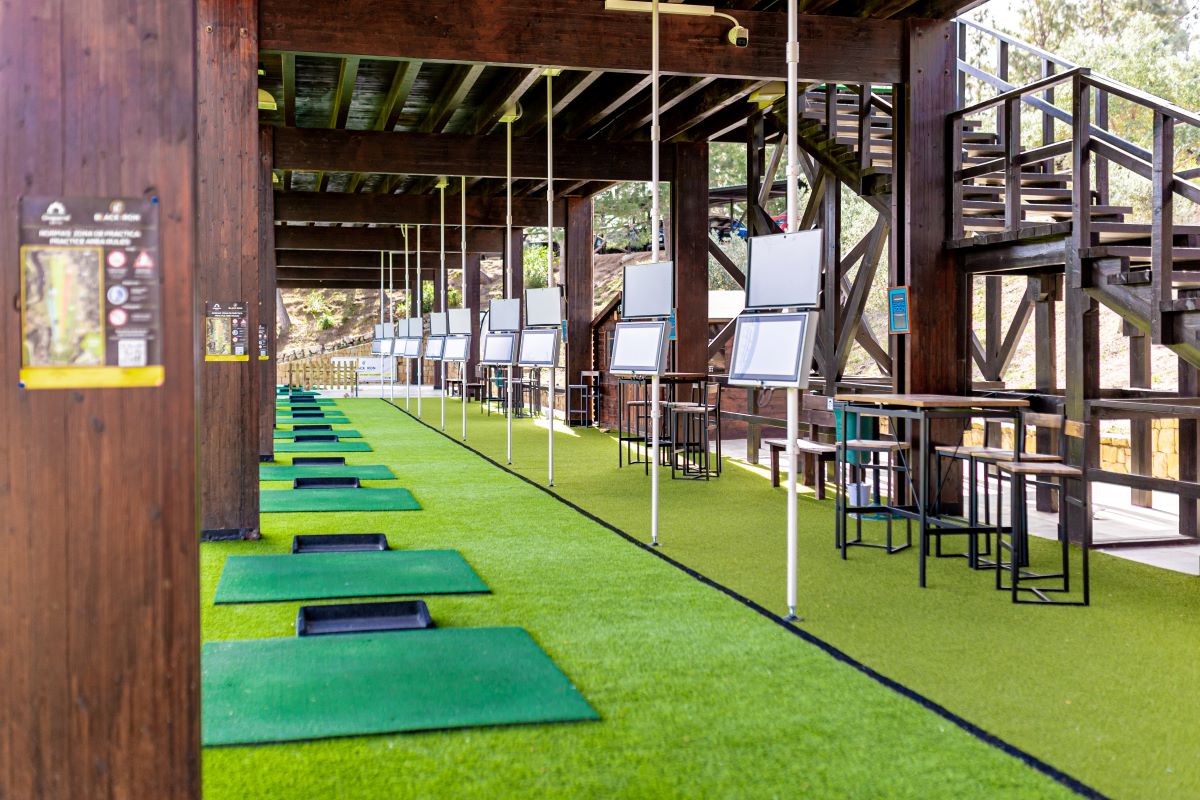
“We want to offer golf at all levels and remain a meeting point,” Gavira emphasizes.
Twenty years later, Antonio Rubio reflects on the journey: “It is probably the most beautiful project of my life and the one I am most proud of, having achieved it alongside my family.”
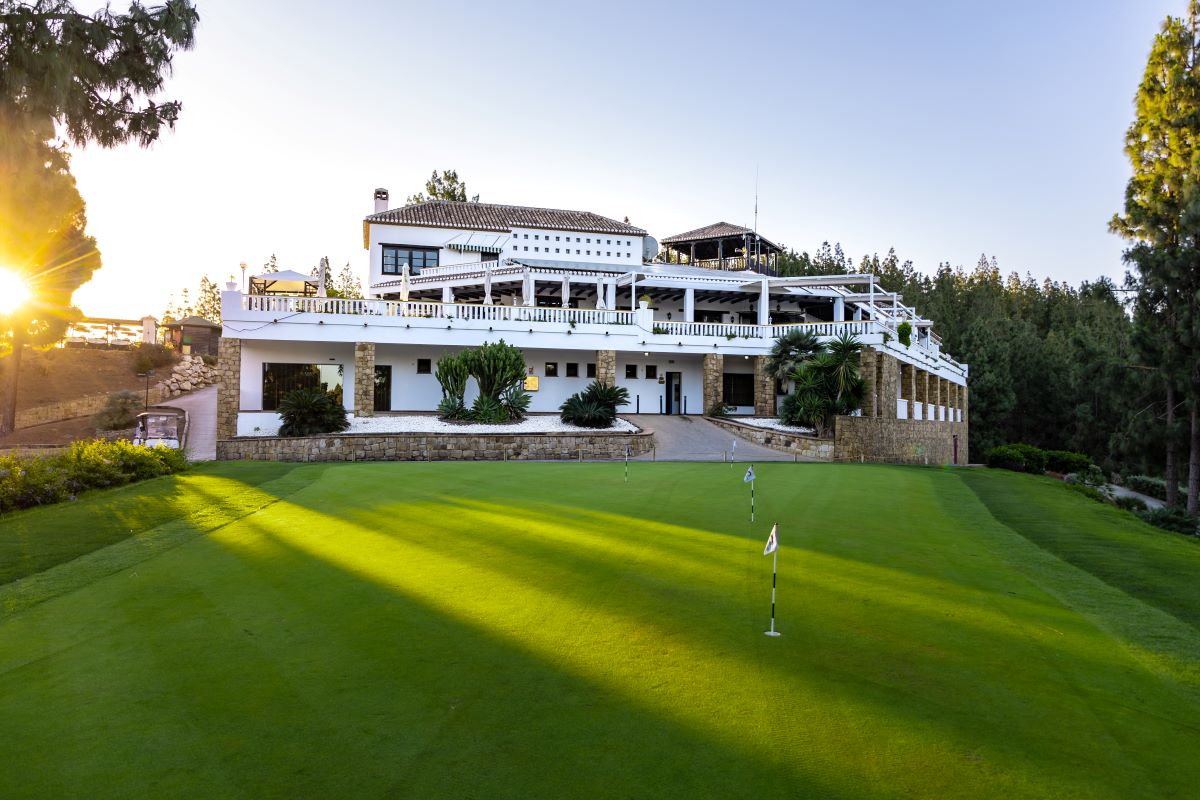
Located in a privileged natural setting, Chaparral Golf is now much more than a course. Its landscape, climate, and tranquility make playing golf a unique experience. At its heart stands a clubhouse that was once an abandoned farmhouse and is now a meeting place for golf lovers.
Looking ahead, Chaparral Golf enters a new phase defined by investment, sustainability, and continuous improvement. The club is developing several projects aimed at further raising standards of quality and course maintenance, as well as enhancing the player experience. Infrastructure modernization, optimization of irrigation and energy efficiency systems, expansion of practice areas, and the incorporation of new technologies for game analysis and enjoyment are all part of a strategic plan already underway. As General Manager Domingo Gavira explains: “We are implementing improvements that will ensure players enjoy an even more refined, modern, and excellence-driven Chaparral.” With this vision, the club moves forward with determination to consolidate its position as a benchmark for contemporary golf on the Costa del Sol.
INTERVIEW Q&A: DOMINGO GAVIRA – CHAPARRAL GOLF CLUB

In this edition, Destination Golf sits down with General Manager Domingo Gavira of Chaparral Golf Club to discuss his journey in the game, the evolution of one of the Costa del Sol’s most distinctive courses, and the challenges and triumphs behind running a leading golf destination. From course investment and guest experience to the future of golf tourism in southern Spain, Gavira shares an inside look at what it takes to keep Chaparral thriving in a highly competitive market.
Q: Every golf person has a starting point, where did your journey in golf begin, and what first sparked your passion for the game?
Domingo: Like many people in Spain, my introduction to golf came through working life rather than childhood. I started in the industry at a young age, and what struck me immediately was the unique combination of nature, sport, and human connection. Golf is not just a game—it’s an environment. That’s what drew me in and kept me here.
Q: Did you always see yourself working in golf management, or did your career take a few unexpected turns along the way?
Domingo: It was definitely a journey rather than a straight line. You start by learning operations, understanding the customer, the course, the team. Over time, you realise that managing a golf club is about bringing all of those elements together. I didn’t begin with the idea of becoming a General Manager, but the industry gives you opportunities if you are willing to grow with it.
Q: Running a golf club is equal parts hospitality, agronomy, business and people management. What have been the biggest lessons the role has taught you?
Domingo: Balance is everything. You can have a beautiful course, but if the service is not right, the experience is incomplete. Equally, great service cannot compensate for poor conditioning. The biggest lesson is that consistency across all areas is what builds a reputation. And of course, your team is at the centre of everything.
Q: What has been the toughest challenge you’ve faced at Chaparral, and what did that experience teach you about leadership?
Domingo: The most challenging periods are always those that involve change—whether that’s investment, restructuring, or external factors affecting tourism. Leadership in those moments is about clarity and communication. People need to understand the direction and feel confident in it. Transparency builds trust.
Q: Looking back, is there a defining moment in your time here, perhaps a difficult one or a breakthrough, that helped shape the club’s direction?
Domingo: The period around COVID was certainly a defining moment for us. The restrictions forced us to close and then gradually reopen under very challenging conditions. It wasn’t just about restarting operations. We had to adapt quickly, implement new protocols, and at the same time maintain the standards people expect from Chaparral. There were moments of real uncertainty, particularly in terms of tourism and international travel, which are so important for us.
But that period also strengthened the club. It brought the team closer together and reinforced the importance of resilience and adaptability.
Q: Chaparral celebrates its 20th Anniversary in 2026. How has Chaparral evolved over the years and what special occasions are planned?
Domingo: Chaparral has evolved from being a well-known local course into an established international destination. The focus has been on continuous improvement—both on the course and in the overall experience. For the 20th anniversary, we are planning a series of events that celebrate our history, our members, partners and our visitors. It’s a moment to reflect, but also to look forward.
Q: Course conditioning has become such a key talking point for travelling golfers. How much pride do you take in presenting the course day to day and what investments have been made by owners to ensure that the course is always presented in top condition?
Domingo: It is one of our biggest priorities. Conditioning is the first thing a golfer notices, and it reflects the standards of the club. The ownership has been very committed in this area, investing in maintenance, machinery, and our greenkeeping team. It’s a daily effort, and we take great pride in it.
Q: If you were standing on the first tee with someone playing Chaparral for the very first time, what would you tell them to expect from the round ahead?
Domingo: I would tell them to enjoy the experience and to stay focused. Chaparral is not a course where you can switch off, it challenges you on every shot. But at the same time, it rewards good decisions and precision. And of course, to take in the surroundings. It’s a very special setting.
Q: Every great course has a few signature moments. Are there particular holes at Chaparral Golf Club that you feel define its character?
Domingo: There are several, but what really defines Chaparral is the variety and the way the course interacts with the natural environment. Each hole asks a different question, which keeps the round interesting from start to finish. If I had to highlight one truly signature moment, it would be the 8th hole. It features the iconic tree in the middle of the fairway, the chaparro, which actually gives the club its name. It’s a very visual and strategic hole. From the tee, you immediately have to make a decision: how much you want to challenge it and how you want to shape your shot around it. It’s a perfect example of what Chaparral is about: strategy, character, and a strong connection to nature.
Q: The Costa del Sol is one of Europe’s great golf destinations. What do you believe sets Chaparral apart in such a competitive market?
Domingo: Our identity. We are a parkland course by the sea, which is quite unique. The layout, the tranquillity, and the atmosphere create a different experience. We focus on quality, but also on making every guest feel welcome and valued.
Q: Golf tourism continues to evolve. What “golf experiences” are today’s golfers looking for that perhaps they weren’t demanding ten years ago?
Domingo: Today’s golfers are looking for more than just a round of golf. They want a complete experience, quality facilities, good gastronomy, efficient service, and a memorable environment. Attention to detail is more important than ever.
Q: Are there any memorable stories from your days in golf management, good or bad, involving guests, tournaments, weather, or unexpected moments that still make you smile?
Domingo: There are many. Golf always brings unexpected moments, weather changes, incredible shots, or situations you cannot predict. One that stands out recently is Manu Morugán, who set the course record with a 63 (-9) during the Andalucía Golf Tournament last year. What makes it even more special is that he broke his own previous record. Performances like that are always memorable because they showcase the very best of the course and the level of golf we can host here at Chaparral. But beyond records, what stays with you are the positive experiences – when guests leave happy, having enjoyed both the course and the atmosphere, and want to return. That is always the best story.
Q: Why do you think golfers from the UK, Ireland and Europe continue to have such a strong affinity with golf in southern Spain?
Domingo:
It’s a combination of climate, accessibility, and quality. The Costa del Sol offers consistency; you can plan a trip with confidence. And there is a long tradition of welcoming international golfers, which creates loyalty.
Q: For someone planning a golf trip to the region, why should Chaparral Golf Club be on their itinerary? Give us your pitch.
Domingo: Because it offers something different. Chaparral is a course that challenges you but also allows you to enjoy the surroundings and the atmosphere. It’s a complete experience from the first tee to the clubhouse. If you are visiting the Costa del Sol, it’s a course you should not miss.
Q: Finally, what still excites you most about coming to work at a golf course every day?
Domingo: No two days are the same. You are working in a natural environment, with people from all over the world, and always striving to improve. That combination keeps it interesting and motivating.
BOOK NOW – www.golfelchaparral.com