





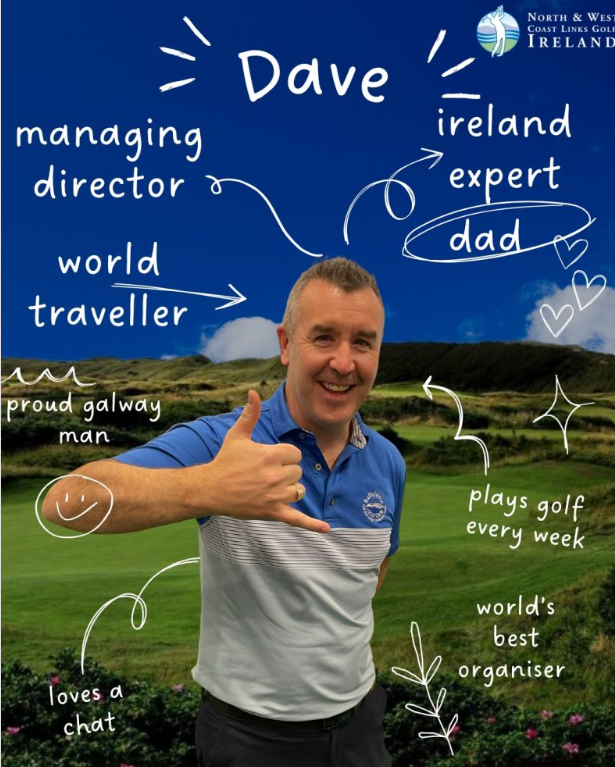
Ireland has become one of the world’s great golf destinations, but creating a memorable Irish golf trip involves far more than simply booking a tee time. We caught up with Dave Wensley, Managing Director of North and West Coast Links DMC & Tour Operator, to talk about his journey into the industry, the evolution of the company, what continues to draw golfers to Ireland, and the secrets to getting the most from a golf trip around the Emerald Isle.
DG: Dave, firstly congratulations on being nominated for an award with the World Golf Awards this year. Can you start by telling us a little bit about that and how golfers can vote for you?
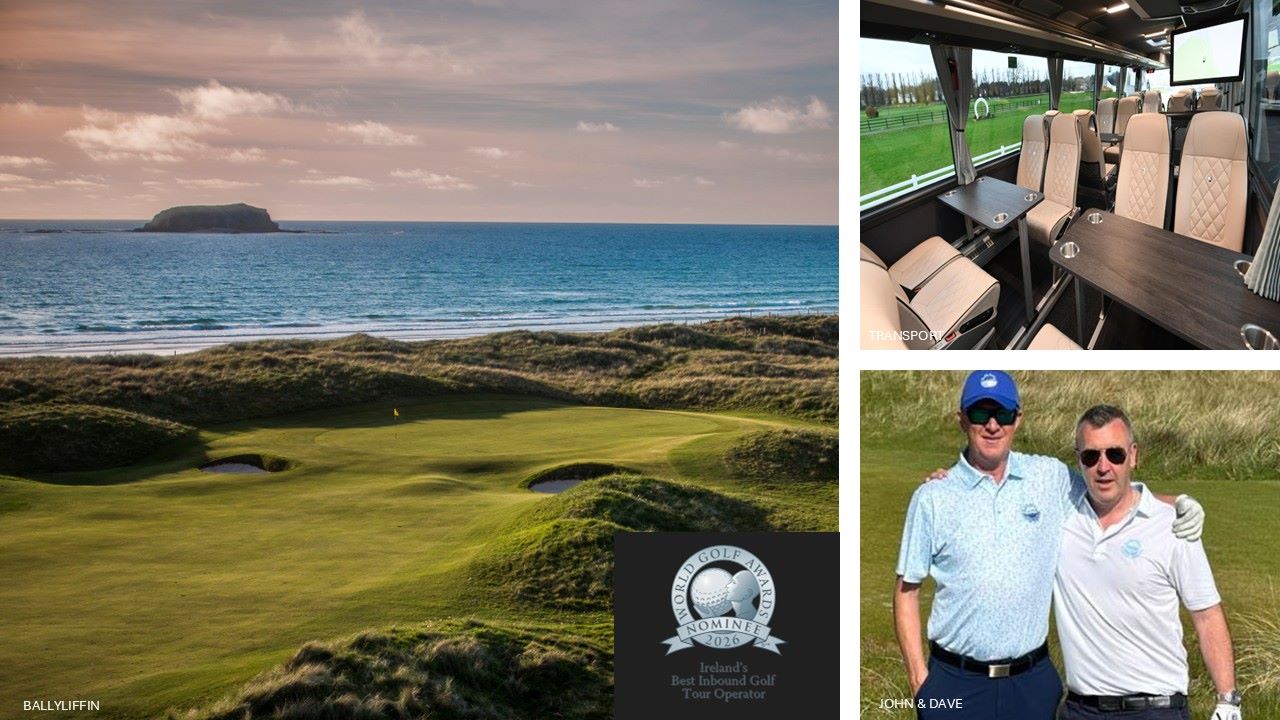
DW: Thank you. We’re absolutely delighted to have been nominated for Ireland’s Best Inbound Golf Tour Operator 2026 at the World Golf Awards. It’s a huge honour, particularly because the nomination recognises not just our team, but the courses, hotels and partners we work with right across Ireland.
We’ve spent many years trying to convince golfers around the world that Ireland is worth the long flight, the unpredictable weather and the occasional ball disappearing into the Atlantic, so it’s great to get some recognition for that.
The voting is open to golfers and golf travellers, and it takes about a minute. If anyone reading this has travelled with us, or simply likes the idea of supporting Irish golf, we’d be hugely grateful for their vote.
DG: Okay, let’s start at the beginning. How did you find yourself in the golf travel business, was it something you deliberately pursued, or did you fall into golf and the industry?
DW: I’d love to tell you there was a five-year masterplan and that I carefully mapped out my career in golf travel, but the reality is probably a little less glamorous.
I fell into it, really. I was fortunate enough to get involved with North & West Coast Links and quickly realised that golf travel is a fantastic industry to work in. You’re dealing with golfers from all over the world, showcasing Ireland, travelling to some of the best courses in the country and, importantly, spending a lot of time talking about golf.
What I discovered fairly quickly is that the golf is actually only one part of the job. You’re arranging accommodation, transport, tee times, restaurants, caddies, luggage, timings and about 100 other things that the golfer never realises are happening behind the scenes. When it all works perfectly, it looks easy. When it doesn’t, that’s when it gets exciting!
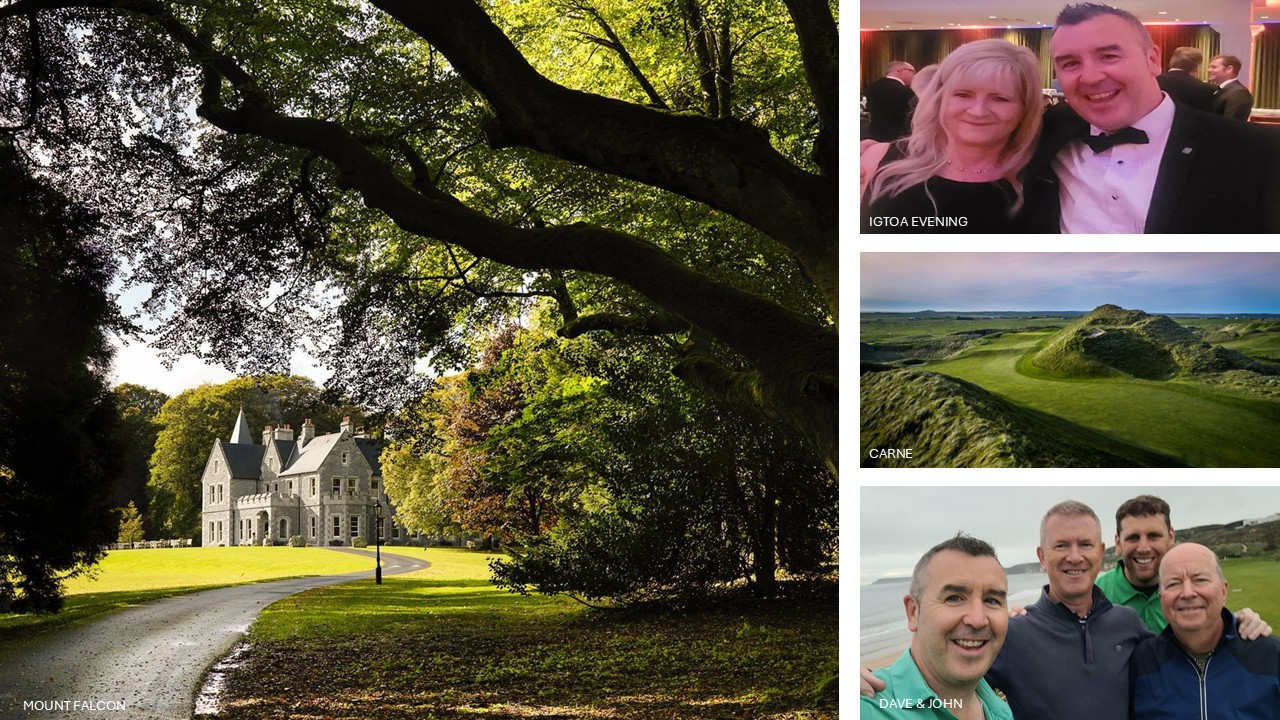
DG: You’ve had a front-row seat as North and West Coast Links has grown. When you look back at the early days, what has changed the most, and what has stayed exactly the same?
DW: The scale has certainly changed. The international interest in Irish golf is enormous now, and golfers are far more knowledgeable about the courses than they were 15 or 20 years ago. You can have someone sitting in North Carolina who knows the 5th hole at Carne better than I do.
Technology has obviously transformed the business too. Communication is instant, golfers research everything online and expectations are higher.
But the fundamentals haven’t changed at all. People still want great golf, good accommodation, reliable transport and, above everything else, someone they can trust.
And I think that’s one of the reasons North & West Coast Links has lasted. We’ve always understood that we’re not just selling a tee time. We’re helping create a trip that people may have been dreaming about for years. We always encourage people to look at our Google Reviews to get a taste for what we offer, and how we manage it.
DG: What do you think has been the biggest driver behind the company’s growth? Is it the golf, the service, the relationships, or a combination of all three?
DW: It’s definitely a combination, but if I had to pick one, I’d say relationships.
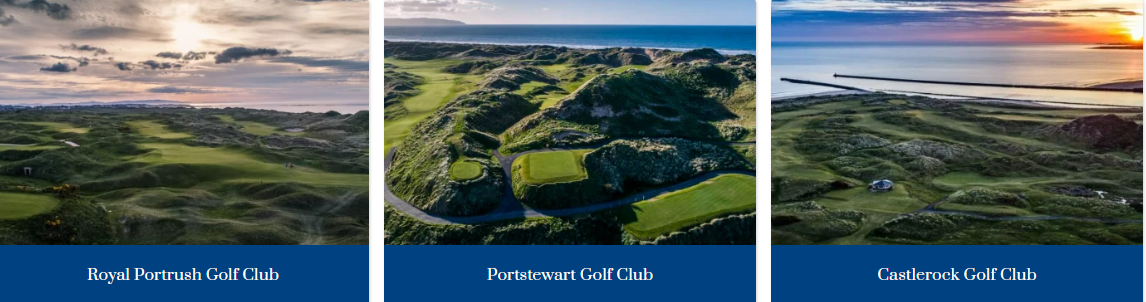
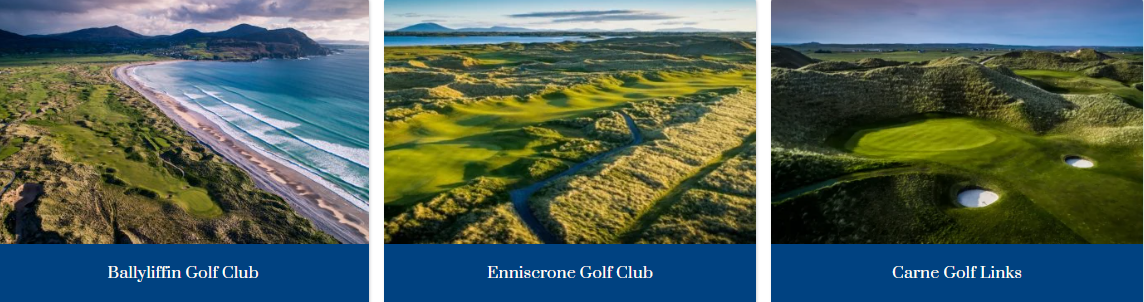
The golf gets people here, but the people, the hospitality and the 19th Hole ‘craic’ is what brings them back, year after year.. We’re incredibly fortunate to have courses like Royal Portrush, Portstewart, Ballyliffin, Carne, Enniscrone, Connemara and so many others on our doorstep.
But great golf is available in lots of parts of the world. What makes a golf trip really work is the people behind it — the relationships with the clubs, hotels, drivers, restaurants and, most importantly, the customers.
A golfer might book one trip with you because of a particular course. They come back because of the experience. And hopefully they bring eight of their mates with them the next time!
That repeat business and word-of-mouth recommendation is incredibly important to us.
DG: You deal with golfers from all over the world. Have you noticed a change in what today’s travelling golfer is looking for compared with ten or fifteen years ago?
DW: Absolutely. The modern golfer is much more informed and, in many ways, much more demanding, although I mean that in a positive way they know what they want!
They’re looking for more than just four or five rounds of golf. They want a genuine experience. They want great hotels, good food, interesting places to visit and time to actually enjoy where they are.
We’re also seeing much more demand for tailor-made trips and smaller groups rather than simply taking a standard package off the shelf.
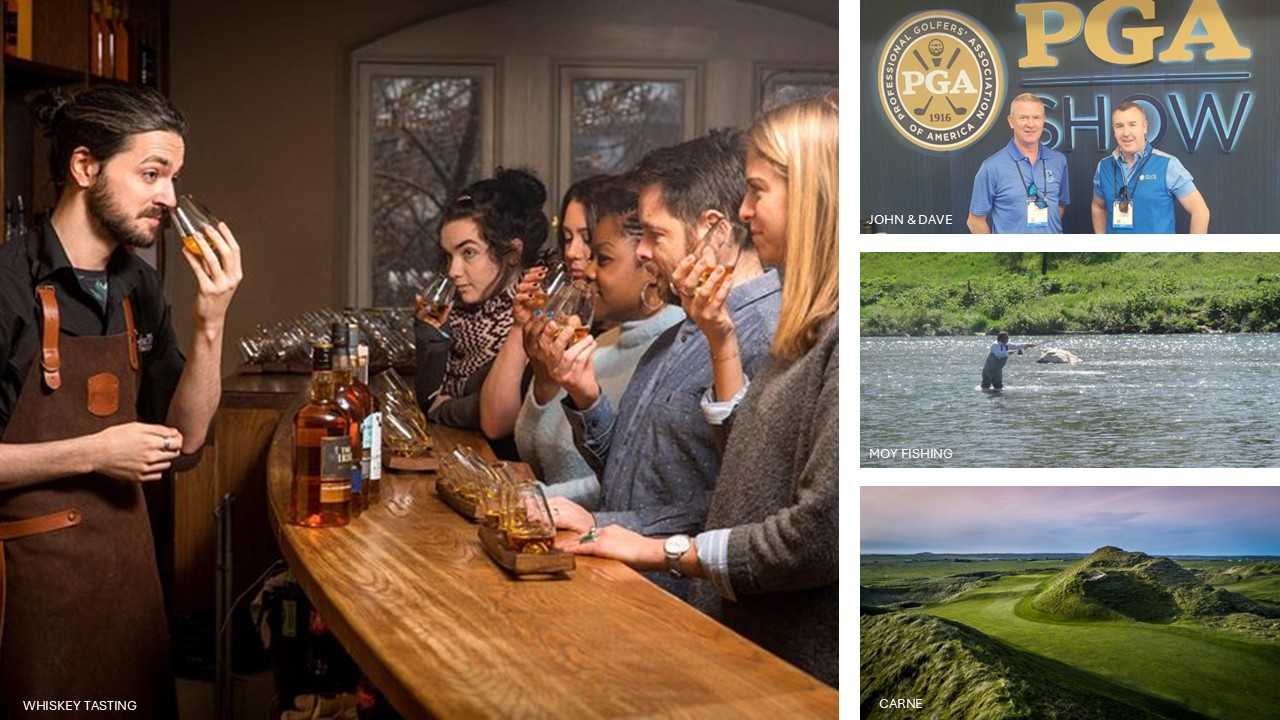
There’s also a greater willingness to mix things up. We’ve put together trips involving golf and fishing, whiskey, food, sightseeing and other experiences. The idea that you have to play golf from breakfast until dinner every day is slowly disappearing.
Although I suspect there are still a few groups out there who would happily play 36 holes a day, but that can be exhausting. We encourage groups to play 18 or 27 max, and enjoy a day off in between the rounds.
DG: Let’s talk about Ireland. Everyone knows about the famous names, but what do you think Ireland offers that golfers simply can’t replicate elsewhere?
DW: It’s the combination.
Ireland has some of the best links courses in the world, but you also have the landscape, the history, the people, the pubs, the food and that very particular Irish welcome.
You can play a world-class links course in the morning, drive through scenery that looks like it belongs in a film, stop in a little village for lunch, have a pint beside a fire that evening and genuinely feel like you’ve experienced something rather than simply played another round of golf.
And there’s an authenticity to it. You don’t have to manufacture the experience. It’s just there.
That’s very difficult to replicate.
DG: There’s something very raw and unpredictable about Irish links golf. Is that part of the attraction, that you never quite know what the course or the weather is going to throw at you?
DW: Absolutely — although I think that answer depends on whether you’re playing or standing in the clubhouse!
That unpredictability is a huge part of the attraction. Links golf is supposed to be played in the elements. Wind changes everything, the ground changes, the weather changes and suddenly the shot you hit yesterday is completely different today.
You can stand on a tee looking at a hole you thought you understood and then the Atlantic decides it has other plans.
I always tell golfers not to come to Ireland expecting perfect weather. Come expecting an adventure. If the sun shines for four days, fantastic. If it blows a hoolie on the third day, embrace it. You’ll probably remember that round for longer anyway.
DG: If you took a golfer who had never visited Ireland before and wanted to show them what makes the country special, where would you take them?
DW: That’s a dangerous question because I could give you about 15 different answers!
But if I wanted to give someone a real taste of Ireland, I’d probably head west and north. I’d want them to experience the Wild Atlantic coast, play some genuinely spectacular links and stay in places where they can experience Irish hospitality rather than simply moving from golf course to golf course.
Something like Connemara, Carne or Enniscrone, moving north towards Donegal and Ballyliffin, and then into the north-west and Northern Ireland.
And I’d absolutely make sure there was time built into the itinerary for a proper Irish evening. A great pint, some music, a good dinner and a few stories from the locals.
Otherwise they’ve just played golf in Ireland. I want them to experience Ireland and everything else that we have to offer.
DG: Ireland has some of the world’s best-known links, but are there any under-the-radar courses or areas that you find yourself championing again and again?
DW: This is where people in the golf business get themselves into trouble, because once you start naming hidden gems they stop being hidden!
I’m a huge advocate for the west and north-west. Courses like Carne and Enniscrone deserve far more recognition than they sometimes get internationally. Strandhill is another one that I think can genuinely surprise people — spectacular scenery, superb condition and a feeling that you’ve discovered somewhere special.
And that’s probably the key. Some of these courses aren’t just about the quality of the golf. They’re about the scenery.
You can play somewhere that hasn’t been on your radar, walk off the 18th and think, “How on earth did I not know about this?”
DG: What’s the most common mistake golfers make when planning an Irish golf trip?
DW: Trying to do too much.
Golfers see a map of Ireland and think, “That doesn’t look too far.”
Then they discover that a 120-mile drive can involve narrow roads, tractors, tourists – plus the drivers can only keep going for 8 or 9 hours max per day!
The other mistake is underestimating the logistics. Ireland’s great links courses are spread around the coastline, so it’s very important that we make the whole journey flow.
DG: There’s a temptation when planning a golf trip to cram in as much golf as humanly possible. How important is it to slow things down and actually enjoy the destination?
DW: I think it’s hugely important.
Golfers are golfers, so I understand the temptation. You’ve flown thousands of miles and you want to play every course in Ireland.
But if you play 18 holes every morning, drive three hours, check into a hotel, eat dinner and go straight to bed, you’ve missed half of what makes Ireland special.
Build in some breathing space. Have a long lunch. Visit a distillery, local shops, local bars, we know them all.
The best itineraries have a rhythm to them. Great golf followed by great experiences, followed by another great round.
And, occasionally, a lie-in – we all need to recharge!
DG: What makes a great itinerary in your view? Is it about ticking off the biggest names, or is there more of an art to putting the right combination of courses and experiences together?
DW: There’s definitely an art to it.
Of course, you want the big names. If someone has dreamed for 20 years about playing Royal Portrush, that’s a priority, but then you have Portstewart, Castlerock, two World Classes in Ballyliffin, North West GC, all within a short drive. The magic is in what you put around those headline courses.
I always think of it a little bit like putting together a good fourball. You don’t necessarily want four superstars. You want the right combination.

DG: You’ve presumably seen just about every kind of golf traveller over the years. What separates the golfer who has a good trip from the golfer who comes home saying, “That was the trip of a lifetime”?
DW: I think it’s the attitude they arrive with.
The golfers who have the best trips tend to embrace the whole experience. They’re not obsessing over whether the weather is going to be 72 degrees and sunny every day or whether they’re going to shoot their handicap. They’re there for the experience.
And I think the other difference is that they allow a little bit of spontaneity. Some of the best memories aren’t necessarily the ones that were written down on the itinerary.
It might be a brilliant caddie, a chat with a local in the pub, an unexpected stop somewhere or simply sitting with your group after golf saying, “That was some day.”
You can’t always schedule those moments thank God!
DG: Tell us about one trip or customer experience that has stayed with you over the years. What made it memorable?
DW: There have been so many that it’s difficult to pick one.
What always sticks with me are the groups who arrive as customers and leave as friends. We’ve had golfers who have been coming back to Ireland for years and, over time, you get to know their families, their lives and their stories.
I remember one particular group where everything that could possibly go wrong seemed to happen, weather, transport issues, delays, the usual stuff. At the time it felt like a disaster.
But at the end of the trip they told us it had been one of their best golf holidays.
That’s when you realise that people remember the stories.
And thankfully, we had done enough right that the stories were funny rather than traumatic!
DG: Ireland isn’t always the easiest place to predict when it comes to the weather. What do you tell golfers who are worried about rain, wind and everything else the Atlantic might throw at them?
DW: Bring waterproofs!
Seriously, I always tell golfers that the weather is part of Irish links golf. The old adage is that you can have four seasons in a day, but you can also have some absolutely stunning weather. This summer for example has been incredible, and we are already seeing those guys that travelled with us, rebook.
You just have to embrace whatever comes your way.
And if it really is raining sideways, there’s always the 19th hole. Ireland has invested heavily in those over the years.
DG: For someone planning their first Irish golf trip, how far ahead should they really be thinking, particularly if they have a bucket-list course or two in mind?
DW: The earlier the better, particularly for the really popular courses and peak travel periods.
For a bucket-list trip, I’d ideally be talking to golfers 12 to 18 months ahead. That gives you the best chance of getting the courses, tee times and hotels you really want rather than building the itinerary around whatever happens to be left. You can absolutely still have a fantastic trip, but you may find yourself having to compromise.
If you’ve been dreaming about a particular course for 20 years, I’d suggest giving us more than 20 minutes’ notice!
DG: Finally, let’s forget about business for a moment. You’ve got one perfect day of golf in Ireland. One course, one group of playing partners, perfect conditions, where are you teeing it up, and where are you heading afterwards for a pint?
DW: That’s probably the hardest question of the lot.
If we’re talking one perfect day, I’d have to say Carne – I love the place. It’s wild, natural, remote and feels like links golf in its purest form. Give me a bit of sunshine, a light breeze and a good fourball and I’d be very happy. A tee time at 10am, enough time to go back to the Hotel, check in and head to McDonnells, AKA the Lobster Pot, for a pint and a chat with the lads about the birdies (or Bogeys in my case)!
World Golf Awards vote:
https://worldgolfawards.com/award/ireland-best-inbound-golf-tour-operator/2026
Official website: