

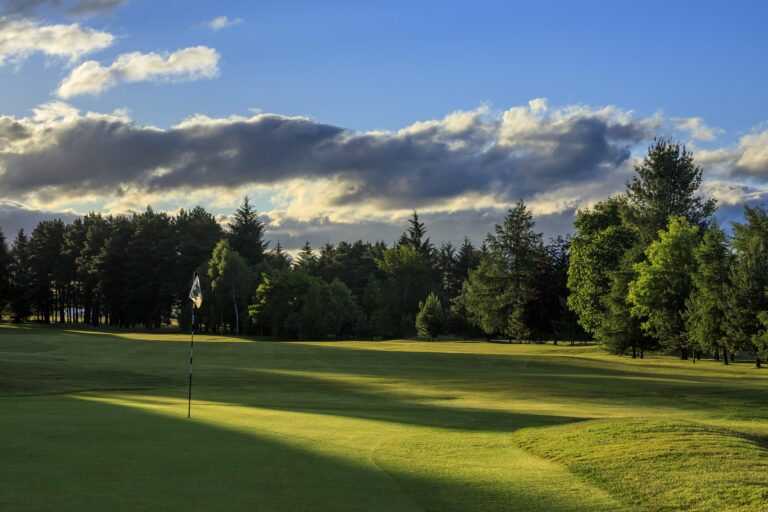
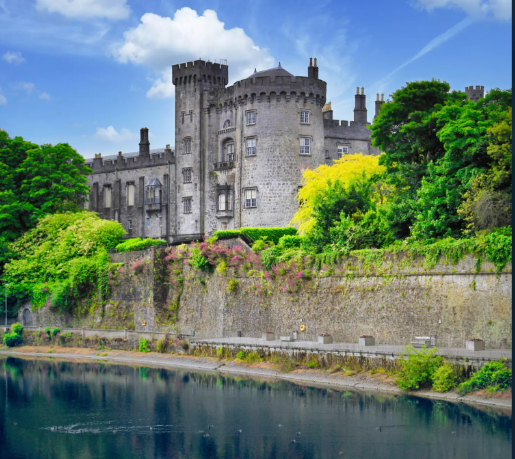
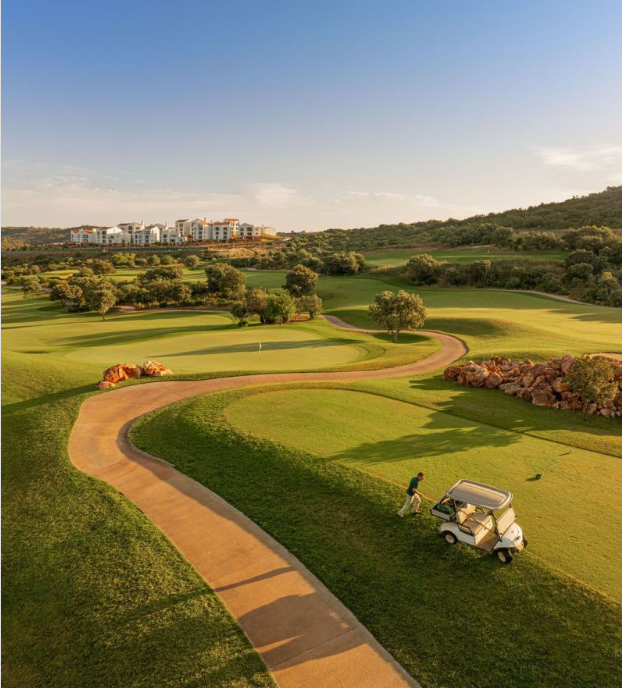
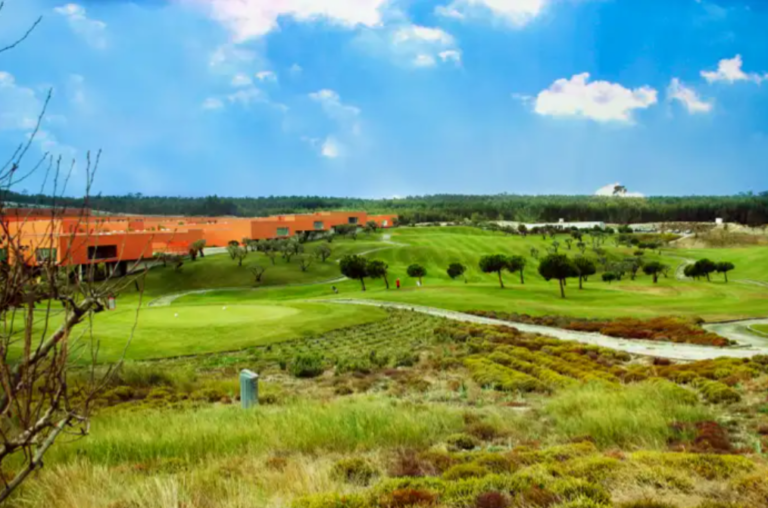
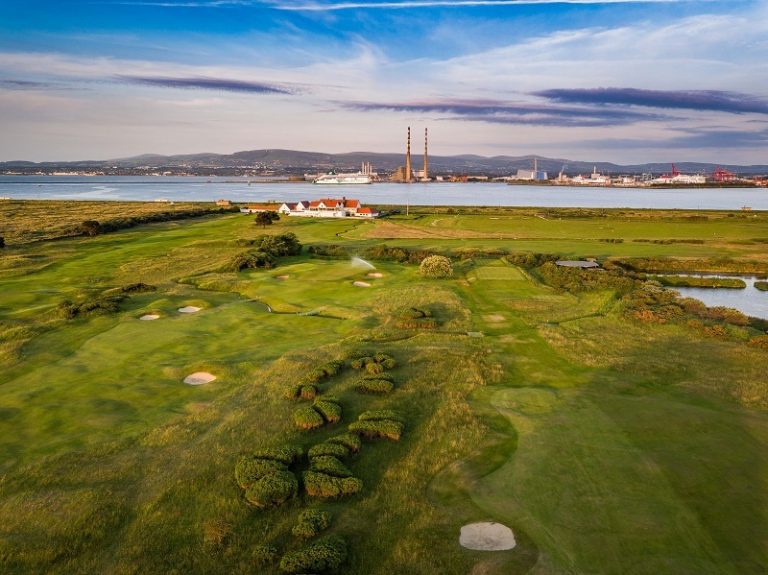


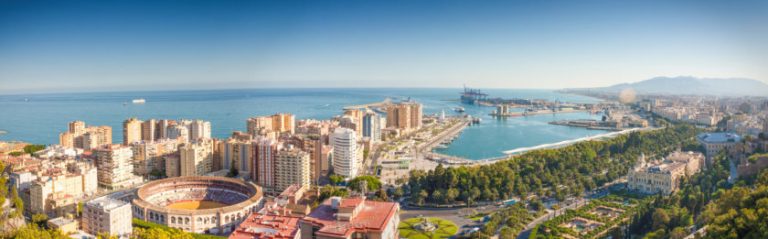
There is a temptation, when discussing Irish golf, to focus on the obvious destinations: the great links of the west, the championship courses around Dublin, or the spectacular courses of Northern Ireland.
Yet spend time exploring Leinster and another story quickly emerges.
Ireland’s eastern province is one of the country’s most diverse golfing territories, encompassing 12 counties and approximately 160 golf courses. It stretches from the Irish Sea westwards into the heart of the country and south towards the Wicklow Mountains and Wexford coast. Within that area are historic links, modern championship layouts, heathland, parkland courses, lakeside golf, mountain golf and some of the most atmospheric traditional clubs in Ireland.
For the travelling golfer, this diversity is Leinster’s great strength.
You can begin a trip on the dunes at County Louth, play a Tom Simpson classic at Carlow, experience Jack Nicklaus at Mount Juliet, take on the twin challenges of Powerscourt, discover Seve Ballesteros at The Heritage and then head towards the coast for Rosslare and Arklow. In between, there are mountain landscapes, historic estates, ancient towns, rivers, lakes, beaches, castles and some seriously good food.
What follows is a journey through 15 courses that demonstrate why Leinster (ex Dublin) deserves to be regarded as one of Europe’s most complete golf regions.
COUNTY LOUTH — BALTRAY
The purist’s links

County Louth Golf Club, universally known as Baltray, sits beside the Boyne Estuary near Drogheda on Ireland’s east coast. It is a course that does not need to shout for attention. Its reputation has been built quietly through more than a century of exceptional golf.
Founded in 1892, the original links was laid out by Thomas Gilroy. The course was subsequently redesigned in 1938 by Tom Simpson and Molly Gourlay, and remarkably much of their work survives today. From the back tees it measures around 7,031 yards and plays to par 72.
Baltray is one of those courses where the first impression can be deceptive. There is no overwhelming opening vista comparable with some of Ireland’s more dramatic links. Instead, the quality gradually reveals itself.
That is the essence of Simpson’s work.
The holes change direction constantly, making the wind an ever-changing opponent. Fairways thread through dunes, greens are small and beautifully shaped, and bunkers are positioned to make the golfer think rather than simply punish a poor shot.
The 3rd hole, a long par five requiring a blind approach over a knoll, is one of the early highlights. The 6th disappears through a valley of dunes before arriving at a green hidden behind natural rises, while the elevated tee at the 14th provides one of the more dramatic drives on the course.
If forced to choose one feature stretch rather than one hole, the answer is easy: holes 12 to 16. It is an exceptional piece of links routing through the larger dunes. The 3rd to 7th provides an equally strong counterpoint.
The clubhouse is understated but welcoming, and the restaurant is part of the Baltray experience. Fresh seafood sourced from nearby Clogherhead is a speciality, with the clubhouse overlooking the putting green.
Don’t miss: The Boyne Valley. Drogheda is close by, while the ancient monuments at Newgrange and Knowth, Monasterboice’s high crosses and the fishing village of Clogherhead provide plenty to explore away from the course.
Verdict: A must-play for serious links golfers. Baltray is strategic, natural and quietly brilliant.
CARLOW GOLF CLUB
Simpson inland

Carlow Golf Club provides proof that great Irish golf does not require a coastline.
Located on the Dublin Road just outside Carlow town, the club occupies a former deer park and possesses the sort of natural, sandy terrain that makes golfers understand why some inland courses can feel remarkably like links.
The club dates to 1899, moving to its present Deerpark location in 1922. Cecil Barcroft laid out the original 18 holes, with J.H. Taylor and Fred Hawtree subsequently contributing to the course. In 1937, Tom Simpson, assisted by Molly Gourlay, undertook the redesign that largely defines the course golfers play today.
Carlow is a strategic golfer’s course. Its fairways climb, fall and curl around the central hill, producing a succession of approaches where the correct angle is often more important than distance.
The 7th is the obvious candidate for feature-hole status. It is a sweeping uphill dogleg with a ridge running through the fairway and danger on both sides. A good drive leaves an approach to a green that falls away sharply around its edges. It is a hole where the golfer has to commit to a line rather than simply aim at the flag.
The 8th provides one of the most memorable views. From the high tee, the fairway falls away beneath the golfer, with the landscape opening dramatically ahead.
The 16th is another outstanding hole and was selected by Christy O’Connor Snr. for his own list of best holes.
Carlow’s clubhouse complements the course rather than attempting to compete with it. This is a traditional Irish club where the post-round conversation is as much part of the experience as the scorecard.
Don’t miss: Carlow Castle and the historic town centre, while the nearby Mount Leinster area provides excellent walking and scenery. Kilkenny is also close enough to combine with a longer stay.
Verdict: One of Leinster’s finest inland courses and a wonderful example of classic golf architecture.
MOUNT JULIET ESTATE
Golf on a grand scale
If Carlow demonstrates the beauty of traditional inland golf, Mount Juliet Estate demonstrates what happens when a great piece of Irish countryside is combined with the vision of one of golf’s greatest architects.
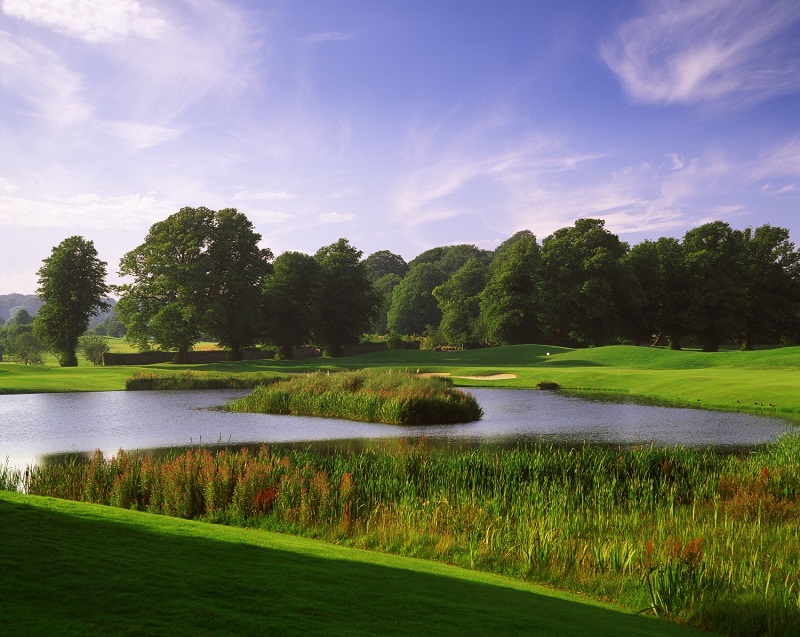
Mount Juliet Estate, Autograph Collection is situated near Thomastown in County Kilkenny, within a magnificent 500-acre estate. Its championship course was designed by Jack Nicklaus and opened in 1991.
At around 7,264 yards and par 72, it is a substantial test. More importantly, it has the tournament pedigree to match its appearance, having hosted the Irish Open on five occasions and the 2002 World Golf Championships, won by Tiger Woods.
Nicklaus uses water and sand with characteristic precision. Five lakes influence six holes, while more than 80 bunkers are positioned throughout the course. The result is a layout that rewards planning from the tee rather than merely asking how far you can hit the ball.
The 3rd is an early statement. From the championship tee, golfers face around 180 yards of carry over a lake. Later, the 11th, 13th and 14th present increasingly attractive but demanding targets, with water and bunkers guarding the approaches.
The unusual 16th is arguably the feature hole: its green is almost entirely surrounded by a bunker, creating a target that looks deceptively inviting from a distance but becomes increasingly intimidating as the approach shot arrives.
The facilities are among the most comprehensive in Leinster. The Golf Academy features TrackMan and TopTracer, alongside a substantial driving range, chipping and putting areas and PGA coaching.
Then there is the clubhouse and Jack’s Bar, named after Nicklaus himself, overlooking the 10th and 18th. It is the ideal place to debate the merits of that 16th hole over a drink.
Accommodation ranges from the grandeur of the Manor House to the contemporary Hunter’s Yard. The estate also offers equestrian activities, a spa, restaurants and extensive countryside to explore.
Don’t miss: Kilkenny Castle, the medieval streets of Kilkenny city, Jerpoint Abbey and the village of Thomastown.
Verdict: One of Ireland’s finest golf resorts and an obvious choice for a luxury stay-and-play trip.
POWERSCOURT EAST & WEST
Thirty-six holes beneath the Wicklow Mountains

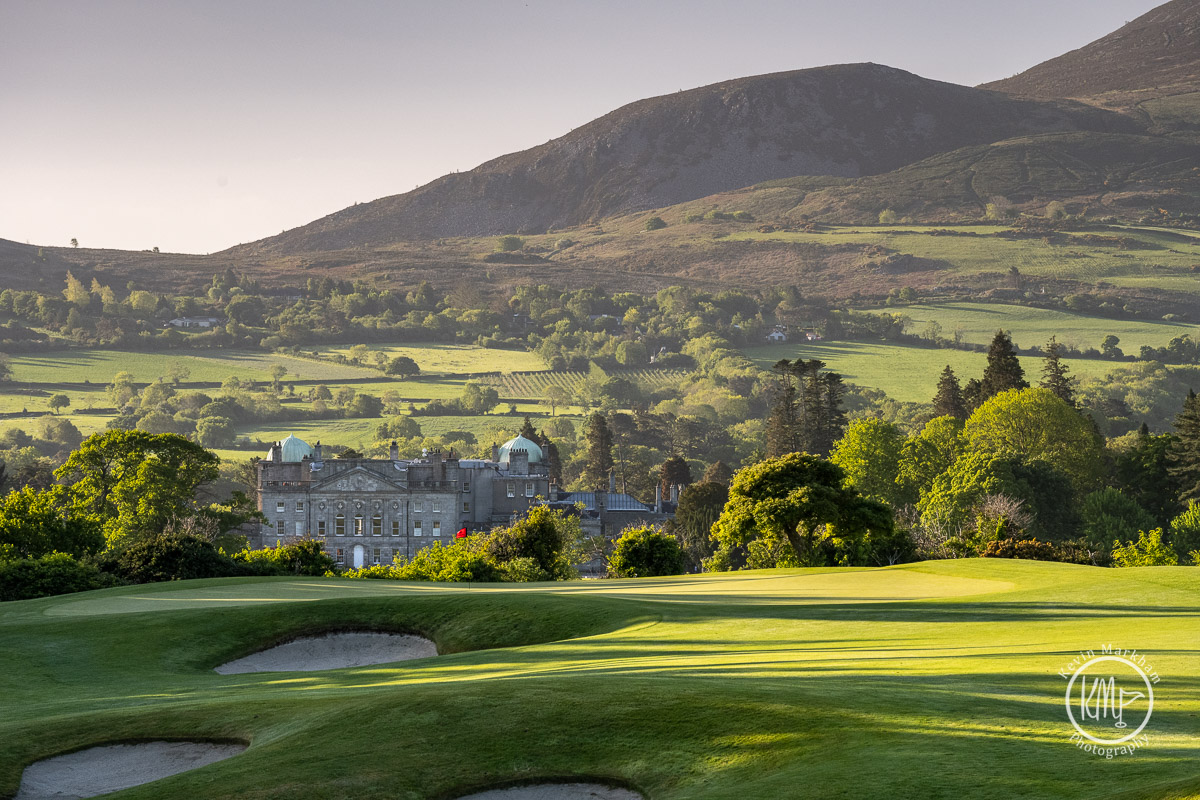
Powerscourt Golf Club has one of the most enviable settings in Irish golf.
Located at Powerscourt Estate near Enniskerry, the club offers 36 holes, divided between the East and West courses. The two layouts are markedly different, which makes Powerscourt an excellent destination for a multi-round trip.
The East Course was designed by English amateur legend Peter McEvoy. The West Course was created by Scottish architect David McLay Kidd, the designer whose reputation was transformed by his work at Bandon Dunes in Oregon.
The East is a beautifully balanced parkland course, while the West is more dramatic, with approximately 80 feet of elevation change and large, clever greens.
On the West, the 17th is an obvious candidate for the feature-hole title. The hole has long been regarded as one of the design’s signature moments, while the 4th is another memorable long par four bending back towards the Wicklow Mountains.
The East has its own collection of memorable holes and possesses a slightly more classical rhythm.
The practice facilities are excellent. The driving range has 12 bays, with grass and mat surfaces depending on the season. There are dedicated putting greens beside the first tees, a short-game area and a practice par three.
The clubhouse is a particular strength. Its balcony looks across the finishing holes, with the Wicklow Mountains providing the backdrop. It is exactly the sort of terrace where golfers can spend considerably longer than intended after the round.
Don’t miss: The spectacular Powerscourt Estate and Gardens, Powerscourt Waterfall and the village of Enniskerry. The Sally Gap and Wicklow Mountains National Park are also within easy reach.
Verdict: Play both courses. The contrast between McEvoy and McLay Kidd makes Powerscourt one of Leinster’s best two-course golf experiences.
THE HERITAGE GOLF CLUB
Seve in the Irish Midlands
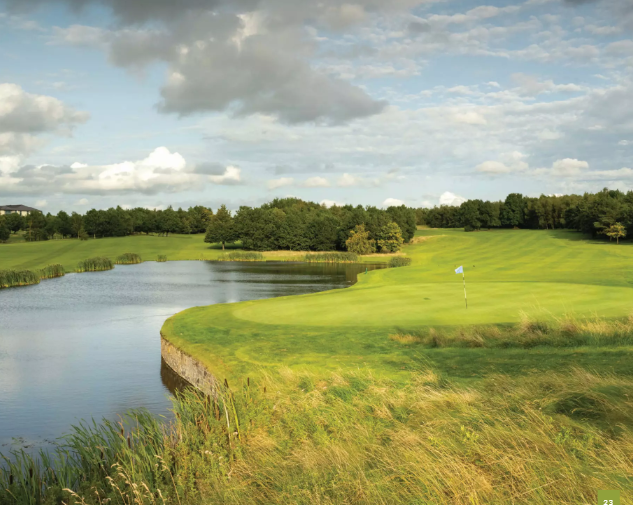
The Heritage Golf Resort in Killenard, County Laois, has one of the most distinctive design pedigrees in Irish golf.
It is Ireland’s only Seve Ballesteros-designed championship course, co-designed with Jeff Howes and opened in 2004. The championship layout stretches to 7,319 yards and features five lakes, a stream, 96 bunkers and approximately 7,000 trees.
This is not a course where water appears simply for decoration. It comes into play on ten holes, demanding that golfers constantly reassess the risk involved in attacking.
The course has multiple tee positions, allowing the same layout to be enjoyed by a wide range of handicaps. That accessibility is one of its greatest strengths.
The 18th is an appropriate feature hole for a Ballesteros course: it demands a combination of imagination and nerve as the golfer attempts to complete the round without giving anything away at the last.
The clubhouse and wider resort make The Heritage a particularly attractive stay-and-play proposition. Golfers can move directly from championship golf into restaurants, bars, spa and leisure facilities without needing to get back in the car.
The course’s drainage also means it is designed to remain playable throughout the year.
Don’t miss: The Rock of Dunamase, one of the most dramatic historic sites in Laois, is close by. Portlaoise and the Slieve Bloom Mountains are also worth exploring.
Verdict: A rare opportunity to play a genuine Ballesteros design in Ireland, with the added convenience of a full resort.
ROSSLARE GOLF LINKS
The fairways of the sea

Few Leinster courses feel as connected to their environment as Rosslare Golf Club.
Established in 1905, Rosslare occupies a narrow strip of links land between the Irish Sea and Wexford Harbour. It is one of the authentic links courses of Ireland and has been shaped by coastal winds, sand and erosion for more than a century.
The Old Course was extended to 18 holes in 1926 by Hawtree & Taylor. The club also has the 12-hole Burrow Links, designed by Christy O’Connor Jnr in 1992.
The Old Course is the principal attraction. It is not manufactured golf. The dunes provide the architecture, while the wind supplies the defence.
The course does not necessarily rely on a single theatrical signature hole. Instead, it builds its character gradually, with a particularly strong opening stretch. The 16th provides one of the most memorable visual moments, with views towards the sea and Rosslare Strand.
The clubhouse remains central to the club’s identity. This is a proper members’ club, with bar, restaurant and changing facilities, and visitors are encouraged to become part of the atmosphere rather than simply passing through.
Practice facilities include an iron-range with six indoor bays, grass practice areas, a pitching green and three putting greens.
Don’t miss: Rosslare Strand itself, Wexford town and the spectacular Hook Peninsula. The National Heritage Park is another excellent diversion for anyone interested in Ireland’s history.
Verdict: A genuine south-east links and one of Leinster’s most enjoyable coastal surprises.
MACREDDIN
Paul McGinley’s Wicklow masterpiece
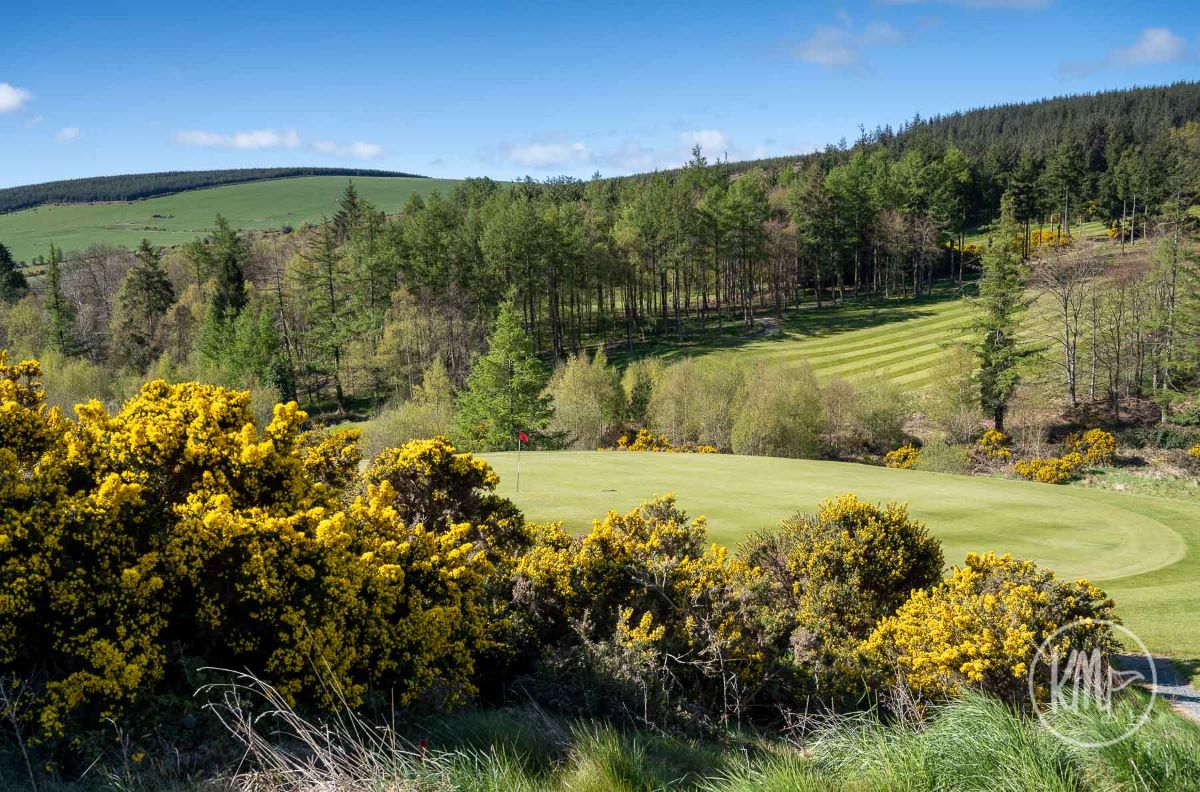
Macreddin Golf Club sits in one of the most peaceful corners of County Wicklow.
Designed by Ryder Cup captain Paul McGinley, the par-72 course covers approximately 160 acres and occupies both sides of a valley. Its defining ingredients are elevation, mature trees, dramatic mounding and the brook that enters the picture on the back nine.
McGinley has produced a course that feels adventurous without being artificial. The land rises and falls naturally, while holes frequently reveal new views of the surrounding Wicklow countryside.
The 12th, known as McGinley’s, is the feature hole and, appropriately, one of the architect’s favourites. From an elevated tee, the drive must be played over Ballycrean Brook, followed by a long iron between elegant pines to a green that demands precision.
The back nine becomes particularly dramatic as the brook enters the strategy. The 13th, 14th and 15th form another excellent sequence.
Macreddin is not simply about golf. The nearby Macreddin Village offers accommodation, dining and a genuine rural retreat atmosphere.
Don’t miss: Avondale Forest Park, the Wicklow Mountains and the villages of Aughrim and Tinahely. The area is ideal for walkers and cyclists.
Verdict: One of Leinster’s most atmospheric modern parkland courses. Golfers should allow time to enjoy the setting rather than rushing back to the city.
BUNCLODY GOLF & FISHING CLUB
Golf with a view of Mount Leinster

Bunclody Golf and Fishing Club sits on the Carlow-Wexford border in the former Hall-Dare Estate.
Opened in 2009, the course was designed by Jeff Howes and extends across approximately 300 acres alongside the River Slaney. It stretches beyond 7,000 yards and combines mature woodland, open countryside, water and elevation.
The 16th is the hole that visitors remember. The tee sits beside the River Slaney, with more than 400 yards between tee and green. A good drive through mature pines is followed by an exacting approach, with the river protecting part of the green.
Then comes one of Irish golf’s most unusual transitions.
After playing the 17th, golfers can take an elevator five floors upwards from the 17th green to the 18th tee. The elevator provides a bird’s-eye view across the river and the closing hole.
The clubhouse itself is another talking point. Designed by Robin Beer of Beer and Burgess, it features a circular design and traditional reed-thatched roof. Inside are changing facilities, sauna, bar, restaurant and professional shop.
Don’t miss: Mount Leinster, the Blackstairs Mountains, Huntington Castle and the picturesque town of Bunclody.
Verdict: A modern Irish course with enormous personality. The 16th and the elevator alone make it worth the journey.
ARKLOW GOLF CLUB
Traditional links on the Wicklow coast
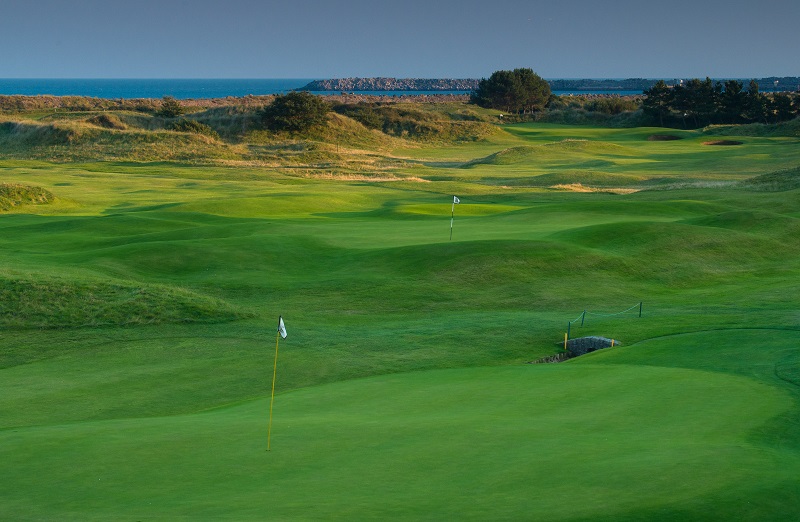
Arklow Golf Club is located south of Arklow town beside the Irish Sea.
Established in 1927, the links is relatively compact by modern standards at around 6,500 yards, but the quality of its individual holes makes it considerably more demanding than its scorecard might suggest.
The course has evolved through the work of Hawtree & Taylor, Eddie Hackett and Eddie Connaughton. It combines links terrain, sand warrens, large greens and water hazards.
The 17th, Janie’s, is widely regarded as the signature hole. It is a tough par four requiring a well-positioned drive before a demanding approach, often into the prevailing wind.
The early holes are especially strong, with the 3rd a fine par three and holes 4 and 5 running close to the coastline. The 7th, played over a burn, is another memorable test.
The clubhouse has one of the best post-round views in this part of Ireland. Its bay window overlooks the links and Irish Sea, making it an excellent place to watch the final groups come home.
Don’t miss: Arklow Harbour, the Avoca area, Glenmalure and the Wicklow Mountains. The nearby European Club also makes an obvious addition for serious links golfers.
Verdict: A traditional, affordable and highly enjoyable Irish links that rewards anyone prepared to look beyond the headline courses.
BIRR GOLF CLUB
Esker golf in the heart of Ireland
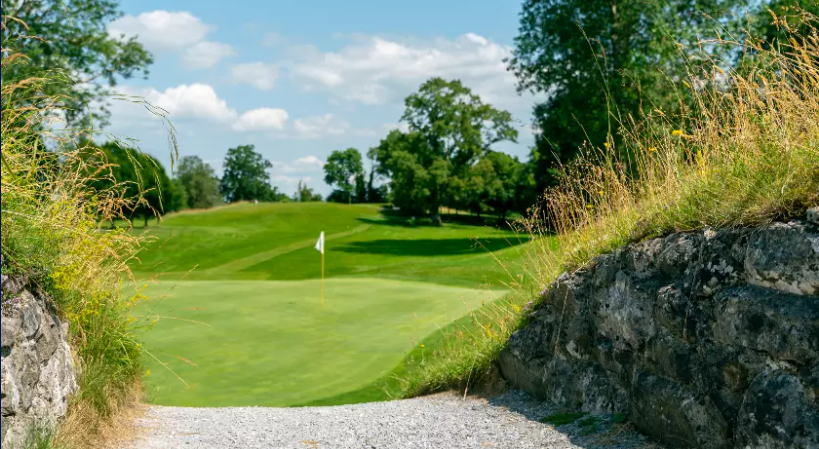
Birr Golf Club provides one of the most enjoyable inland-golf experiences in Leinster.
Founded in 1893, Birr is carved through natural woodland and eskers near the historic town of Birr. The terrain is the closest thing inland Ireland offers to coastal linksland: ridges, hollows, undulations and unpredictable changes in elevation.
The modern course has been associated with architects including Michael Ashe and Eddie Connaughton, with the layout evolving through its long history. The result is an 18-hole par-70 course where almost every hole presents a new visual question.
The 10th is an obvious feature hole. It is short but difficult, running alongside the clubhouse through a tree-lined fairway. The natural slopes and carefully positioned hazards make it far more complicated than its yardage suggests.
The middle of the back nine, particularly holes 10 to 15, is where Birr really starts to show its character.
The clubhouse offers bar and restaurant facilities, while a well-stocked shop and driving range are located near the entrance.
Don’t miss: Birr Castle and its famous gardens, the historic town itself and the nearby Slieve Bloom Mountains.
Verdict: A wonderful example of Irish country golf – natural, friendly and much more adventurous than its modest profile suggests.
BLAINROE GOLF CLUB
Golf above the Irish Sea
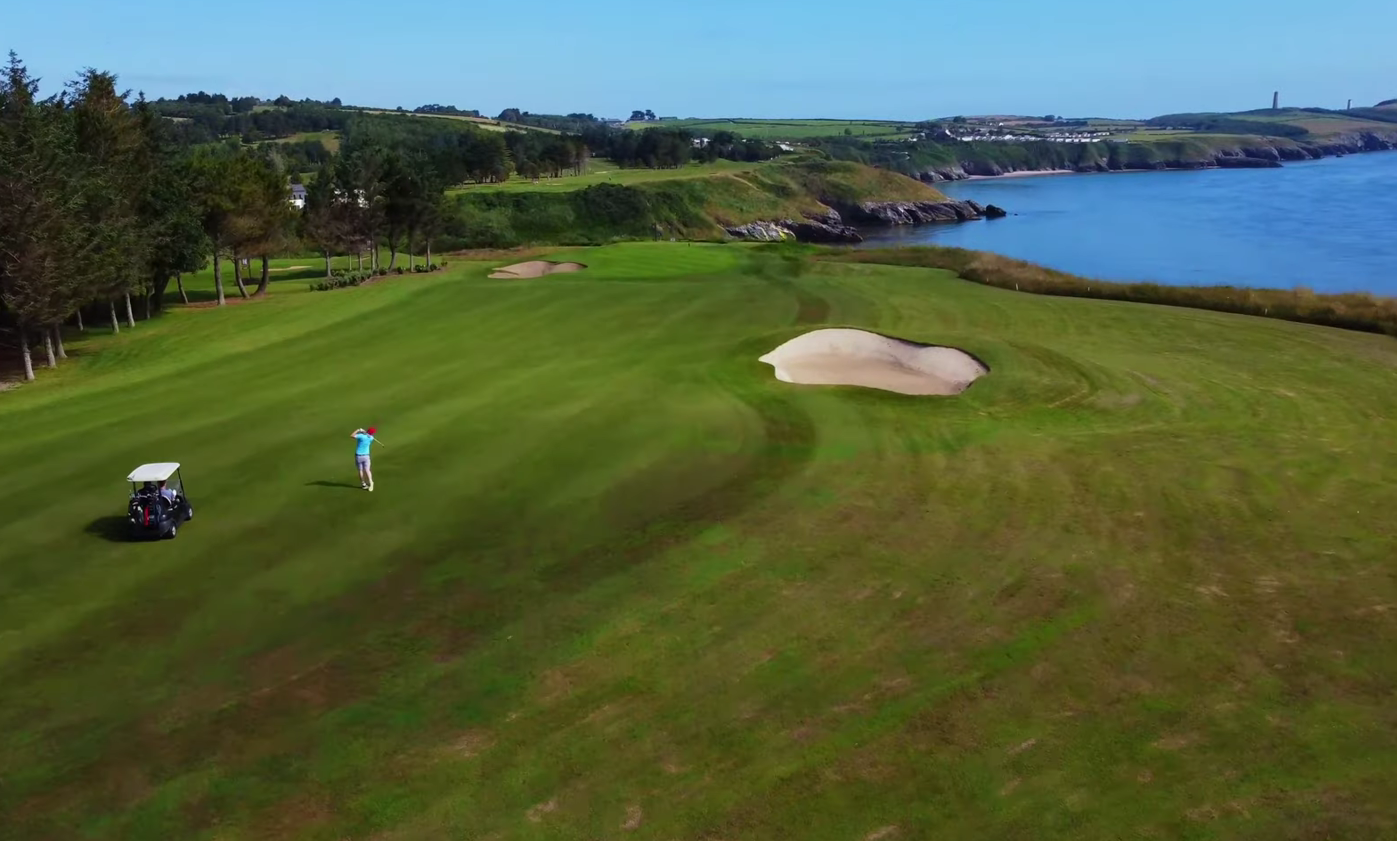
Blainroe Golf Club occupies one of the most dramatic locations in Leinster.
Situated around 3.5km south of Wicklow town, the course sits above the Irish Sea, with views extending along the coast and towards the Wicklow Mountains. On exceptionally clear days, Wales can even appear on the horizon.
The original course opened in 1978 carrying the Hawtree & Son design signature. In 2005, Martin Hawtree – son of the original architect – undertook a substantial redesign involving new greens, tees and bunkering.
The course is 18 holes and par 72, with sea views accompanying virtually the entire round.
The feature hole is the 14th, where the golfer plays over the sea from a cliff promontory. It is followed immediately by the testing 15th, creating a short but dramatic stretch.
The clubhouse overlooks a private beach and offers a full bar and catering service. The setting makes it one of the more attractive places in Leinster to finish a round.
Don’t miss: Wicklow town, Wicklow Head and the Wicklow Mountains. Glendalough is also within reach for those extending their stay.
Verdict: If scenery matters as much as score, Blainroe is difficult to beat.
WOODENBRIDGE
A valley of rivers and trees
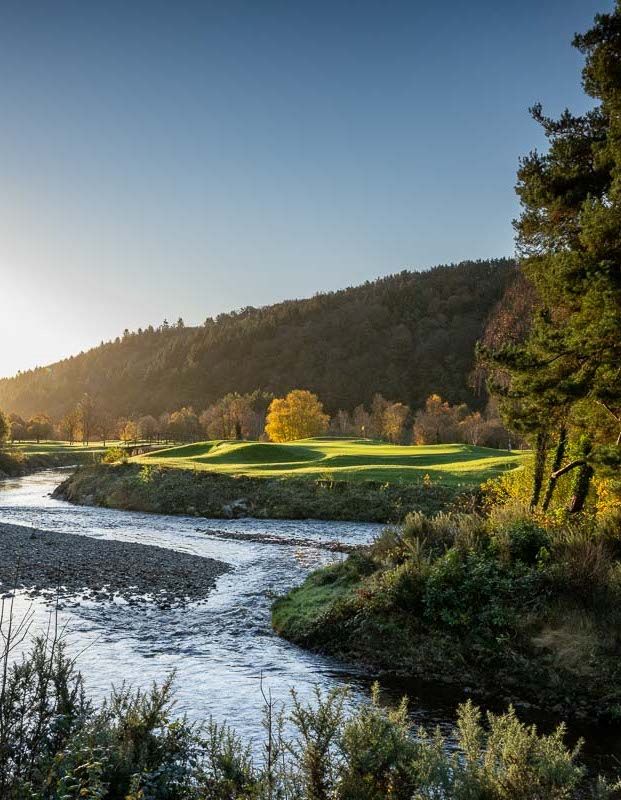
Woodenbridge Golf Club is one of the most picturesque courses in County Wicklow.
Located in the Avoca Valley near Arklow, the course is surrounded by mature woodland and the confluence of the Avoca and Aughrim rivers. Designed by Patrick Merrigan, the 18-hole par-71 course brings those rivers into play on no fewer than ten holes.
This is golf of a very different character to Baltray or Rosslare. Instead of dunes and coastal wind, Woodenbridge relies on trees, water, elevation and precise approach play.
The 4th is an excellent example. It is a par three played towards a punchbowl-style green, with the river running along the left. A bold long draw is required from the back tees, while the safe miss is short and right.
The finishing holes remain engaging, ensuring that the course never simply fades into the background.
The clubhouse is warm and traditional, reflecting the character of the club and the surrounding valley.
Don’t miss: The Avoca area, Avoca village, the Meeting of the Waters and the historic Avoca Handweavers. The nearby Vale of Avoca is one of Wicklow’s prettiest landscapes.
Verdict: A genuine hidden gem and one of Ireland’s most scenic parkland courses.
TULFARRIS
Golf around Blessington Lakes
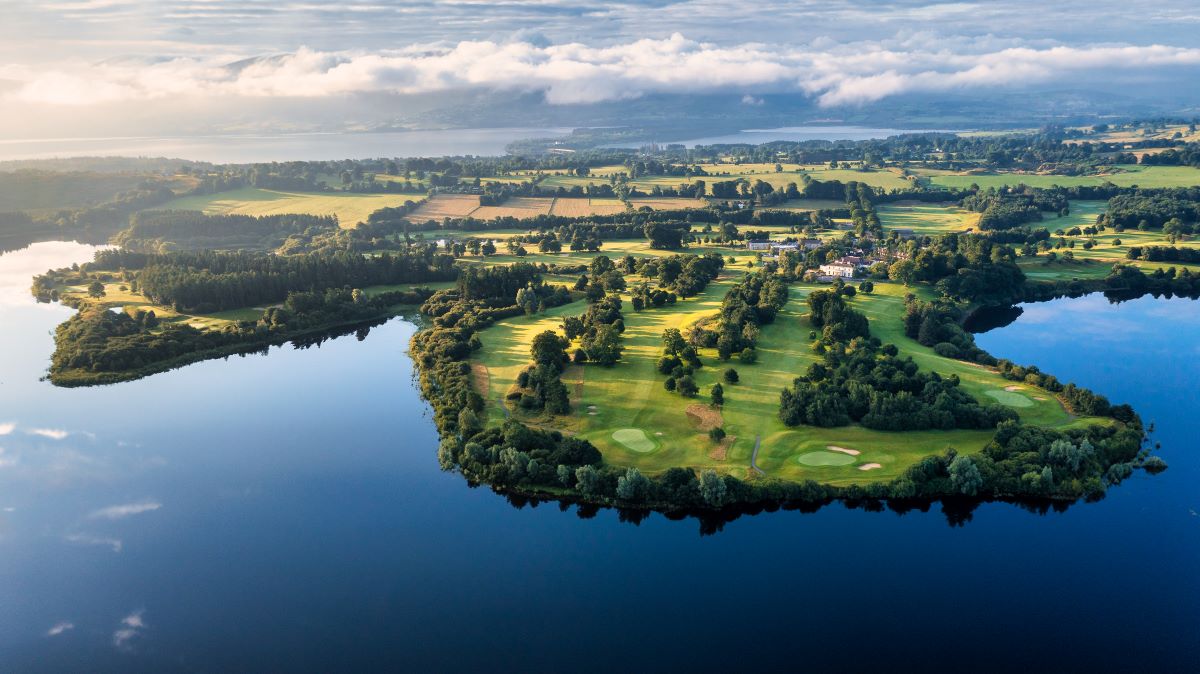
Tulfarris Golf Club is set on the shores of Blessington Lakes in County Wicklow, surrounded by approximately 200 acres of woodland and countryside.
The course was designed by Patrick J. Merrigan, who transformed the original nine-hole course into an 18-hole championship layout routed across three peninsulas of the lake.
The setting is extraordinary. Water, woodland, mountains and the lake dominate the visual experience, while the historic Tulfarris Manor provides an architectural counterpoint.
The 7th is a standout par five. At 608 yards from the back tees, the opening shot is played over a lake before the fairway doglegs towards a well-defended green. On the back nine, the 16th, a 200-yard par three, provides another memorable water-carry challenge.
The course has hosted the European Tour, Irish Seniors Open and Club Professional PGA Championship, giving it an impressive competitive pedigree.
The adjacent Tulfarris Hotel & Golf Resort makes it particularly attractive for stay-and-play visitors, with four-star accommodation, dining and leisure facilities.
Don’t miss: Blessington Lakes, the Wicklow Mountains and Russborough House. The nearby village of Blessington is also worth exploring.
Verdict: One of Leinster’s best choices for golfers who want accommodation, scenery and championship golf in one location.
GREENORE GOLF CLUB
A railway-born golfing classic
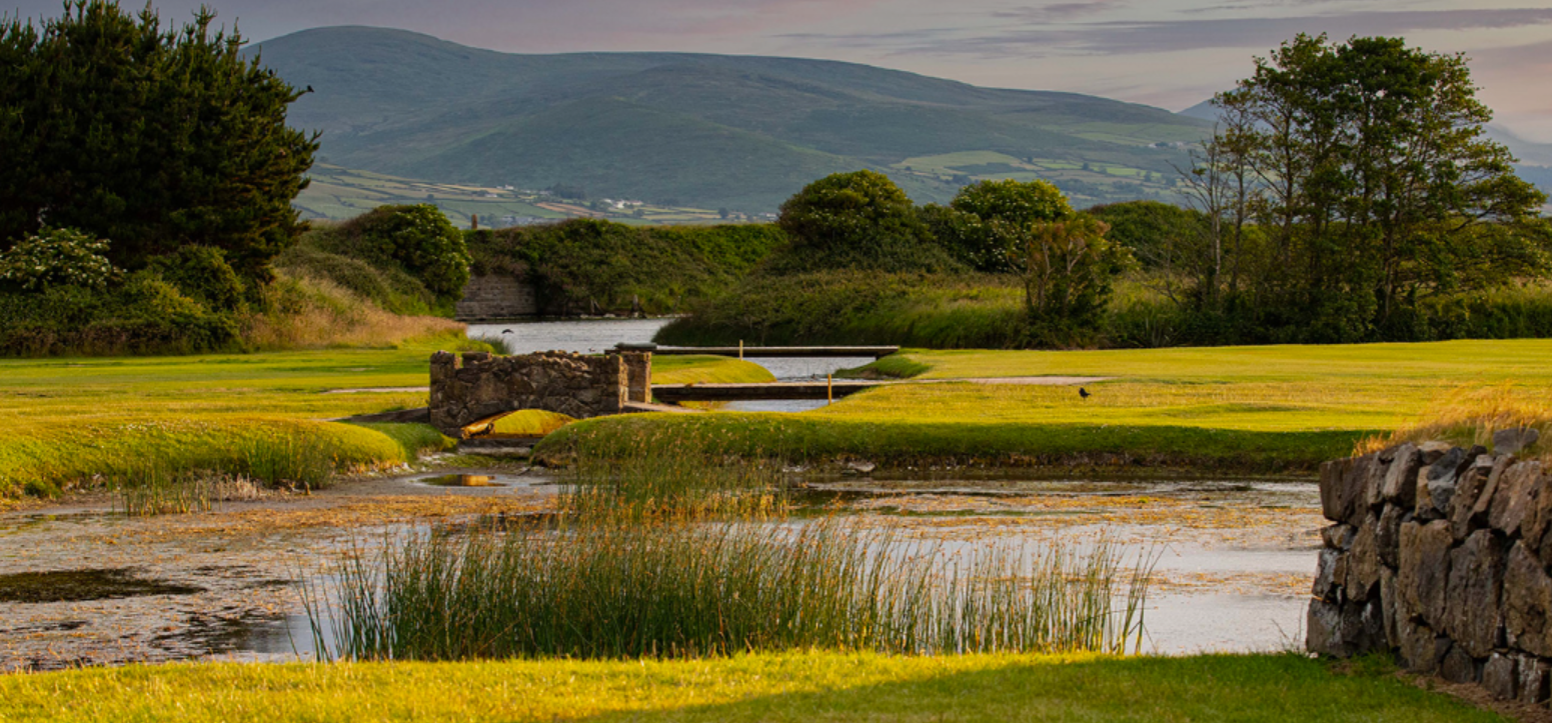
Greenore Golf Club occupies an intriguing position at the tip of the Cooley Peninsula in County Louth.
Its origins are unusual. The course was created by the London & North Western Railway Company in 1896 to encourage visitors to travel to Greenore, where the railway company also owned a hotel. It opened with 12 holes before expanding to 18 the following year.
The modern course is associated with Eddie Hackett, one of Ireland’s great golf architects. Today Greenore combines links and heathland characteristics over relatively easy walking terrain.
The 12th, named Allotments, is an attractive risk-and-reward par four. Water lies left and a bold line can create a better angle into the sloping green, while the conservative route leaves a longer approach.
The course is surrounded by scenery that includes the Cooley Mountains and Carlingford Lough, making the journey to Greenore worthwhile even before the first tee shot.
The clubhouse retains the atmosphere of a traditional Irish club, while the course’s relatively gentle terrain makes it an enjoyable walking experience.
Don’t miss: Carlingford village, Carlingford Lough and the Cooley Peninsula. The area is superb for walking, cycling, food and history.
Verdict: A historic, atmospheric course that makes an excellent companion to Baltray and the other north Leinster links.
GLASSON GOLF CLUB
The lakeside finale
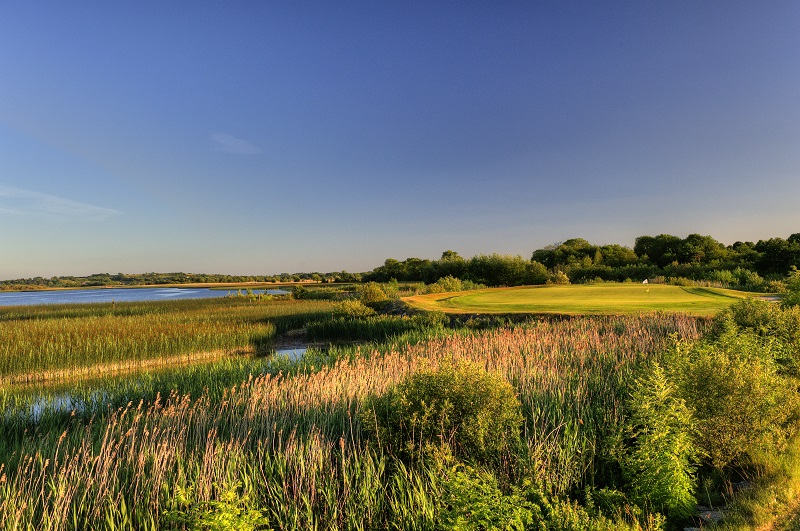
Glasson Golf Club is technically the furthest west of our featured courses and provides a fitting gateway from Leinster towards Ireland’s Midlands.
Situated near Athlone in County Westmeath, Glasson occupies a peninsula beside Lough Ree, with water visible across the course. The course was designed by the late Christy O’Connor Jnr and opened in 1993.
O’Connor was one of Ireland’s great professional golfers and later became a respected golf architect. His skill was understanding how golfers actually play, and Glasson provides a course that is visually spectacular without becoming excessively intimidating.
The front nine overlooks Lough Ree, while the back nine moves towards Killinure Bay. The result is a course where scenery accompanies virtually every hole.
The feature holes are numerous, but the closing stretch deserves particular attention. The finishing holes use the lakeside landscape to create an increasingly dramatic conclusion.
The clubhouse is equally important. Glasson has long been associated with warm hospitality, and the original period house was incorporated into the resort development.
Today, the surrounding resort environment makes Glasson particularly suitable for a relaxed golf break.
Don’t miss: Athlone Castle, the River Shannon and the ancient monastic site at Clonmacnoise. A boat trip on the Shannon is another excellent way to experience the region.
Verdict: One of Ireland’s most scenic parkland courses and an ideal Midlands base.
THE LEINSTER GOLF ROAD TRIP
The beauty of Leinster is that these courses can be combined into several very different golf itineraries.
For the serious links golfer, begin in the north with Greenore and Baltray before travelling south towards the Dublin coast and then onwards to Rosslare and Arklow. The result is a succession of authentic coastal experiences, each with a different personality.
For the luxury golfer, Mount Juliet, Powerscourt and The Heritage offer the ideal combination of championship golf, high-quality accommodation, restaurants, spas and leisure facilities.
For those seeking scenic parkland golf, the Wicklow cluster of Powerscourt, Macreddin, Woodenbridge, Blainroe and Tulfarris could form the backbone of an outstanding week.
And for the golfer who simply wants to discover the Ireland that exists beyond the headline destinations, Carlow, Birr, Bunclody and Glasson offer something equally important: a sense of place.
That is perhaps the defining characteristic of Leinster golf.
The courses do not all look alike. They do not all demand the same style of play. They do not all have the same history.
And that is precisely why a Leinster golf trip can be so rewarding.
MORE THAN GOLF
A golf destination ultimately has to offer more than good golf. Fortunately, Leinster is one of Ireland’s richest regions for visitors.
In County Louth, the Boyne Valley provides some of Ireland’s most important archaeological sites. Newgrange, Knowth and Dowth are reminders that this landscape was a centre of civilisation thousands of years before golf arrived.
Carlow and Kilkenny offer castles, medieval streets, historic estates and a thriving food scene. Kilkenny city is one of Ireland’s most enjoyable destinations for an evening away from the course.
County Laois combines rolling countryside with historic sites such as the Rock of Dunamase and the Slieve Bloom Mountains.
Wicklow, meanwhile, is Ireland’s Garden County. It offers waterfalls, mountains, forests, lakes and valleys seemingly designed for exploring between rounds. Powerscourt, Glendalough, Sally Gap and the Wicklow Gap could occupy several days by themselves.
Wexford provides beaches, history and seafood, with the Hook Peninsula and Wexford town particularly attractive additions to a golf itinerary.
And in Westmeath, the lakes and rivers around Athlone provide an entirely different atmosphere. The Midlands may not have the Atlantic drama of Ireland’s western coastline, but the waterways and rolling countryside create their own appeal.
THE CLUBHOUSE MATTERS
One of the most enjoyable aspects of travelling through Leinster is discovering how different Irish golf clubs can be.
At Baltray, the clubhouse is intimate and rooted in local food.
At Mount Juliet, Jack’s Bar delivers the polished resort experience.
Powerscourt’s terrace overlooks the closing holes and mountains.
Bunclody has its remarkable circular, thatched-roof clubhouse.
Blainroe’s clubhouse looks towards the sea and private beach.
Arklow’s bay window provides an ideal view of the links.
These are not incidental details.
For an overseas golfer, the clubhouse is often where the real connection with Irish golf begins. It is where the scorecard is dissected, where the weather is debated, where recommendations for the next course are exchanged and where visitors discover that the traditional Irish welcome is not simply a marketing phrase.
The golf course provides the challenge.
The clubhouse provides the memory.
A PROVINCE BUILT FOR GOLF
There is also something wonderfully convenient about Leinster as a golf destination.
Dublin Airport provides an international gateway, while the road network allows golfers to move between many of the province’s courses relatively easily. The distances are manageable, meaning that a visitor can base themselves in one or two locations rather than changing hotels every night.
That opens the door to something many golfers increasingly value: choice.
A group can play a championship course in the morning and visit a historic town in the afternoon. A couple can combine golf with spa treatments and fine dining. A family can build a holiday around golf while non-golfers enjoy gardens, castles, walking trails and beaches.
The province also provides a remarkable education in golf-course architecture.
At Baltray and Carlow, golfers encounter the classic principles of Tom Simpson and Molly Gourlay.
At Mount Juliet, there is the unmistakable strategic thinking of Jack Nicklaus.
Powerscourt provides two contrasting visions from Peter McEvoy and David McLay Kidd.
The Heritage introduces the imagination of Seve Ballesteros and Jeff Howes.
Macreddin demonstrates the work of Paul McGinley.
Bunclody brings Jeff Howes again.
Blainroe carries the Hawtree family tradition.
Woodenbridge and Tulfarris demonstrate the talents of Patrick Merrigan.
Glasson provides a lasting example of Christy O’Connor Jnr’s architectural legacy.
Rosslare and Arklow, meanwhile, remind golfers that the best links courses often evolve through generations of architects rather than being attributed to a single designer.
This variety makes Leinster particularly fascinating for golfers who appreciate architecture as much as score.
THE FINAL VERDICT
Ireland has no shortage of golf destinations.
But Leinster deserves greater recognition as one of the most complete.
With approximately 160 courses across 12 counties, the provide a staggering range of experiences. There are famous championship venues and modest local clubs. There are links that have been shaped by more than a century of wind and sand, and parkland courses where architects have transformed rivers, lakes, forests and hills into strategic golfing landscapes.
And then there is the scenery.
The Irish Sea.
The Wicklow Mountains.
The Boyne Estuary.
The Slaney.
The Avoca Valley.
Blessington Lakes.
Lough Ree.
The Cooley Peninsula.
Mount Leinster.
These landscapes are not simply backdrops. They are part of the golf.
For the first-time visitor, County Louth, Mount Juliet, Powerscourt and Rosslare provide obvious starting points. For the returning golfer, Carlow, Macreddin, Bunclody, Arklow, Woodenbridge, Blainroe, Greenore, Birr, Tulfarris and Glasson offer a wealth of reasons to return.
Perhaps the greatest appeal, however, is that Leinster allows golfers to construct their own Irish golf story.
Play links golf in the morning and walk through a medieval town in the afternoon.
Stay in a five-star estate one night and a traditional Irish village the next.
Watch the sun disappear over the Wicklow Mountains, listen to the wind coming off the Irish Sea, or sit in a clubhouse bar while a local golfer tells you which hole you absolutely must not miss tomorrow.
That is what makes Leinster special.
It isn’t just a collection of golf courses.
It is an entire golfing landscape.
And with 12 counties, and it’s approximately 160 courses and an extraordinary combination of links, parkland, heathland, lakeside and mountain golf, it is a landscape that could keep even the most committed travelling golfer coming back for years.
DISCOVER MORE ON LEINSTER’S GOLF COURSES IN THIS YEAR’S; DESTINATION GOLF TRAVEL IRELAND TOP150 / Editor Kevin Markham