



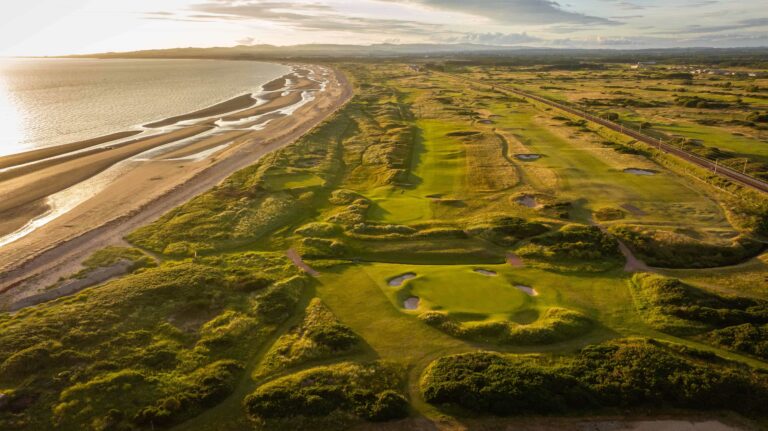
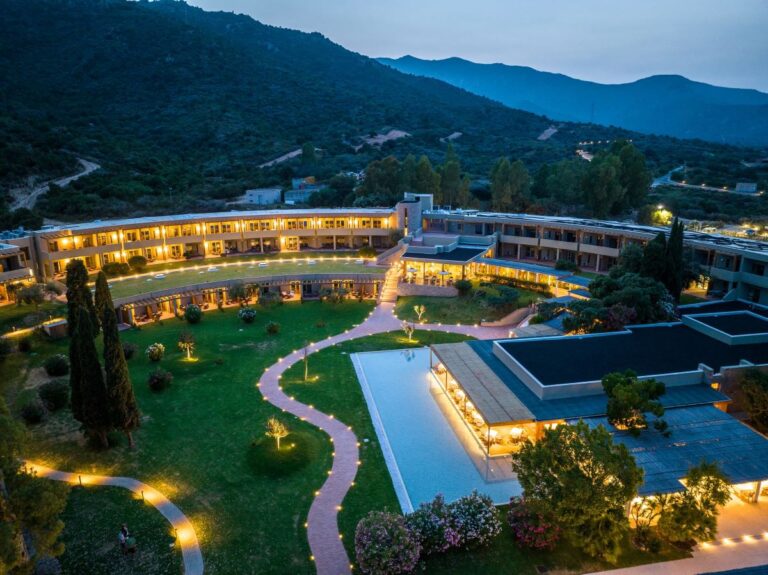
Eight outstanding courses, two coastlines, mountains, castles and one of Europe’s most entertaining capital cities make Dublin an irresistible destination for a golf break.
Ireland is blessed with golf destinations, but few can match the sheer variety found in and around its capital. Within the roughly 922 square kilometres of County Dublin – a compact area by Irish standards – golfers can move from championship links beside Dublin Bay to tree-lined parkland, heathland and dramatic courses beneath the Dublin Mountains, often within little more than half an hour of the city centre.
That proximity is Dublin’s great golfing advantage. You can play a historic links in the morning, visit a castle or whiskey distillery in the afternoon, enjoy some of Ireland’s finest restaurants in the evening and be back on the first tee the following morning without spending hours travelling between courses.
The eight courses featured here provide a particularly attractive snapshot of what Dublin and its immediate surroundings can offer: The Royal Dublin, Jameson Golf Links Portmarnock, The Island, Luttrellstown Castle Resort, Dun Laoghaire, St Anne’s, Howth and Rathfarnham.
THE ROYAL DUBLIN – THE CLASSIC

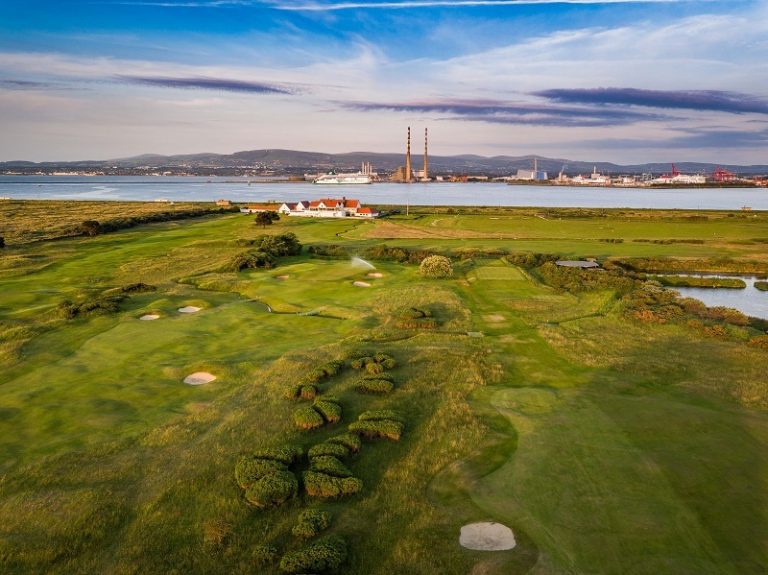
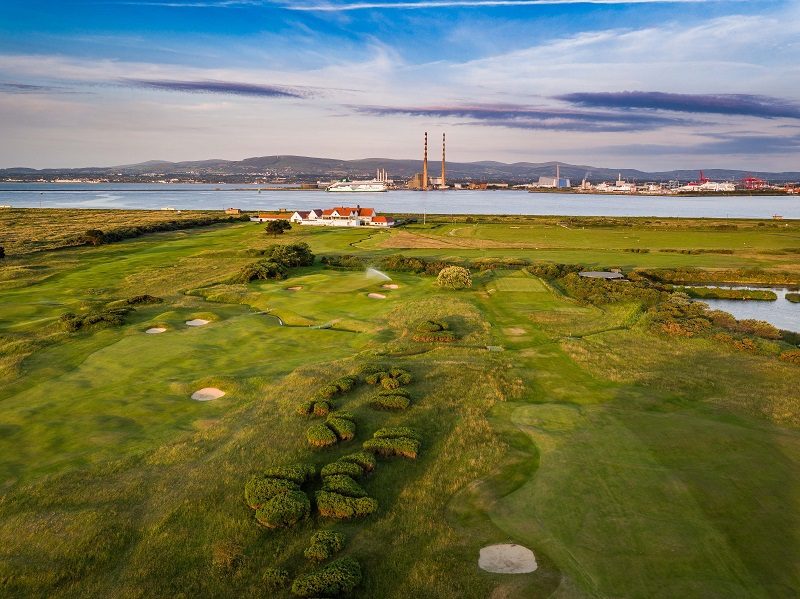
There are few more evocative golfing locations than Bull Island, stretching into Dublin Bay from the north side of the city. Here, just a few kilometres from Dublin city centre, sits The Royal Dublin Golf Club, one of Ireland’s great historic links.
Founded in 1885 and established on Bull Island from 1889, the club’s modern championship course owes much to the celebrated architect H.S. Harry Colt, who redesigned the links after the First World War. More recently, Martin Hawtree undertook a major modernisation, retaining Colt’s character while bringing the course to a modern championship standard. Today it measures 7,269 yards and remains a formidable par-72 test.
The defining feature is its setting. Dublin Bay provides an ever-changing backdrop, while the wind can transform the personality of the course from one day to the next. This is traditional, out-and-back links golf: firm fairways, rough that punishes wayward drives, testing approaches and greens that demand imagination.
For a feature hole, the 15th, Hogan’s, is a worthy choice. The 433-yard par four is a serious test, with the club advising players to avoid the rough left from the tee and warning that the approach can play longer than it appears.
The clubhouse is equally important to the experience. Its distinctive red-slate roof has become part of the Dublin skyline, while the lounge and dining areas provide spectacular views across the course and bay.
Don’t miss: Walk along nearby Dollymount Strand and explore Bull Island, a remarkable coastal nature reserve. Back in the city, the National Gallery, Trinity College and the Guinness Storehouse provide obvious attractions, while the coastal villages of Howth and Clontarf are ideal for dinner.
JAMESON GOLF LINKS PORTMARNOCK – LINKS WITH A NEW CHAPTER
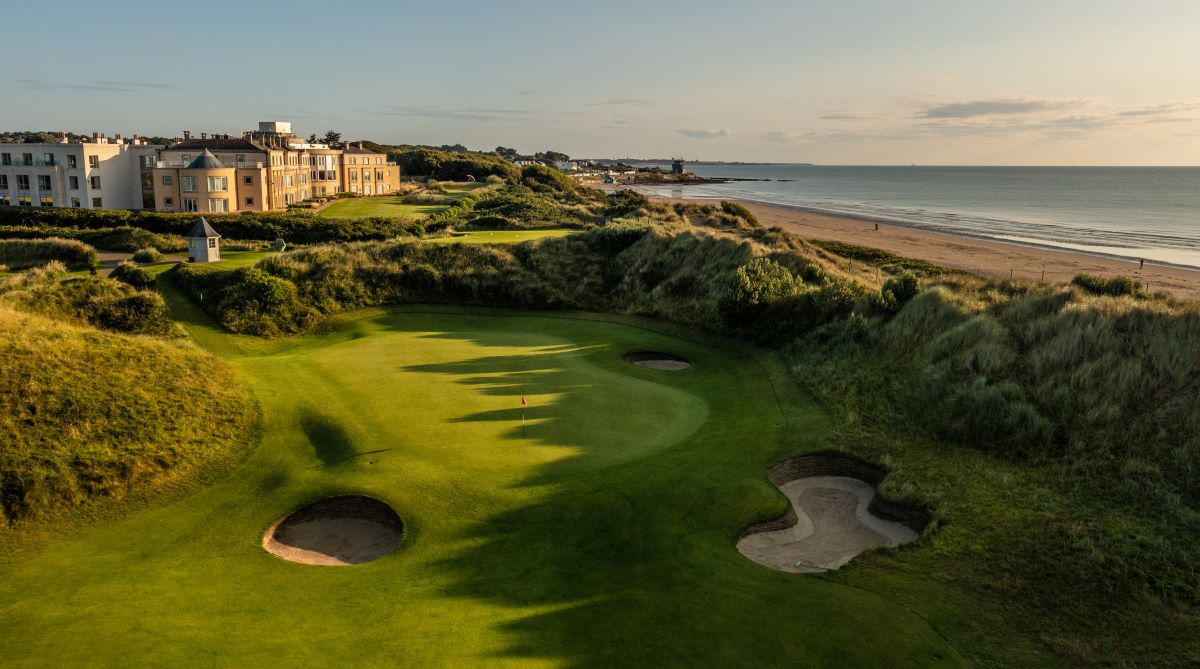
On the opposite side of Dublin Bay, Jameson Golf Links brings together golf, history and hospitality in a particularly attractive package.
Situated on the historic Portmarnock Estate beside the Velvet Strand, the 18-hole links occupies 203 acres and is only around 15 minutes from Dublin Airport. The original course was designed by Bernhard Langer and Stan Eby of European Golf Design and opened in 1995. Recent investment and redevelopment, including work by Jeff Lynch of ReGolf Design, has given the course a fresh identity and enhanced its links character.
The Jameson connection is more than a marketing name. In the 1850s, John Jameson had his own nine-hole course laid out among the dunes, and three holes from that historic layout were incorporated into the modern design.
The course makes full use of the natural dunes, with rolling fairways, elevated tees, blind approaches, pot bunkers and the ever-present coastal breeze. The recent redevelopment has particularly enhanced the closing stretch, with the new 17th hole replacing the previous par three with a short par four that introduces an appealing risk-and-reward element.
The clubhouse experience is effectively part of the wider Portmarnock Resort, making this one of Dublin’s best stay-and-play propositions. Golfers can choose from several dining options, including The Jameson Bar, The Snug, The Seaview and the 1780 Restaurant, while the resort also offers a spa and comfortable accommodation.
Don’t miss: The Velvet Strand is virtually on the doorstep. Nearby Malahide offers a beautiful marina, restaurants and Malahide Castle, while Howth is another excellent coastal excursion.
THE ISLAND – DUBLIN’S HIDDEN LINKS GEM
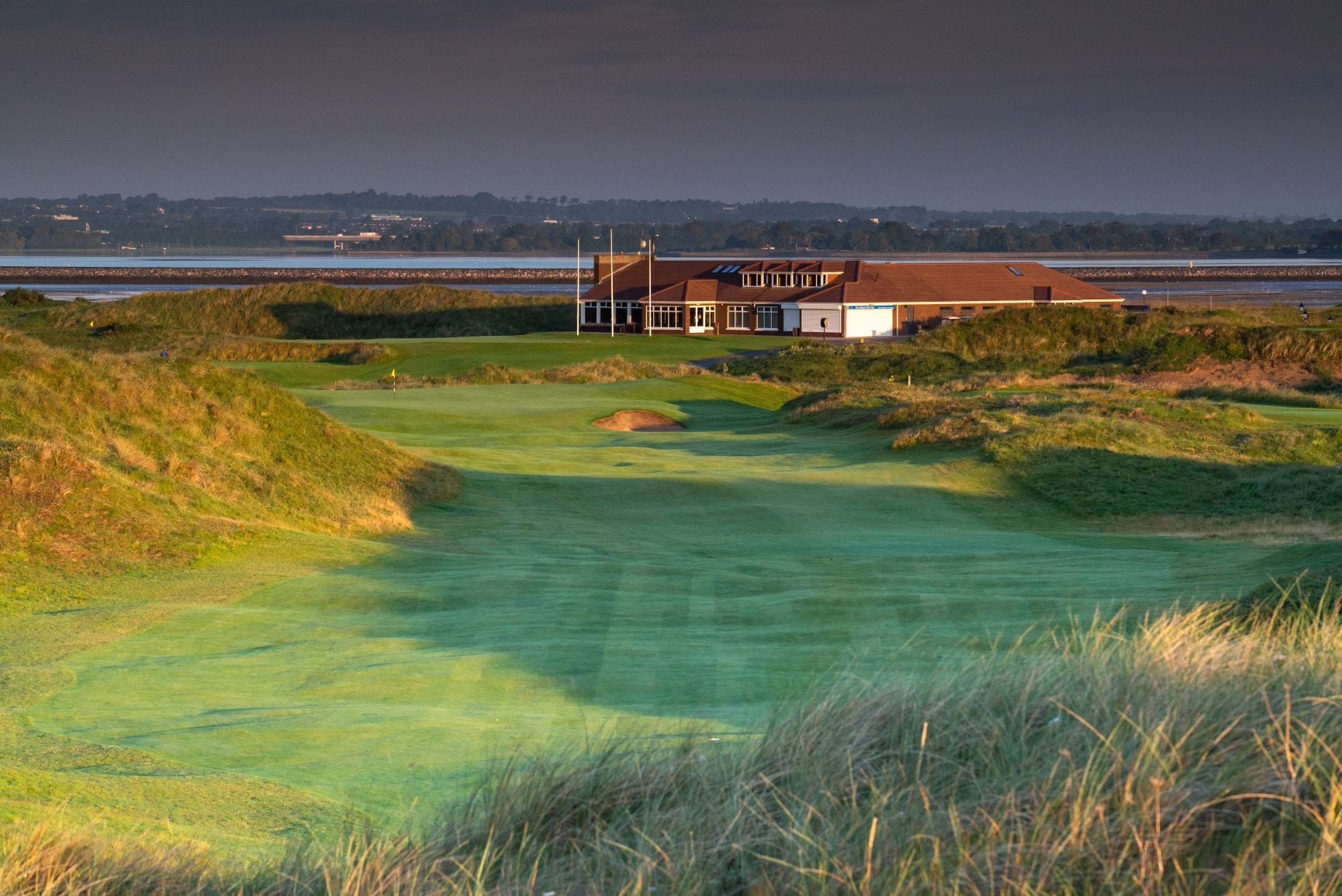
If The Royal Dublin is the famous name, The Island Golf Club is arguably the discovery that can surprise visiting golfers most.
Situated at Corballis near Donabate, north of Dublin, The Island occupies a remarkable coastal position bordered by water on three sides. Founded in 1890, the course retains the wild, isolated character of its origins, when golfers actually travelled to the links by boat from Malahide.
The original architect is unknown, but the course has evolved through the work of architects including Eddie Hackett, while more recent renovation work has involved Tom Mackenzie and Martin Ebert. The result is a spectacular links routed through some of the most dramatic dunes on Ireland’s east coast.
The 13th, Sandy Lane, is one of the holes to remember. It combines the natural drama of the dunes with the strategic demands that make The Island so enjoyable.
The clubhouse dates from the 1970s, when the old boat service finally ended and the club became accessible by road. Today it provides a comfortable and welcoming setting for visitors, with dining overlooking the course. A post-round Guinness while looking back across the links is almost compulsory.
Don’t miss: Make time for Malahide, Newbridge House and Donabate Beach. The nearby coastal villages provide an easygoing contrast to central Dublin.
LUTTRELLSTOWN CASTLE RESORT – GOLF IN A PRIVATE KINGDOM
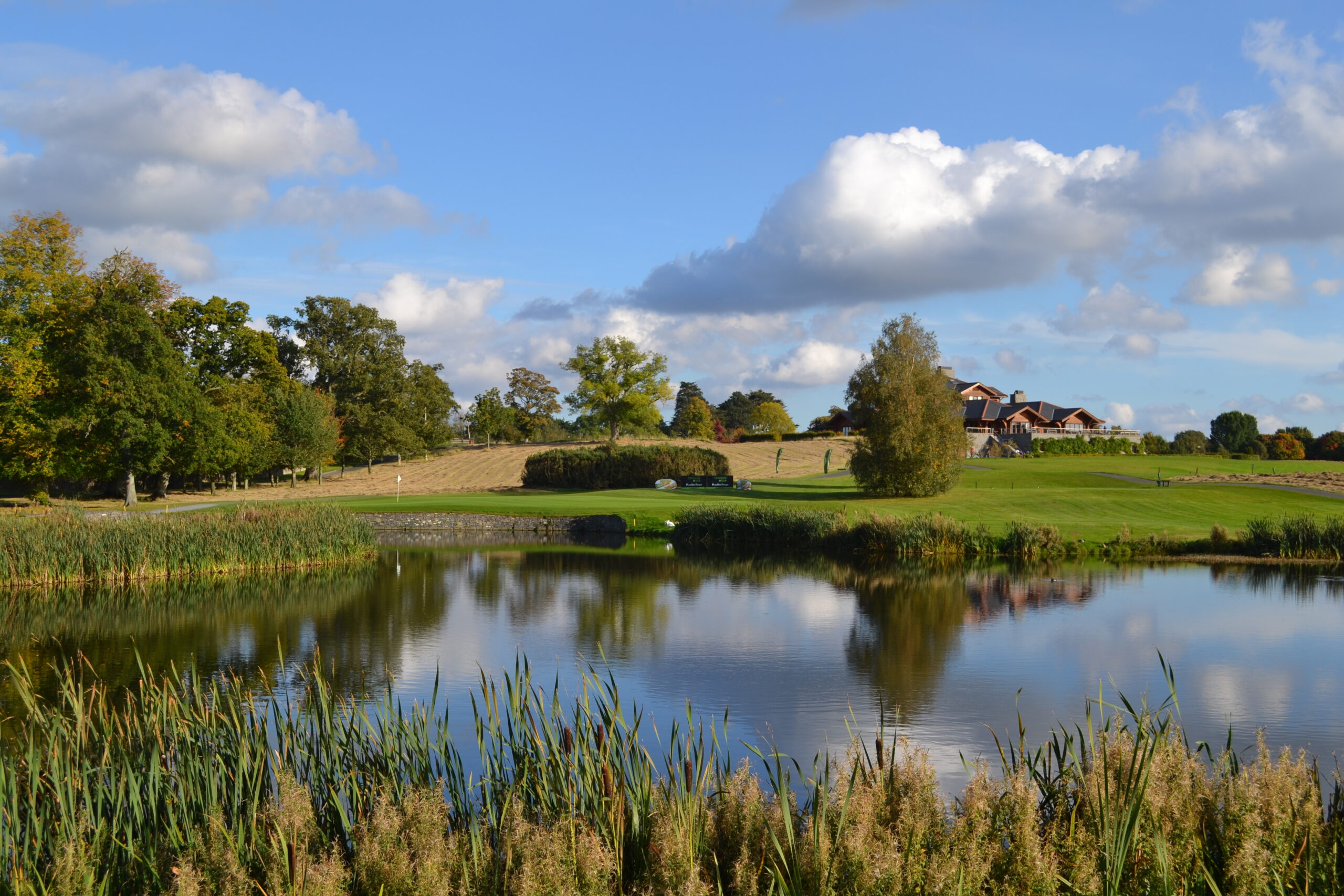
For a complete change of scenery, head west from the city to Luttrellstown Castle Resort in Castleknock. Here, links golf gives way to magnificent parkland, mature woodland and the River Liffey.
The setting alone makes Luttrellstown special. The course occupies a 567-acre private estate surrounding a 15th-century castle and incorporates the River Liffey, a historic Doric Temple and mature chestnut, beech, oak and lime trees.
The championship course was redesigned by Donald Steel and Tom MacKenzie, creating a 7,347-yard par-72 layout. Its links-style bunkering, gathering slopes, water hazards and long par threes give it something of an inland-links personality despite its unmistakable parkland setting.
The 11th hole is a standout. This par four curves gently with water tracking the left side, while the castle provides one of the course’s most dramatic backdrops.
The facilities are substantial. A three-storey alpine-lodge-style clubhouse includes modern locker rooms and dining, while the resort boasts a 30-bay indoor/outdoor driving range, making it an excellent option for golfers who want to practise before playing.
Don’t miss: The castle itself is the obvious attraction, while nearby Phoenix Park, Dublin Zoo and the Guinness Storehouse are all within easy reach.
DUN LAOGHAIRE GOLF CLUB – MOUNTAIN GOLF
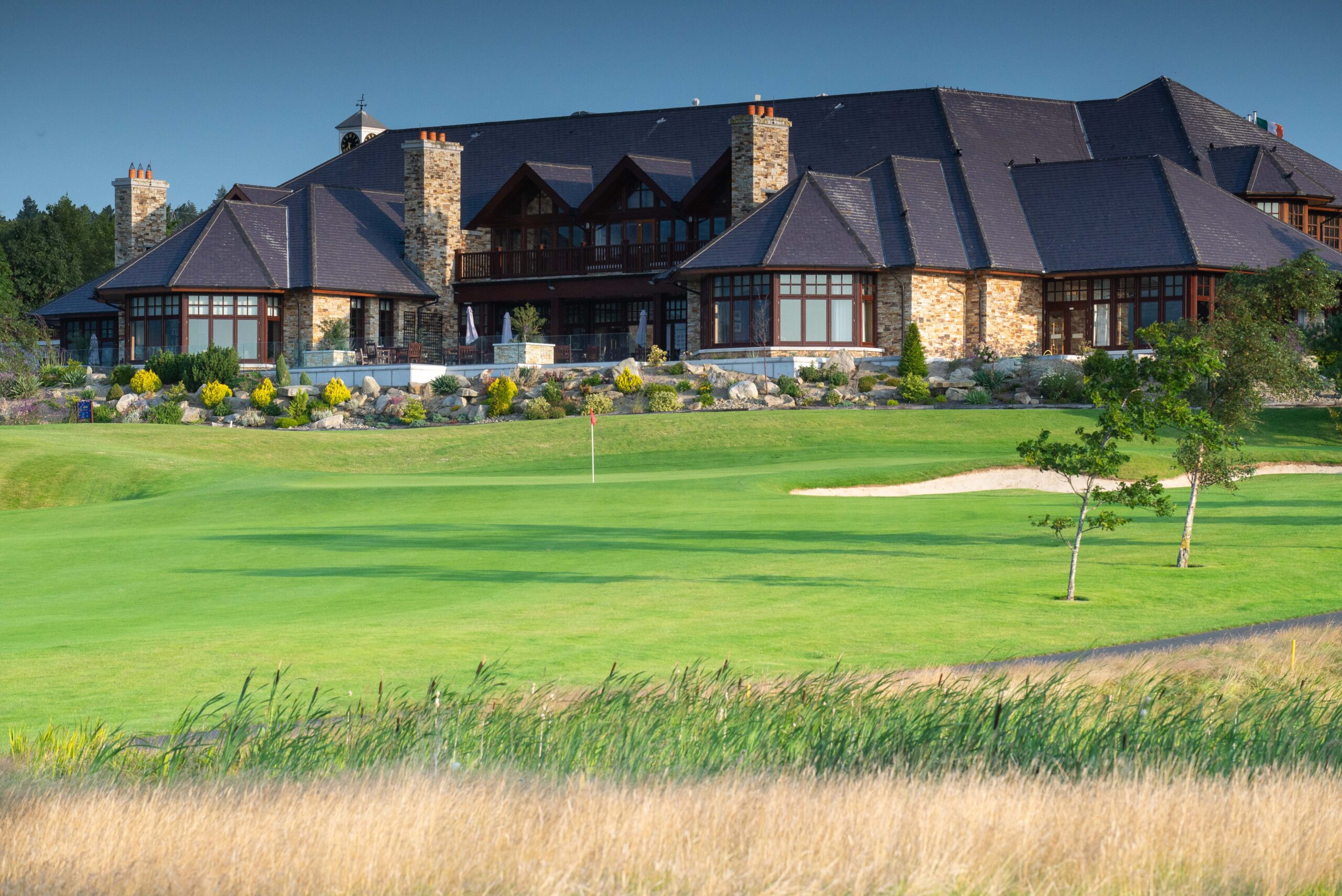
There is a geographical twist to Dun Laoghaire Golf Club. Despite its name, the club is now located on Ballyman Road in Enniskerry, County Wicklow, on the Dublin-Wicklow border. It moved from its original south Dublin site to the spectacular Ballyman Glen location in 2007.
The reward is a magnificent 27-hole parkland complex, comprising Upper, Middle and Lower nines, created by Hawtree Limited, with Martin Hawtree responsible for the new course. The three nines allow different combinations to be played and give the club a flexibility unusual among championship venues.
The setting beneath the Dublin and Wicklow Mountains is the star. The Upper nine provides expansive mountain views; the Middle introduces lakes, ponds and streams; while the Lower is shorter but places greater emphasis on its large, undulating greens.
The course is complemented by an extensive practice facility and golf academy, while the clubhouse is a genuine strength. Its bars, restaurants, function rooms, luxurious locker rooms and large terrace provide panoramic views across the courses towards the Wicklow Mountains.
Don’t miss: The village of Enniskerry, Powerscourt Estate and Powerscourt Waterfall are essential visits. The scenic Sally Gap and Wicklow Mountains are also close enough to turn a golf day into a memorable touring day.
ST ANNE’S – THE LOCAL’S SECRET
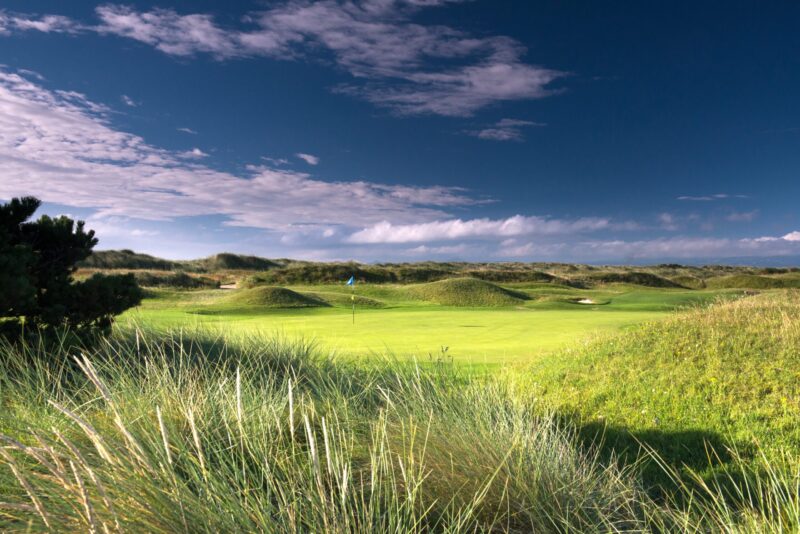
Sharing North Bull Island with Royal Dublin is St Anne’s Golf Club, a course that international visitors can easily overlook. That would be a mistake.
Founded in 1921, St Anne’s began as a nine-hole course before Eddie Hackett extended it to 18 holes in 1989. Eddie Connaughton has also played an important role in the course’s evolution and upgrading.
At approximately 6,700 yards and par 71, St Anne’s is not a brute-force course. Instead, it rewards thought, positioning and an understanding of how the wind interacts with the dunes. Its four par threes are particularly good.
The 17th, Kitchen, is arguably the feature hole. At around 178 yards, the green sits low among dunes, with gorse behind and the clubhouse beyond. It is a visually striking and demanding conclusion to the round.
The clubhouse has a distinctive character of its own and is known for its panoramic outlook across Dublin Bay, Howth, the city and towards Bray Head and the Wicklow Mountains.
Don’t miss: Bull Island itself. Walk Dollymount Strand, explore the nature reserve and, if time permits, compare the experience with a round at neighbouring Royal Dublin.
HOWTH – GOLF ABOVE THE BAY
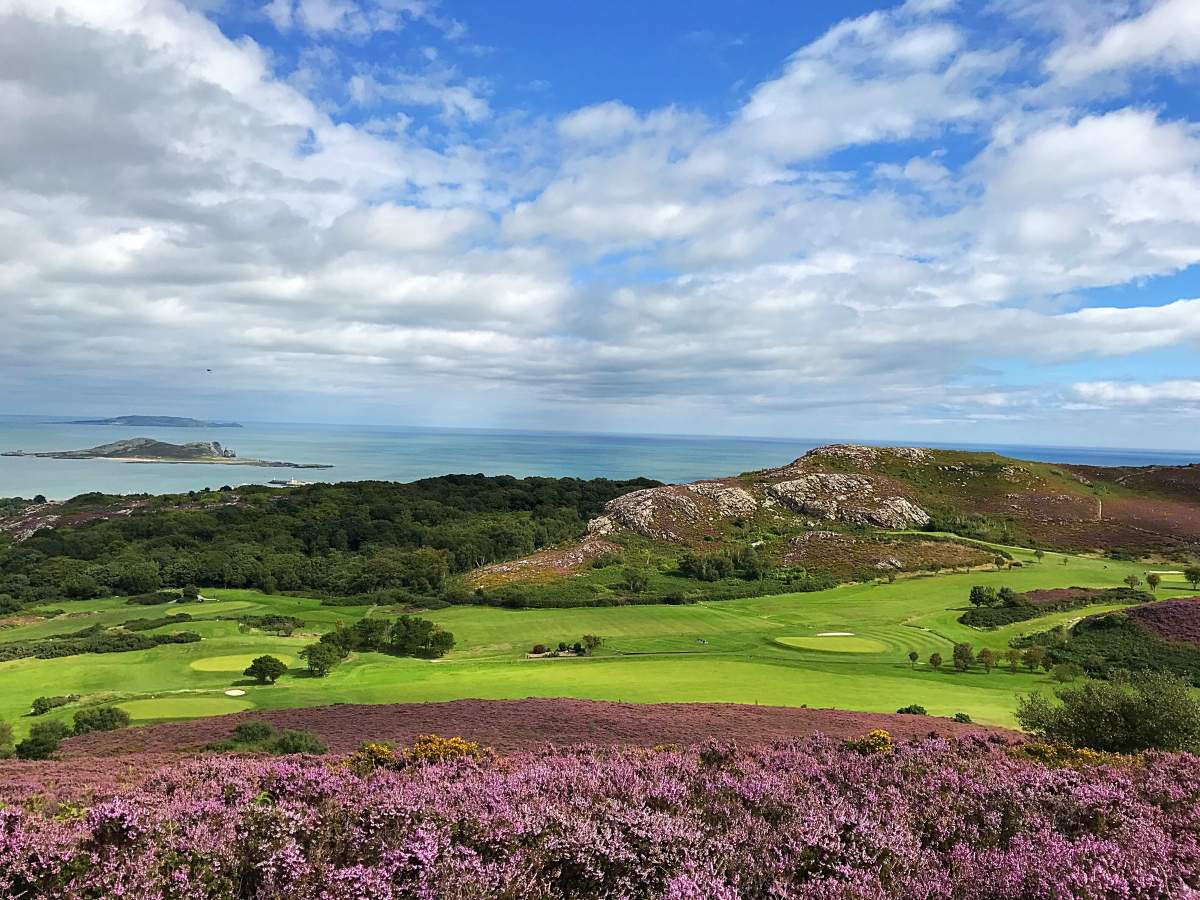
Few Dublin golf courses offer views quite like Howth Golf Club. Perched on the Hill of Howth around 25 minutes from the city centre, the course looks across Dublin Bay towards Wicklow and northwards towards Ireland’s Eye, Lambay Island and, on a clear day, the Cooley and Mourne Mountains.
Founded in 1916, Howth is a traditional heathland layout designed by legendary five-time Open champion James Braid. Braid was famous for his strategic doglegs, and his influence remains particularly evident at the 5th hole, which the club itself identifies as an excellent example of his ability to work a hole naturally into the landscape.
The 5th is therefore the feature hole, but the 16th tee may provide the most memorable visual moment of the round.
Howth combines heather, gorse, elevation changes and clever doglegs, demanding accuracy rather than simply length. The clubhouse provides a friendly post-round setting with dining, a bar, golf shop and even two full-size snooker tables.
Don’t miss: The Howth Cliff Walk, Howth Harbour and the village’s famous seafood restaurants. A walk around the harbour followed by fresh seafood is one of Dublin’s classic day-out experiences.
RATHFARNHAM – THE MOUNTAINS AND THE CITY
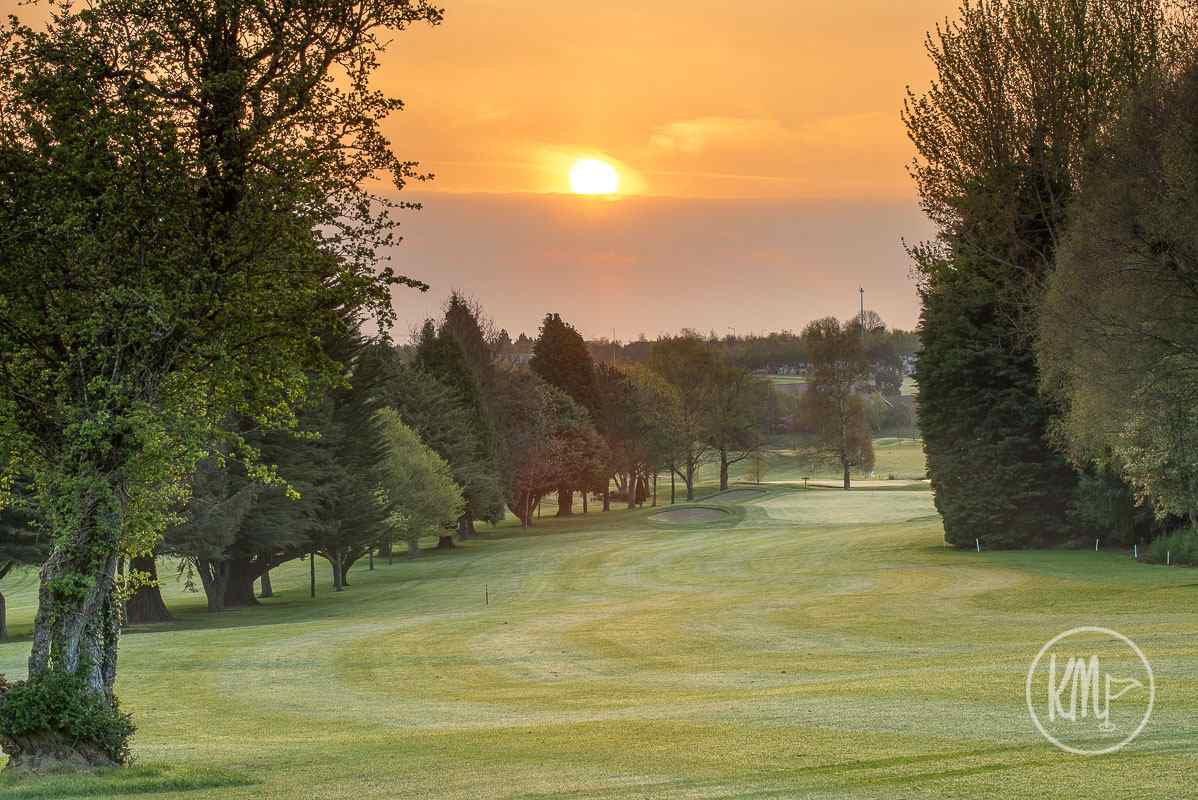
Completing the eight is Rathfarnham Golf Club, tucked into the foothills of the Dublin Mountains yet surprisingly close to the capital.
Founded in 1899, the club moved to its present Stocking Lane location in 1966. The current parkland course is the product of several stages of development, with J. Jacobs, Patrick Merrigan and J. Howes all contributing to its evolution.
The course is not particularly long, and that is part of its appeal. Rathfarnham is a thinking golfer’s course, mixing wooded corridors, open hillsides, water and doglegs. The 9th, where players must drive over an old mill, is an especially memorable piece of golf architecture.
The 3rd hole, however, is the feature hole identified by Destination Golf: a par four that emerges from the trees onto a low fairway curling to the right.
The clubhouse is a fitting conclusion to the experience, with views towards the Dublin Mountains and a well-appointed dining room. The club places a strong emphasis on hospitality, making it an excellent choice for golfers who want a relaxed, authentic Irish club experience.
Don’t miss: The nearby Dublin Mountains, Marley Park and historic Rathfarnham Castle. And, of course, central Dublin is only a short journey away.
THE DUBLIN GOLF EXPERIENCE
What makes Dublin so compelling is not simply the quality of its individual courses. It is the combination.
Few golf destinations allow you to experience the purity of a Harry Colt links at Royal Dublin, the modern coastal challenge of Jameson Golf Links, the wild dunes of The Island, the historic grandeur of Luttrellstown, the mountain scenery of Dun Laoghaire, the understated quality of St Anne’s, the panoramic heathland of Howth and the strategic parkland of Rathfarnham – all while remaining within easy reach of a major European capital.
And when the clubs are back in the boot, Dublin itself becomes part of the itinerary.
Explore Trinity College and the Book of Kells. Walk through Georgian streets. Visit the Guinness Storehouse or discover Ireland’s whiskey heritage. Take the DART along the coast, eat seafood in Howth, explore Malahide Castle, or simply settle into one of the city’s traditional pubs for live music and a pint.
For the travelling golfer, that is the real attraction. Dublin does not ask you to choose between golf and a city break. It gives you both.
With its exceptional links, accessible parkland courses, dramatic coastal scenery, mountain landscapes, historic clubs and famously welcoming après-golf culture, Ireland’s capital has everything required for a memorable golf holiday.
Dublin is not simply a city with good golf nearby. It is a genuine golf destination – compact, diverse and remarkably easy to explore.
READ MORE ON GOLF IN DUBLIN, IN THIS YEAR’S; DG IRELAND TOP150 WITH EDITOR, KEVIN MARKHAM